
N-乙酰半胱氨酸对肥胖成年人内脏脂肪组织中解偶联蛋白1表达及甲状腺功能相关因子的影响:一项随机双盲临床试验
Effects of N-acetylcysteine on the expressions of UCP1 and factors related to thyroid function in visceral adipose tissue of obese adults: a randomized, double-blind clinical trial.
作者信息
Sohouli Mohammad Hassan, Eslamian Ghazaleh, Ardehali Seyed Hossein, Raeissadat Seyed Ahmad, Shimi Ghazaleh, Pourvali Katayoun, Zand Hamid
机构信息
Department of Cellular and Molecular Nutrition, Faculty of Nutrition and Food Technology, Shahid Beheshti University of Medical Sciences, Tehran, Iran.
Department of Cellular and Molecular Nutrition, Faculty of Nutrition and Food Technology, National Nutrition and Food Technology Research Institute, Shahid Beheshti University of Medical Sciences, Tehran, Iran.
出版信息
Genes Nutr. 2024 May 3;19(1):8. doi: 10.1186/s12263-024-00744-7.
BACKGROUND
Evidences have shown that obesity is influenced by various factors, including various hormones such as thyroid hormones and the body's metabolism rate. It seems that practical solutions such as weight loss diets and common drugs can affect these potential disorders. In this study, we investigate one of these common drugs, N-Acetylcysteine (NAC), on expressions of UCP1 and factors related to thyroid function in adults with obesity.
METHODS AND ANALYSIS
The current investigation was carried out as a randomized clinical trial (RCT) including 43 adults with obesity who were potential candidates for bariatric surgery. These individuals were randomly divided into two groups: 600 mg of NAC (n = 22) or placebo (n = 21) for a duration of 8 weeks. Visceral adipose tissue was utilized in the context of bariatric surgery to investigate the gene expression of UCP1 and thyroid function. Polymerase chain reaction (PCR) was performed in duplicate for UCP1, DIO2, DIO3, THRα and β, and 18s RNA (as an internal control) using the provided instructions to investigate the expression of the respective genes.
RESULTS
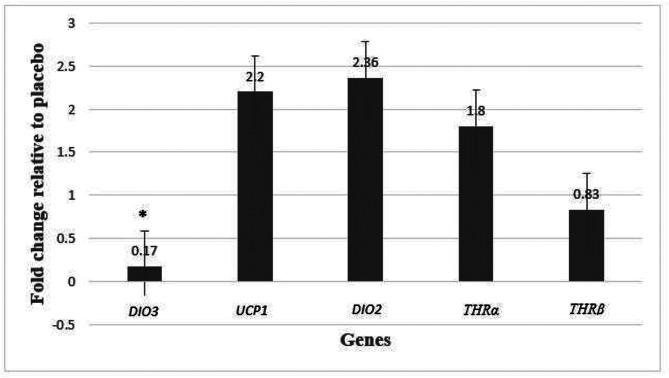
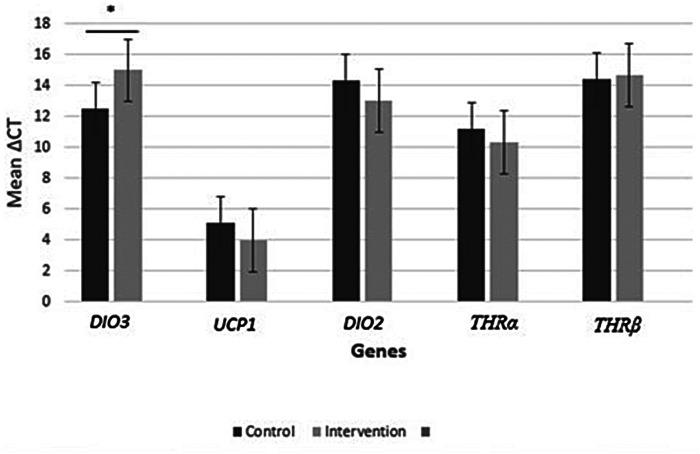
Our findings revealed that after 8 weeks compared to placebo, NAC caused a significant decrease in the expression of the DIO3 gene as one of the genes related to thyroid function and metabolism. However, regarding other related genes, no statistically significant was found (despite the increase in UCP1, DIO2, and THRα expression and decrease in THRβ expression). In addition, after adjustment of possible confounders, no significant effect was observed on anthropometric factors and serum levels of thyroid hormones.
CONCLUSION
The results of this study indicate that, following an 8-week period, NAC effectively decreases the expression of the DIO3 gene in the visceral fat tissue, in comparison to the placebo.
背景
有证据表明,肥胖受多种因素影响,包括甲状腺激素等多种激素以及身体的代谢率。似乎诸如减肥饮食和常用药物等实际解决方案可以影响这些潜在紊乱。在本研究中,我们调查了其中一种常用药物N-乙酰半胱氨酸(NAC)对肥胖成年人中UCP1表达及甲状腺功能相关因子的影响。
方法与分析
本研究作为一项随机临床试验(RCT)开展,纳入43名有肥胖问题且可能接受减肥手术的成年人。这些个体被随机分为两组:600毫克NAC组(n = 22)或安慰剂组(n = 21),为期8周。在减肥手术过程中利用内脏脂肪组织来研究UCP1基因表达和甲状腺功能。使用提供的说明对UCP1、DIO2、DIO3、THRα和β以及18s RNA(作为内对照)进行聚合酶链反应(PCR)一式两份操作,以研究各自基因的表达。
结果
我们的研究结果显示,与安慰剂相比,8周后NAC使作为甲状腺功能和代谢相关基因之一的DIO3基因表达显著降低。然而,对于其他相关基因,未发现统计学显著性差异(尽管UCP1、DIO2和THRα表达增加,THRβ表达降低)。此外,在调整可能的混杂因素后,未观察到对人体测量因素和甲状腺激素血清水平有显著影响。
结论
本研究结果表明,与安慰剂相比,经过8周时间,NAC可有效降低内脏脂肪组织中DIO3基因的表达。

 Zotero 插件