
γ-氨基丁酸(GABA)通过调节大豆幼苗的矿物质营养、渗透物质含量和抗坏血酸-谷胱甘肽循环来提高其耐盐性。
Gamma-aminobutyric acid (GABA) improves salinity stress tolerance in soybean seedlings by modulating their mineral nutrition, osmolyte contents, and ascorbate-glutathione cycle.
机构信息
School of Life Sciences, Changchun Normal University, Changchun, 130032, China.
School of Agriculture, Jilin Agricultural University, Changchun, Jilin, 130118, China.
出版信息
BMC Plant Biol. 2024 May 6;24(1):365. doi: 10.1186/s12870-024-05023-6.
BACKGROUND
In plants, GABA plays a critical role in regulating salinity stress tolerance. However, the response of soybean seedlings (Glycine max L.) to exogenous gamma-aminobutyric acid (GABA) under saline stress conditions has not been fully elucidated.
RESULTS
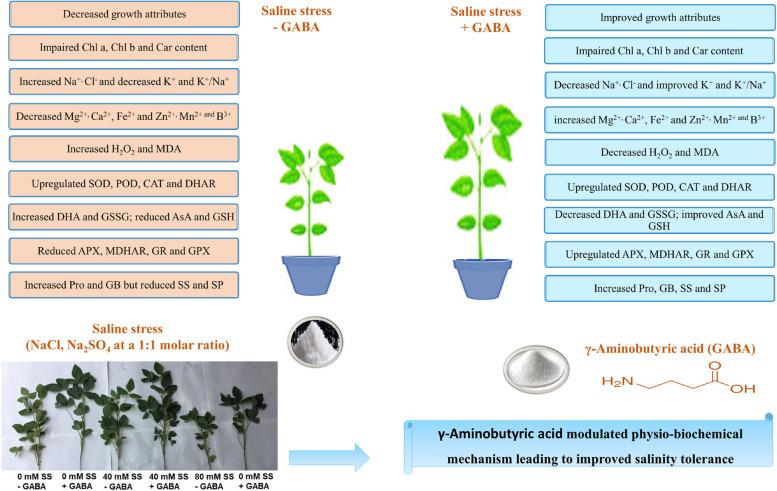
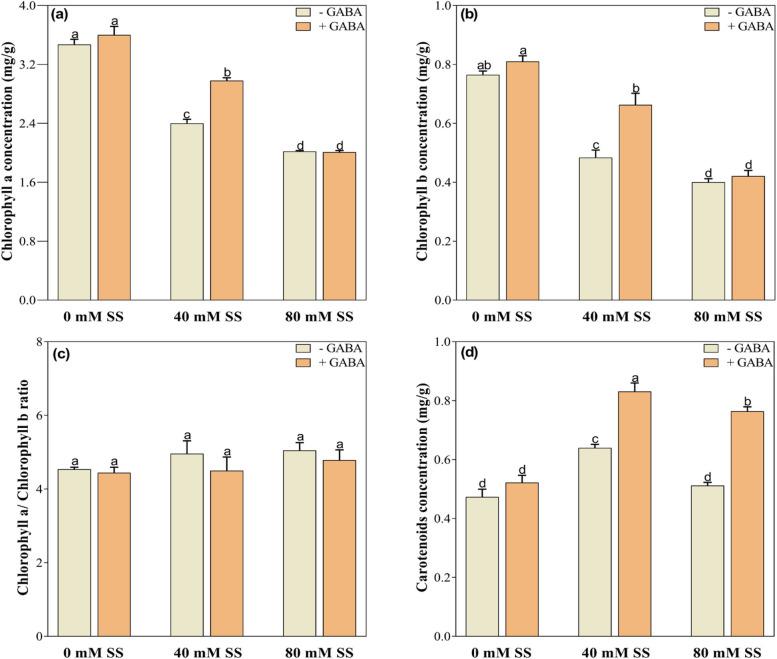
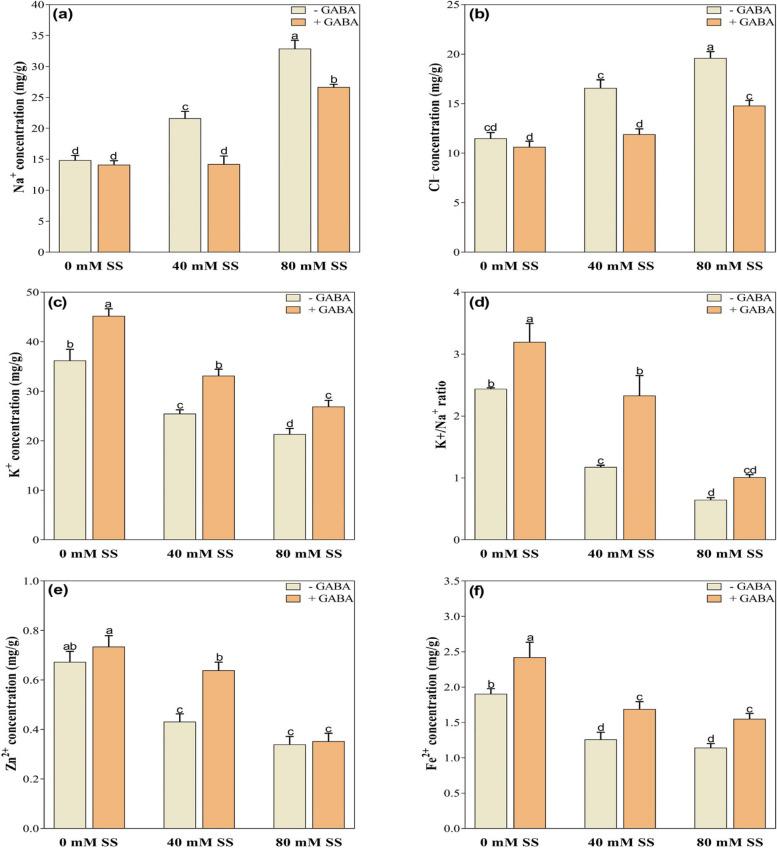
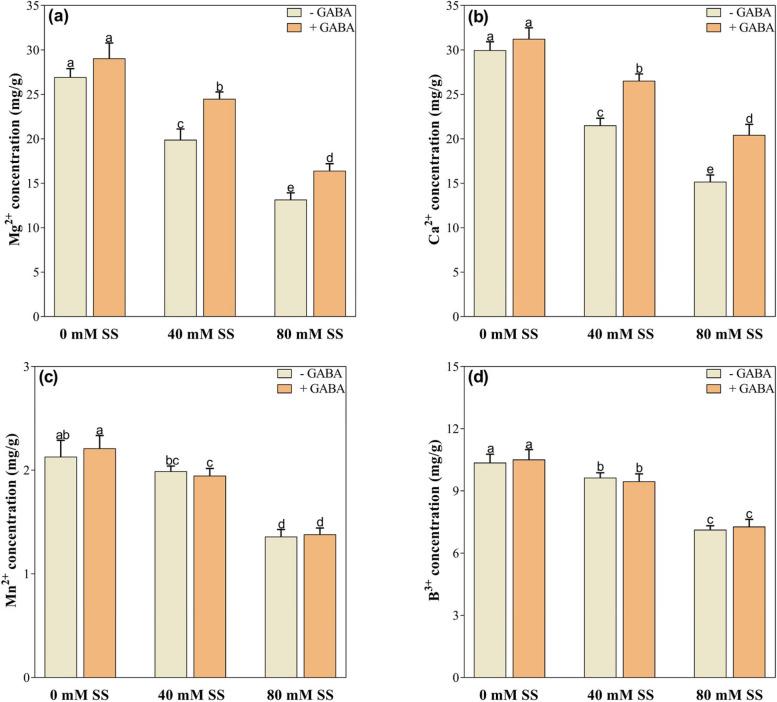
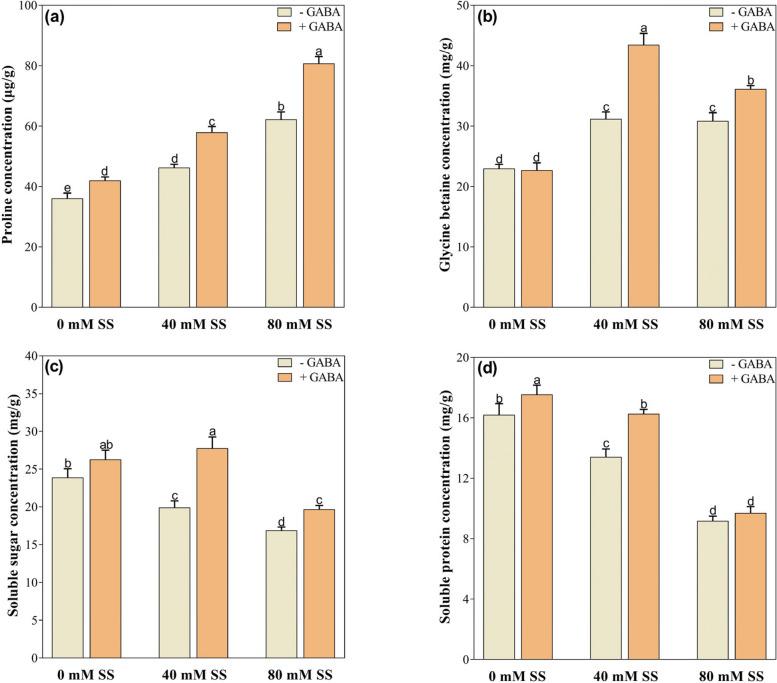
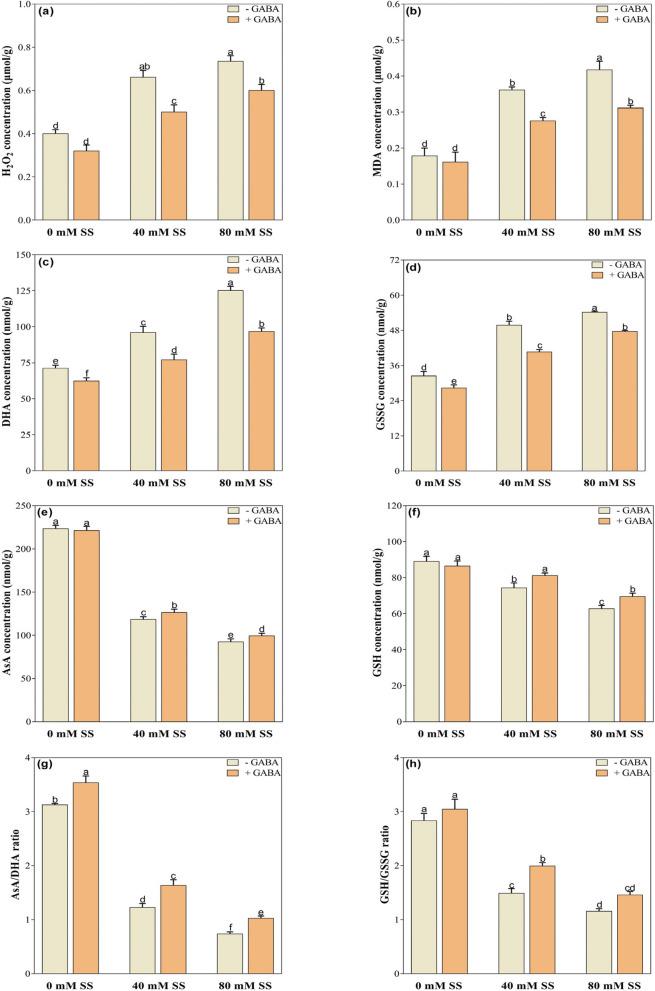
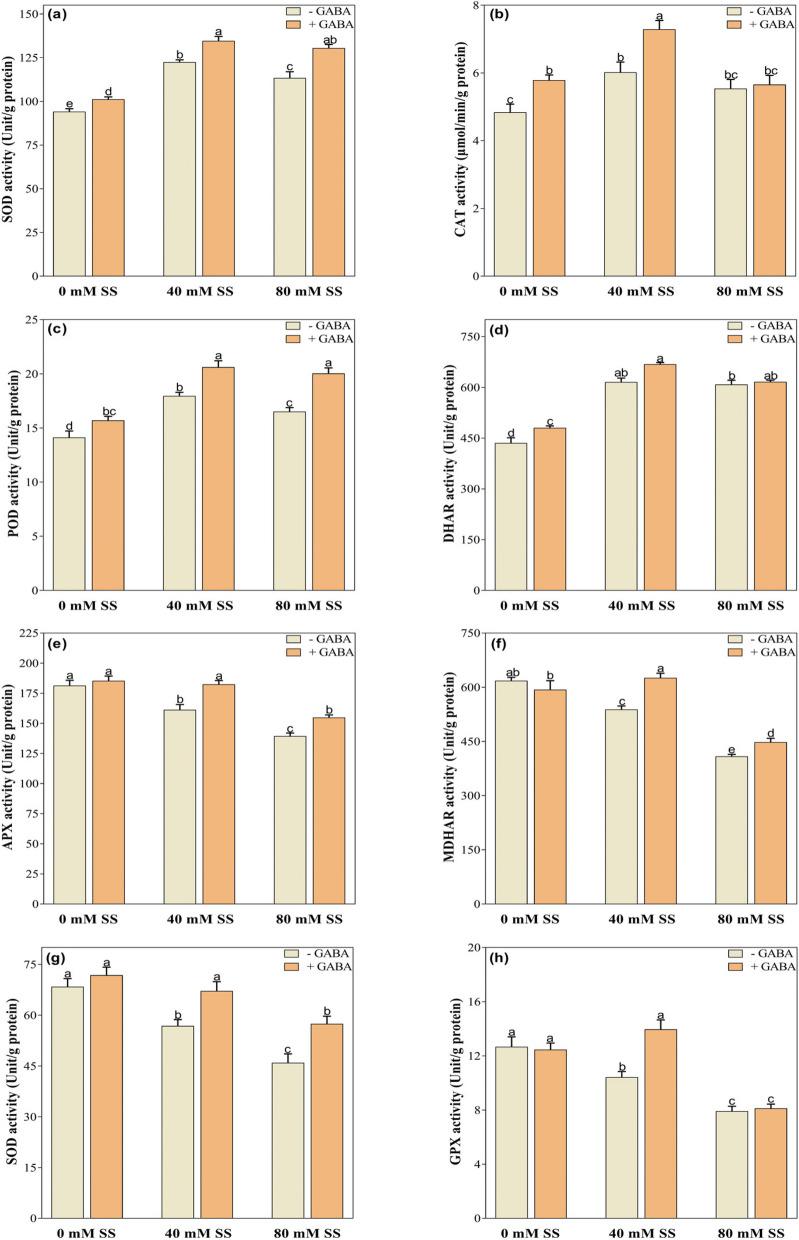
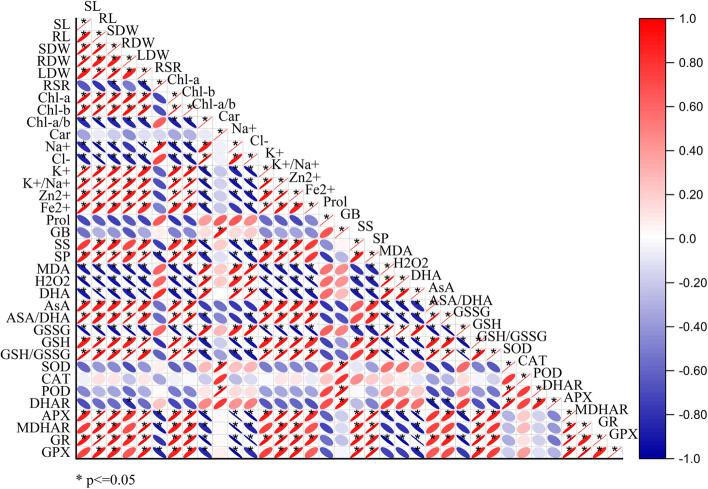
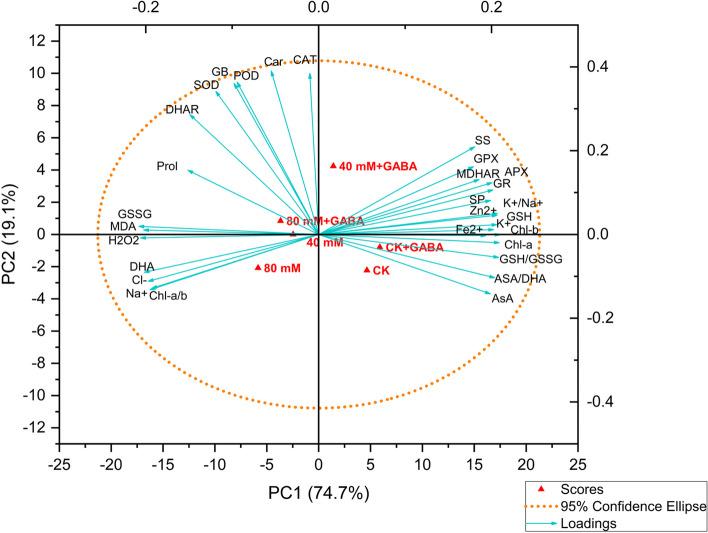
This study investigated the effects of exogenous GABA (2 mM) on plant biomass and the physiological mechanism through which soybean plants are affected by saline stress conditions (0, 40, and 80 mM of NaCl and NaSO at a 1:1 molar ratio). We noticed that increased salinity stress negatively impacted the growth and metabolism of soybean seedlings, compared to control. The root-stem-leaf biomass (27- and 33%, 20- and 58%, and 25- and 59% under 40- and 80 mM stress, respectively]) and the concentration of chlorophyll a and chlorophyll b significantly decreased. Moreover, the carotenoid content increased significantly (by 35%) following treatment with 40 mM stress. The results exhibited significant increase in the concentration of hydrogen peroxide (HO), malondialdehyde (MDA), dehydroascorbic acid (DHA) oxidized glutathione (GSSG), Na, and Cl under 40- and 80 mM stress levels, respectively. However, the concentration of mineral nutrients, soluble proteins, and soluble sugars reduced significantly under both salinity stress levels. In contrast, the proline and glycine betaine concentrations increased compared with those in the control group. Moreover, the enzymatic activities of ascorbate peroxidase, monodehydroascorbate reductase, glutathione reductase, and glutathione peroxidase decreased significantly, while those of superoxide dismutase, catalase, peroxidase, and dehydroascorbate reductase increased following saline stress, indicating the overall sensitivity of the ascorbate-glutathione cycle (AsA-GSH). However, exogenous GABA decreased Na, Cl, HO, and MDA concentration but enhanced photosynthetic pigments, mineral nutrients (K, K/Na ratio, Zn, Fe, Mg, and Ca); osmolytes (proline, glycine betaine, soluble sugar, and soluble protein); enzymatic antioxidant activities; and AsA-GSH pools, thus reducing salinity-associated stress damage and resulting in improved growth and biomass. The positive impact of exogenously applied GABA on soybean plants could be attributed to its ability to improve their physiological stress response mechanisms and reduce harmful substances.
CONCLUSION
Applying GABA to soybean plants could be an effective strategy for mitigating salinity stress. In the future, molecular studies may contribute to a better understanding of the mechanisms by which GABA regulates salt tolerance in soybeans.
背景
在植物中,GABA 在调节盐胁迫耐受性方面起着关键作用。然而,外源γ-氨基丁酸(GABA)对盐胁迫条件下大豆幼苗的响应尚未完全阐明。
结果
本研究通过外源 GABA(2 mM)对植物生物量的影响以及盐胁迫条件下(0、40 和 80 mM NaCl 和 NaSO,摩尔比为 1:1)影响大豆植株的生理机制进行了研究。我们注意到,与对照相比,盐胁迫会对大豆幼苗的生长和新陈代谢产生负面影响。根-茎-叶生物量(分别在 40-和 80 mM 胁迫下减少 27%-和 33%、20%-和 58%、25%-和 59%)和叶绿素 a 和叶绿素 b 的浓度显著降低。此外,类胡萝卜素含量在 40 mM 胁迫下显著增加(增加 35%)。结果表明,在 40-和 80 mM 胁迫水平下,过氧化氢(HO)、丙二醛(MDA)、脱氢抗坏血酸(DHA)氧化型谷胱甘肽(GSSG)、Na 和 Cl 的浓度显著增加,而在两种盐胁迫水平下,矿质养分、可溶性蛋白质和可溶性糖的浓度均显著降低。相反,脯氨酸和甘氨酸甜菜碱的浓度与对照组相比有所增加。此外,盐胁迫后,抗坏血酸过氧化物酶、单脱氢抗坏血酸还原酶、谷胱甘肽还原酶和谷胱甘肽过氧化物酶的酶活性显著降低,而过氧化物酶、过氧化氢酶、过氧化物酶和脱氢抗坏血酸还原酶的酶活性增加,表明抗坏血酸-谷胱甘肽循环(AsA-GSH)的整体敏感性。然而,外源 GABA 降低了 Na、Cl、HO 和 MDA 的浓度,但提高了光合色素、矿质养分(K、K/Na 比、Zn、Fe、Mg 和 Ca);渗透调节剂(脯氨酸、甘氨酸甜菜碱、可溶性糖和可溶性蛋白);酶抗氧化活性;以及 AsA-GSH 池,从而减轻了与盐相关的应激损伤,促进了生长和生物量的提高。外源 GABA 对大豆植株的积极影响可能归因于其改善植物生理应激反应机制和减少有害物质的能力。
结论
将 GABA 应用于大豆植株可能是缓解盐胁迫的有效策略。未来的分子研究可能有助于更好地理解 GABA 调节大豆耐盐性的机制。
 Zotero 插件