
外源腐胺通过调节叶绿素代谢和提高抗氧化防御效率提高番茄幼苗的耐热性。
Exogenous Putrescine Increases Heat Tolerance in Tomato Seedlings by Regulating Chlorophyll Metabolism and Enhancing Antioxidant Defense Efficiency.
作者信息
Jahan Mohammad Shah, Hasan Md Mahadi, Alotaibi Fahad S, Alabdallah Nadiyah M, Alharbi Basmah M, Ramadan Khaled M A, Bendary Eslam S A, Alshehri Dikhnah, Jabborova Dilfuza, Al-Balawi Doha A, Dessoky Eldessoky S, Ibrahim Mohamed F M, Guo Shirong
机构信息
College of Horticulture, Nanjing Agricultural University, Nanjing 210095, China.
Department of Horticulture, Faculty of Agriculture, Sher-e-Bangla Agricultural University, Dhaka 1207, Bangladesh.
出版信息
Plants (Basel). 2022 Apr 11;11(8):1038. doi: 10.3390/plants11081038.
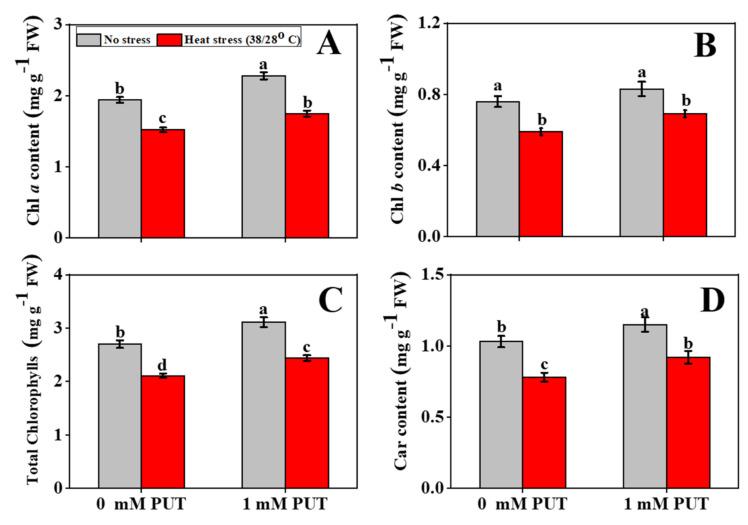
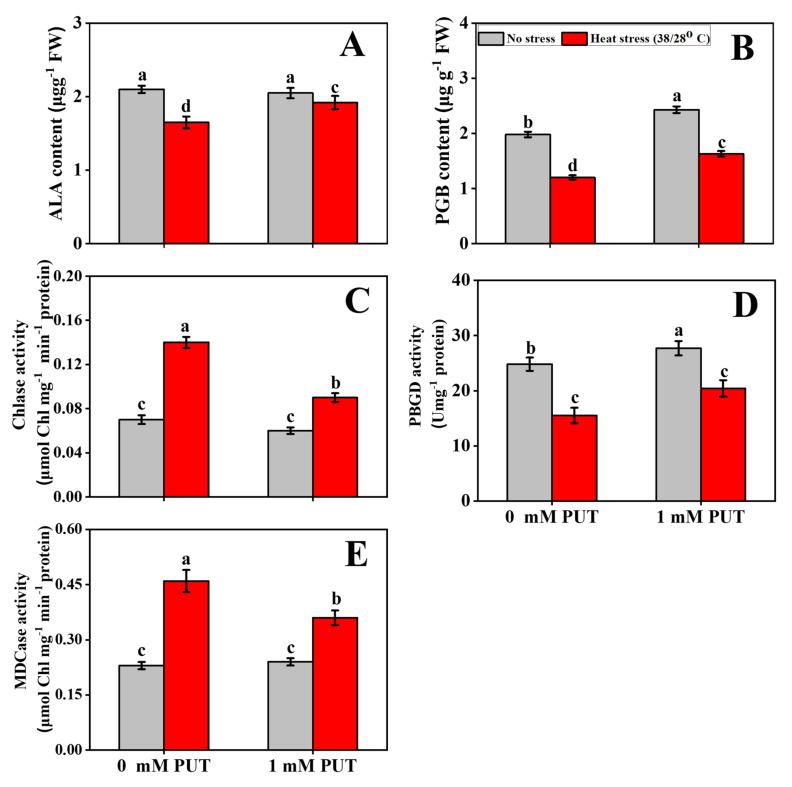
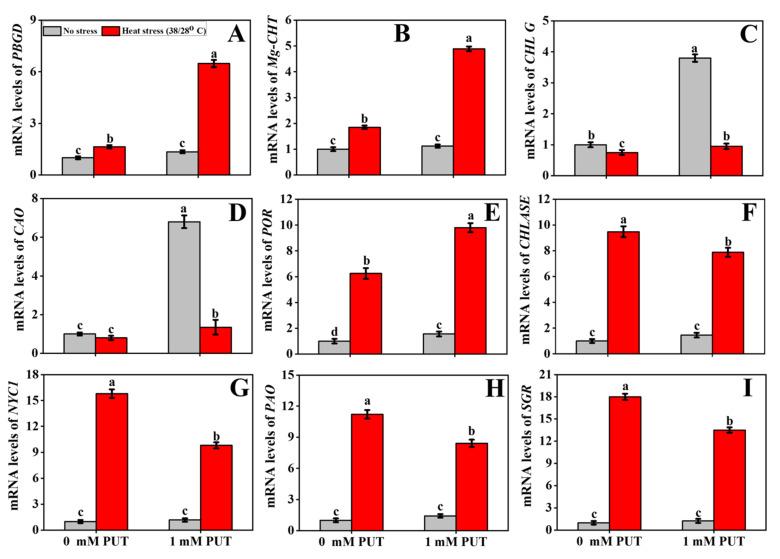
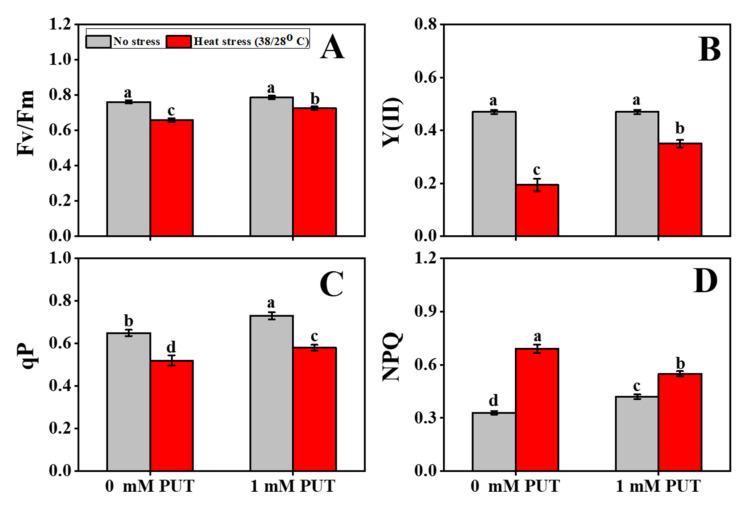
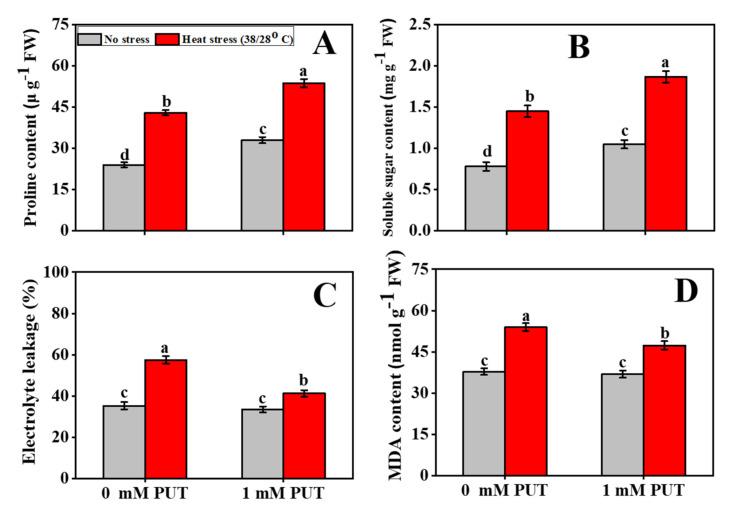
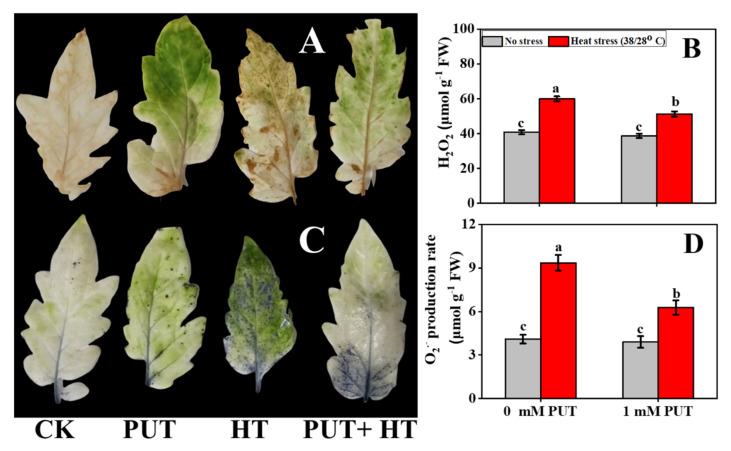
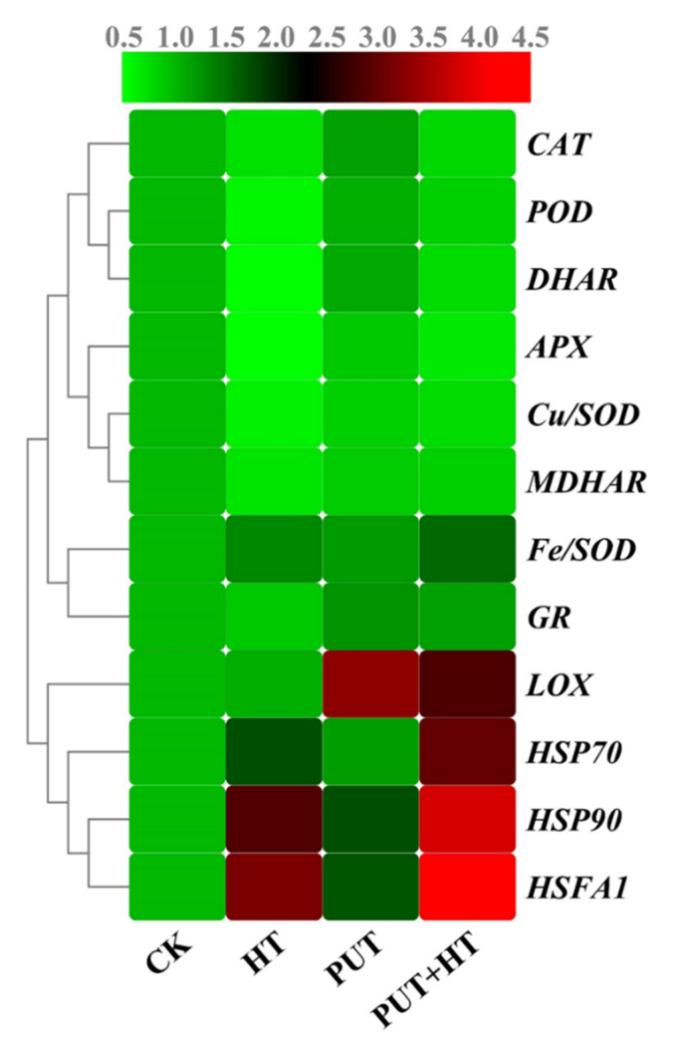
Crops around the world are facing a diversity of environmental problems, of which high temperatures are proving to be the most serious threat to crops. Polyamine putrescine (Put) acts as a master growth regulator that contributes to optimal plant growth and development and increased stress tolerance. Here, the current study aimed to elucidate how Put functions in regulating chlorophyll (Chl) metabolism, oxidative stress, and antioxidant defense, as well as to characterize the expression of genes related to heat stress in tomato seedlings under such stress. The results revealed that Put treatment significantly attenuates heat-induced damage by promoting biomass production, increasing photosynthetic efficiency, and inhibiting excessive production of oxidative stress markers. Heat stress markedly decreased the Chl content in the tomato leaf and accelerated the leaf yellowing process. However, Put-treated tomato seedlings showed a higher Chl content, which could be associated with the functions of Put in elevating PBGD activity (Chl biosynthesis enzyme) and suppressing the activity of the Chl catabolic enzyme (Chlase and MDCase). Under high-temperature stress, the expression levels of the gene encoding factors involved in Chl biosynthesis and Chl catabolism were significantly down- and upregulated, respectively, and this trend was reversed in Put-treated heat-stressed seedlings. In addition, exogenous application of Put boosted the activity of antioxidant enzymes, along with the levels of expression of their encoding genes, only in plants that were heat stressed. Furthermore, the expression levels of heat-shock-related genes (, and ) were elevated in Put-treated, high-temperature-stressed tomato seedlings. Taken together, our results indicate that Put treatment significantly increases the heat tolerance of tomato seedlings, by elevating Chl concentrations and suppressing Chl catabolic enzyme activity, modulating endogenous free PA content, increasing antioxidant defense efficiency, and upregulating the expression of heat-shock-related genes.
世界各地的农作物正面临着各种各样的环境问题,其中高温被证明是对农作物最严重的威胁。多胺腐胺(Put)作为一种主要的生长调节因子,有助于植物的最佳生长发育并提高胁迫耐受性。在此,本研究旨在阐明Put在调节叶绿素(Chl)代谢、氧化应激和抗氧化防御中的作用,以及表征在这种胁迫下番茄幼苗中与热胁迫相关基因的表达。结果表明,Put处理通过促进生物量生产、提高光合效率和抑制氧化应激标志物的过量产生,显著减轻了热诱导的损伤。热胁迫显著降低了番茄叶片中的Chl含量,并加速了叶片黄化过程。然而,经Put处理的番茄幼苗显示出较高的Chl含量,这可能与Put提高PBGD活性(Chl生物合成酶)和抑制Chl分解代谢酶(Chlase和MDCase)活性的功能有关。在高温胁迫下,参与Chl生物合成和Chl分解代谢的基因编码因子的表达水平分别显著下调和上调,而在经Put处理的热胁迫幼苗中这种趋势则相反。此外,仅在热胁迫的植物中,外源施用Put提高了抗氧化酶的活性及其编码基因的表达水平。此外,在经Put处理的高温胁迫番茄幼苗中,热休克相关基因(……和……)的表达水平升高。综上所述,我们的结果表明,Put处理通过提高Chl浓度和抑制Chl分解代谢酶活性、调节内源性游离PA含量、提高抗氧化防御效率以及上调热休克相关基因的表达,显著提高了番茄幼苗的耐热性。



 Zotero 插件