
解锁荨麻(Urtica dioica L.)的药理潜力:对其多方面生物活性的深入研究。
Unlocking the pharmacological potential of Brennnesselwurzel (Urtica dioica L.): an in-depth study on multifaceted biological activities.
作者信息
Elkelish Amr, Abu-Elsaoud Abdelghafar M, Alqahtani Alaa M, El-Nablaway Mohammad, Al Harthi Norah, Al Harthi Najwa, Lakoh Sulaiman, Saied Essa M, Labib Mai
机构信息
Biology Department, College of Science, Imam Mohammad Ibn Saud Islamic University (IMSIU), P.O. Box 1690950, 11623, Riyadh, Saudi Arabia.
Department of Pharmaceutical Sciences, Faculty of Pharmacy, Umm Al-Qura University, 21955, Makkah, Saudi Arabia.
出版信息
BMC Complement Med Ther. 2024 Dec 18;24(1):413. doi: 10.1186/s12906-024-04709-6.
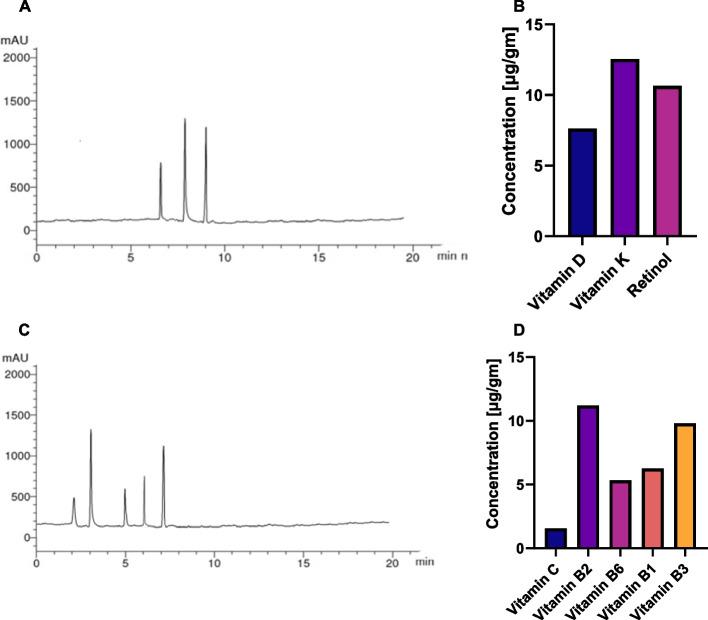
Brennnesselwurzel (Urtica dioica L.) is recognized for its diverse pharmacological properties. With a range of chemical constituents, such as vitamins, minerals, phenolic compounds, fibers, and amino acids, Brennnesselwurzel (BWE) has a long history of traditional medicinal use in Europe and Asia. The correlation between a plant's metabolite composition and its activity can vary depending on considerations such as geographic location, environmental conditions, and genetic variations. In the present study, we explore the phytochemical profile and biological activity of the 70% acetone extract of the BWE plant. The chemical profile of the BWE extract was explored using several techniques, including amino acid analyzer, HPLC, GC-MS, and other colorimetric analysis. The antioxidant activity of the BWE extract was assessed by evaluating the total antioxidant, free radical scavenging activity (DPPH, ABTS, HO), and metal chelating scavenging activity (FRAP, CUPRAC, metal chelating). Furthermore, we assessed the antimicrobial and antiproliferation activities of the BWE extract against 29 microbial strains and 15 cell lines, respectively. Our phytochemical analyzes revealed that the BWE extract has a unique profile of metabolites including amino acids, flavonoids, phenolics, volatile oils, lipids, and vitamins. The BWE extract showed a total antioxidant capacity of 30.94 ± 1.58 mg GAE/g, together with potential free radical scavenging activity towards ABTS (IC = 153.51 ± 3.97 µg/ml), DPPH (IC = 195.75 ± 5.91 µg/ml), and HO (IC = 230.67 ± 5.98 µg/ml). Although the BWE extract showed no significant antifungal activity, our findings revealed that the BWE extract possesses substantial antibacterial activity against Staphylococcus epidermidi, Streptococcus mutants, Enterococcus faecalis, Micrococcus sp., Klebsiella pneumonia and Porphyromonas gingivalis. Furthermore, the BWE extract demonstrated potential antiproliferative activity toward a panel of cancer cell lines with a high selectivity index. Among the cells examined, the BWE extract exhibited significant cytotoxic activity toward HCT-116, A-549, MDA-MB-231 cells with IC of 15.11, 15.32, 15.79 µg/mL, respectively, while it possessed no significant cytotoxic activity towards WI-38 cells (IC 119.62 µg/mL). Taken together, our findings reveal that BWE extract possesses a wide spectrum of biological activities, including antioxidant, antibacterial, and antitumor activities, and could be considered for further research to explore its potential as a natural plant-based supplement for human diseases.
荨麻(Urtica dioica L.)因其多样的药理特性而闻名。荨麻含有一系列化学成分,如维生素、矿物质、酚类化合物、纤维和氨基酸,在欧洲和亚洲有着悠久的传统药用历史。植物代谢物组成与其活性之间的相关性可能因地理位置、环境条件和基因变异等因素而有所不同。在本研究中,我们探究了荨麻植物70%丙酮提取物的植物化学特征和生物活性。使用多种技术对荨麻提取物的化学特征进行了探究,包括氨基酸分析仪、高效液相色谱法(HPLC)、气相色谱 - 质谱联用仪(GC - MS)以及其他比色分析。通过评估总抗氧化能力、自由基清除活性(DPPH、ABTS、HO)和金属螯合清除活性(FRAP、CUPRAC、金属螯合)来测定荨麻提取物的抗氧化活性。此外,我们分别评估了荨麻提取物对29种微生物菌株和15种细胞系的抗菌和抗增殖活性。我们的植物化学分析表明,荨麻提取物具有独特的代谢物谱,包括氨基酸、黄酮类化合物、酚类、挥发油、脂质和维生素。荨麻提取物的总抗氧化能力为30.94±1.58 mg GAE/g,对ABTS(IC = 153.51±3.97 μg/ml)、DPPH(IC = 195.75±5.91 μg/ml)和HO(IC = 230.67±5.98 μg/ml)具有潜在的自由基清除活性。尽管荨麻提取物未显示出显著的抗真菌活性,但我们的研究结果表明,荨麻提取物对表皮葡萄球菌、变形链球菌、粪肠球菌、微球菌属、肺炎克雷伯菌和牙龈卟啉单胞菌具有显著的抗菌活性。此外,荨麻提取物对一组癌细胞系表现出潜在的抗增殖活性,且具有较高的选择性指数。在所检测的细胞中,荨麻提取物对HCT - 116、A - 549、MDA - MB - 231细胞具有显著的细胞毒性活性,IC分别为15.11、15.32、15.79 μg/mL,而对WI - 38细胞则无显著细胞毒性活性(IC为119.62 μg/mL)。综上所述,我们的研究结果表明,荨麻提取物具有广泛的生物活性,包括抗氧化、抗菌和抗肿瘤活性,可考虑进一步研究以探索其作为治疗人类疾病的天然植物性补充剂的潜力。




 Zotero 插件