
再交配和剩余繁殖力对不育昆虫技术效果的影响:以地中海实蝇为例。
On the impact of re-mating and residual fertility on the Sterile Insect Technique efficacy: Case study with the medfly, Ceratitis capitata.
机构信息
UMR AMAP, CIRAD, Saint-Pierre, Réunion island, France.
UMR AMAP, Univ Montpellier, CIRAD, CNRS, INRAE, IRD, Montpellier, France.
出版信息
PLoS Comput Biol. 2024 May 6;20(5):e1012052. doi: 10.1371/journal.pcbi.1012052. eCollection 2024 May.
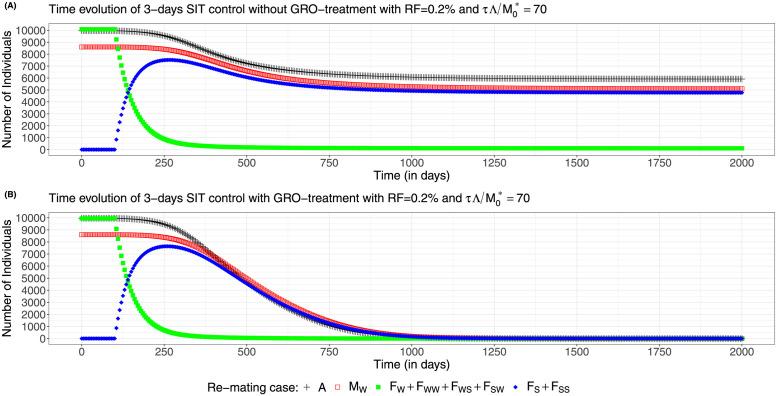
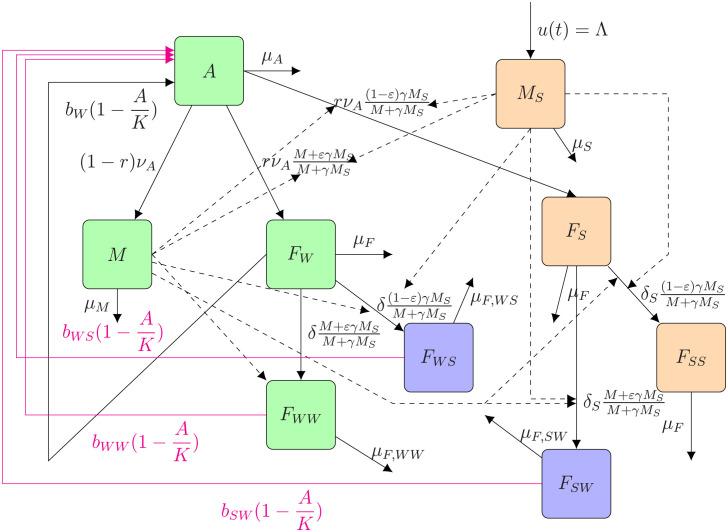
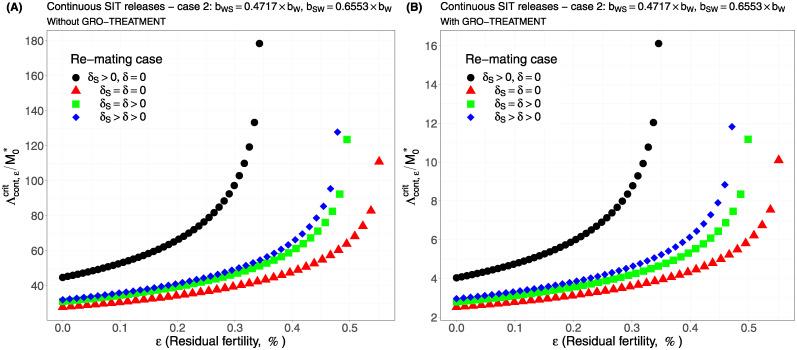
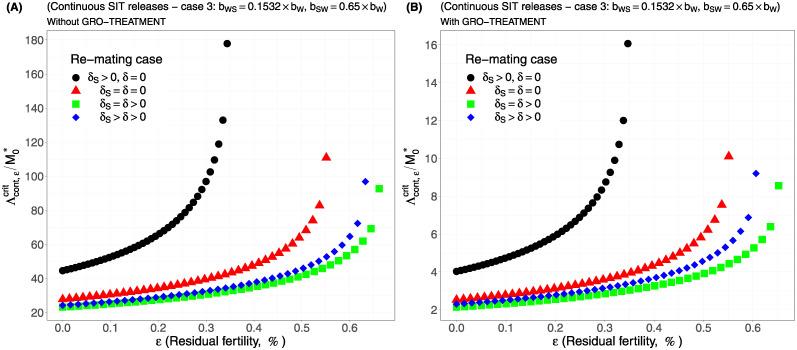
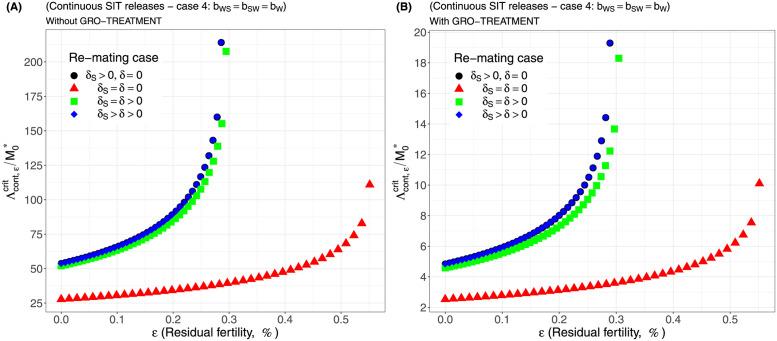
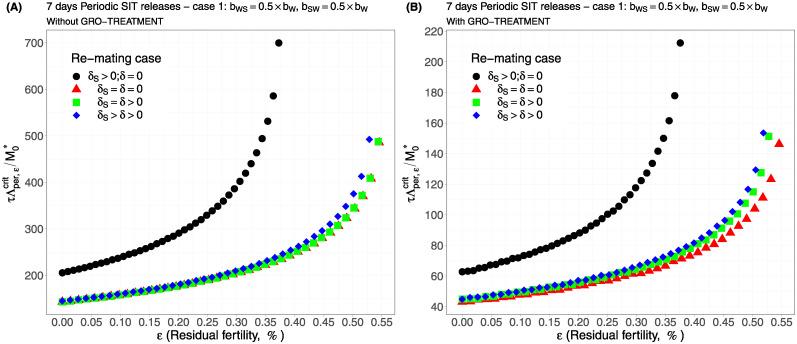
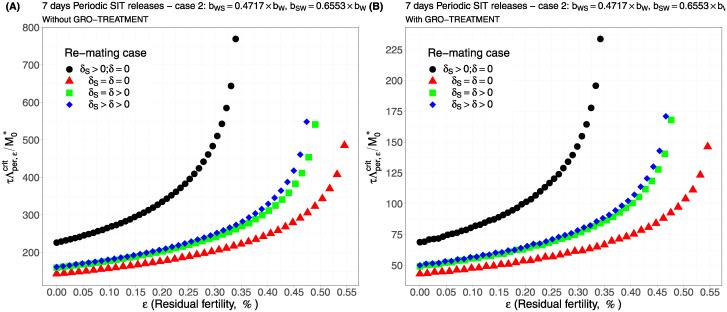
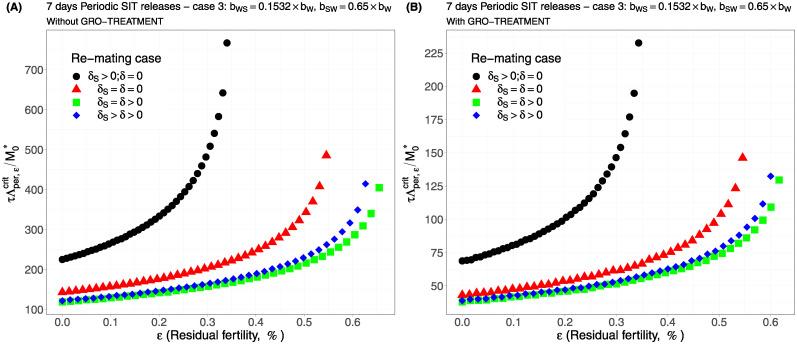
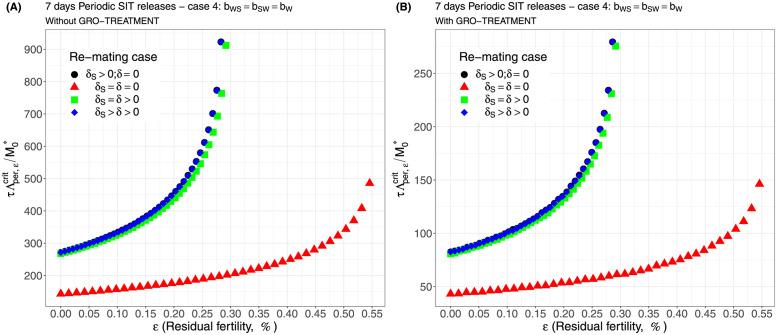
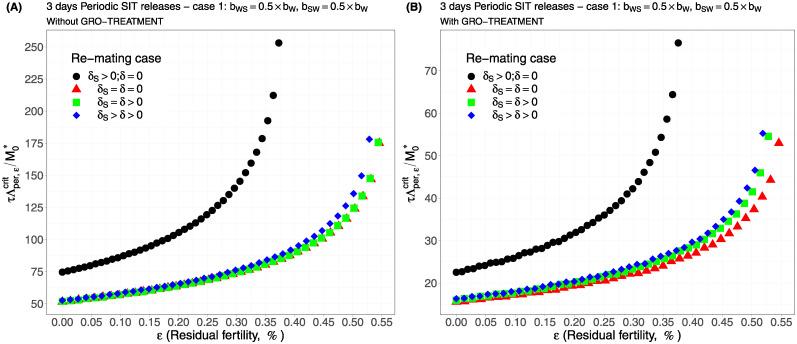
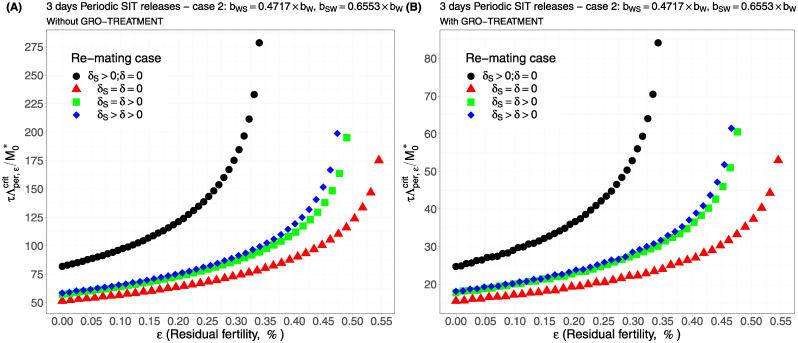
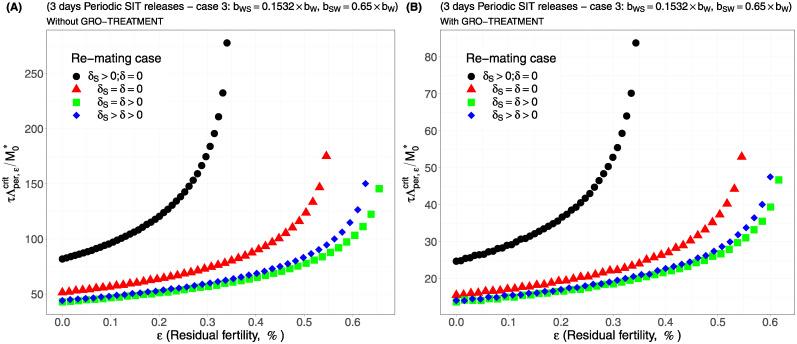
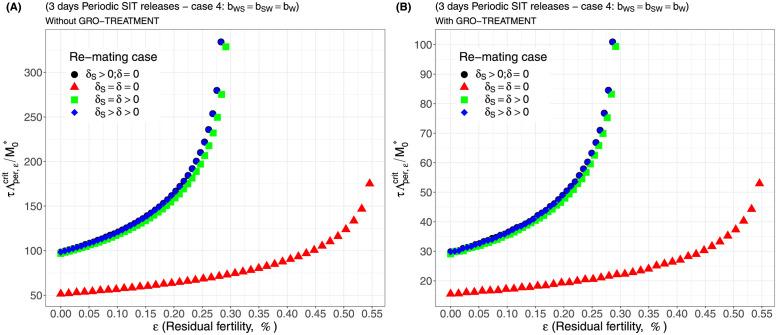
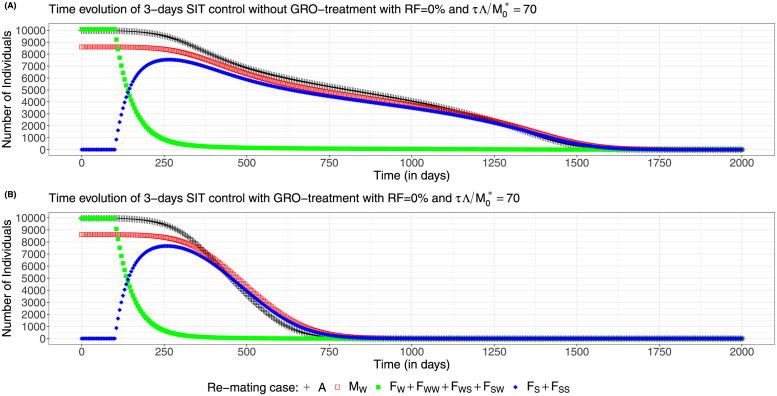
The sterile insect technique (SIT) can be an efficient solution for reducing or eliminating certain insect pest populations. It is widely used in agriculture against fruit flies, including the Mediterranean fruit fly (medfly), Ceratitis capitata. The re-mating tendency of medfly females and the fact that the released sterile males may have some residual fertility could be a challenge for the successful implementation of the SIT. Obtaining the right balance between sterility level and sterile male quality (competitiveness, longevity, etc) is the key to a cost-efficient program. Since field experimental approaches can be impacted by many environmental variables, it is difficult to get a clear understanding on how specific parameters, alone or in combination, may affect the SIT efficiency. The use of models not only helps to gather knowledge, but it allows the simulation of a wide range of scenarios and can be easily adapted to local populations and sterile male production. In this study, we consider single- and double-mated females. We first show that SIT can be successful only if the residual fertility is less than a threshold value that depends on the basic offspring number of the targeted pest population, the re-mating rates, and the parameters of double-mated females. Then, we show how the sterile male release rate is affected by the parameters of double-mated females and the male residual fertility. Different scenarios are explored with continuous and periodic sterile male releases, with and without ginger aromatherapy, which is known to enhance sterile male competitiveness, and also taking into account some biological parameters related to females that have been mated twice, either first by a wild (sterile) male and then a sterile (wild) male, or by two wild males only. Parameter values were chosen for peach as host fruit to reflect what could be expected in the Corsican context, where SIT against the medfly is under consideration. Our results suggest that ginger aromatherapy can be a decisive factor determining the success of SIT against medfly. We also emphasize the importance of estimating the duration of the refractory period between matings depending on whether a wild female has mated with a wild or sterile male. Further, we show the importance of parameters, like the (hatched) eggs deposit rate and the death-rate related to all fertile double-mated females. In general, re-mating is considered to be detrimental to SIT programs. However, our results show that, depending on the parameter values of double-mated females, re-mating may also be beneficial for SIT. Our model can be easily adapted to different contexts and species, for a broader understanding of release strategies and management options.
昆虫不育技术(SIT)可以有效降低或消除某些害虫种群。它在农业中被广泛用于防治果蝇,包括地中海实蝇(medfly)、地中海实蝇。雌果蝇的再交配倾向和释放的不育雄蝇可能具有一定残余生育能力,这可能是成功实施 SIT 的一个挑战。在不育水平和不育雄蝇质量(竞争力、寿命等)之间取得正确的平衡是成本效益计划的关键。由于田间实验方法可能受到许多环境变量的影响,因此很难清楚地了解特定参数单独或组合时如何影响 SIT 效率。模型的使用不仅有助于收集知识,还可以模拟广泛的场景,并可以轻松适应当地种群和不育雄蝇的生产。在这项研究中,我们考虑了单交配和双交配的雌蝇。我们首先表明,只有当残余生育能力低于取决于目标害虫种群基本后代数量、再交配率以及双交配雌蝇参数的阈值时,SIT 才能成功。然后,我们展示了不育雄蝇释放率如何受到双交配雌蝇和雄蝇残余生育能力的参数影响。我们探讨了不同的情景,包括连续和周期性释放不育雄蝇,以及是否使用姜精油,姜精油已知可以提高不育雄蝇的竞争力,同时还考虑了与已交配两次的雌蝇相关的一些生物学参数,这些雌蝇要么先与野生(不育)雄蝇交配,然后再与不育(野生)雄蝇交配,要么仅与两个野生雄蝇交配。选择桃作为宿主水果的参数值是为了反映在科西嘉岛考虑地中海实蝇 SIT 的情况下可能出现的情况。我们的结果表明,姜精油可能是决定地中海实蝇 SIT 成功的决定性因素。我们还强调了根据野生雌蝇与野生或不育雄蝇交配,估计交配之间的不应期持续时间的重要性。此外,我们还展示了与所有可育双交配雌蝇相关的(孵化)卵沉积率和死亡率等参数的重要性。一般来说,再交配被认为对 SIT 计划不利。然而,我们的结果表明,根据双交配雌蝇的参数值,再交配也可能对 SIT 有益。我们的模型可以轻松适应不同的背景和物种,以更广泛地了解释放策略和管理选项。

 Zotero 插件