
不同酿酒酵母菌株对琥珀酸的响应机制。
Response mechanisms of different Saccharomyces cerevisiae strains to succinic acid.
机构信息
College of Architecture and Environment, Sichuan University, No. 24 South Section 1 First Ring Road, Chengdu, 610065, Sichuan, China.
Sichuan Environmental Protection Key Laboratory of Organic Wastes Valorization, No. 24 South Section 1 First Ring Road, Chengdu, 610065, Sichuan, China.
出版信息
BMC Microbiol. 2024 May 8;24(1):158. doi: 10.1186/s12866-024-03314-4.
BACKGROUND
The production of succinic acid (SA) from biomass has attracted worldwide interest. Saccharomyces cerevisiae is preferred for SA production due to its strong tolerance to low pH conditions, ease of genetic manipulation, and extensive application in industrial processes. However, when compared with bacterial producers, the SA titers and productivities achieved by engineered S. cerevisiae strains were relatively low. To develop efficient SA-producing strains, it's necessary to clearly understand how S. cerevisiae cells respond to SA.
RESULTS
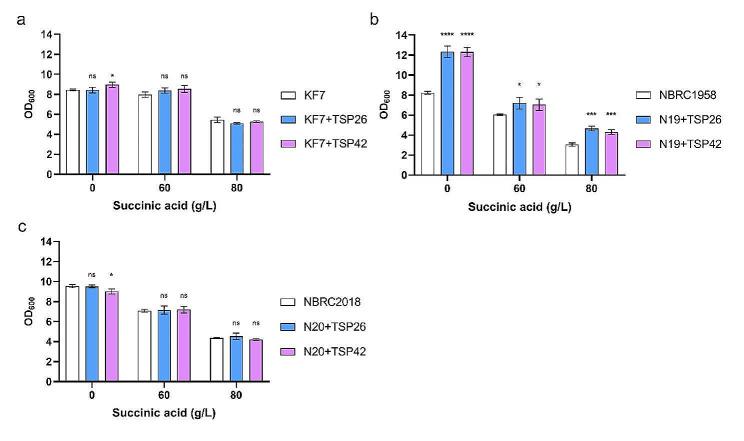
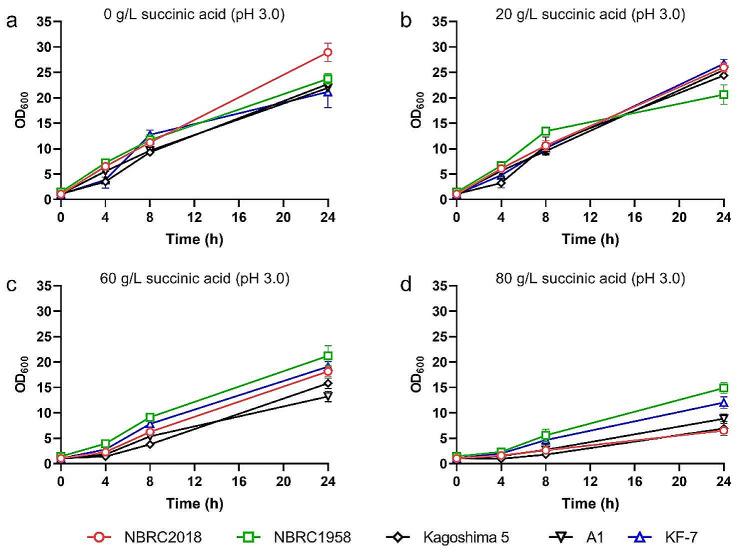
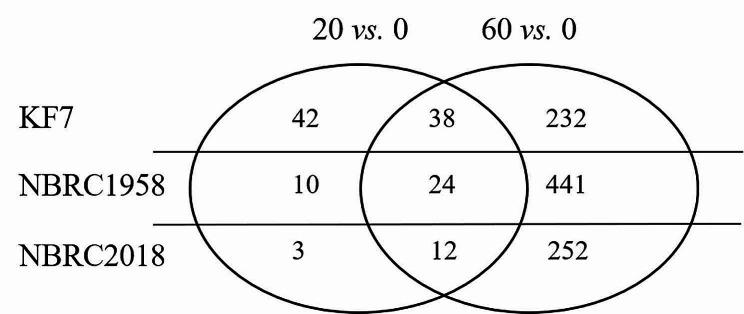
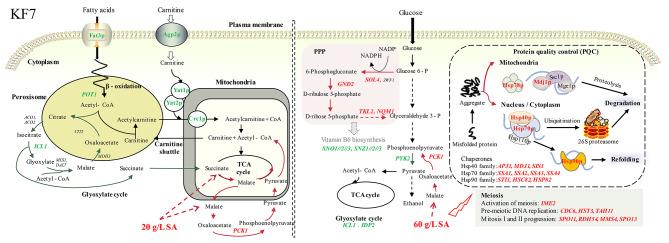
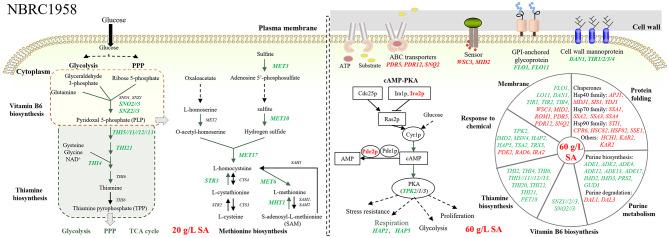
In this study, we cultivated five S. cerevisiae strains with different genetic backgrounds under different concentrations of SA. Among them, KF7 and NBRC1958 demonstrated high tolerance to SA, whereas NBRC2018 displayed the least tolerance. Therefore, these three strains were chosen to study how S. cerevisiae responds to SA. Under a concentration of 20 g/L SA, only a few differentially expressed genes were observed in three strains. At the higher concentration of 60 g/L SA, the response mechanisms of the three strains diverged notably. For KF7, genes involved in the glyoxylate cycle were significantly downregulated, whereas genes involved in gluconeogenesis, the pentose phosphate pathway, protein folding, and meiosis were significantly upregulated. For NBRC1958, genes related to the biosynthesis of vitamin B6, thiamin, and purine were significantly downregulated, whereas genes related to protein folding, toxin efflux, and cell wall remodeling were significantly upregulated. For NBRC2018, there was a significant upregulation of genes connected to the pentose phosphate pathway, gluconeogenesis, fatty acid utilization, and protein folding, except for the small heat shock protein gene HSP26. Overexpression of HSP26 and HSP42 notably enhanced the cell growth of NBRC1958 both in the presence and absence of SA.
CONCLUSIONS
The inherent activities of small heat shock proteins, the levels of acetyl-CoA and the strains' potential capacity to consume SA all seem to affect the responses and tolerances of S. cerevisiae strains to SA. These factors should be taken into consideration when choosing host strains for SA production. This study provides a theoretical basis and identifies potential host strains for the development of robust and efficient SA-producing strains.
背景
从生物质生产琥珀酸(SA)引起了全世界的关注。由于酵母具有较强的耐酸能力、易于遗传操作以及在工业过程中有广泛的应用,因此它是生产 SA 的首选。然而,与细菌生产者相比,经过工程改造的酿酒酵母菌株的 SA 产量和生产率相对较低。为了开发高效的 SA 生产菌株,有必要清楚地了解酵母细胞如何对 SA 作出响应。
结果
在这项研究中,我们在不同浓度的 SA 下培养了具有不同遗传背景的五个酿酒酵母菌株。其中,KF7 和 NBRC1958 对 SA 表现出较高的耐受性,而 NBRC2018 则表现出最低的耐受性。因此,选择这三个菌株来研究酵母细胞如何对 SA 作出响应。在 20 g/L SA 的浓度下,三个菌株中只有少数差异表达基因。在更高浓度的 60 g/L SA 下,三个菌株的响应机制明显不同。对于 KF7,糖异生、戊糖磷酸途径、蛋白质折叠和减数分裂相关基因显著上调,而乙醛酸循环相关基因显著下调。对于 NBRC1958,与维生素 B6、硫胺素和嘌呤生物合成相关的基因显著下调,而与蛋白质折叠、毒素外排和细胞壁重塑相关的基因显著上调。对于 NBRC2018,戊糖磷酸途径、糖异生、脂肪酸利用和蛋白质折叠相关基因显著上调,除小热休克蛋白基因 HSP26 外。HSP26 和 HSP42 的过表达显著增强了 NBRC1958 在有或没有 SA 的情况下的细胞生长。
结论
小热休克蛋白的固有活性、乙酰辅酶 A 的水平以及菌株消耗 SA 的潜力似乎都影响了酵母菌株对 SA 的响应和耐受性。在选择用于 SA 生产的宿主菌株时,应考虑这些因素。本研究为开发稳健高效的 SA 生产菌株提供了理论基础和潜在的宿主菌株。

 Zotero 插件