
玫瑰果油固体脂质纳米粒的抗活性
Anti- activity of rose hip oil-solid lipid nanoparticles.
作者信息
Mohammad Rahimi Hanieh, Hesari Zahra, Mirsamadi Elnaz Sadat, Nemati Sara, Mirjalali Hamed
机构信息
Foodborne and Waterborne Diseases Research Center Research Institute for Gastroenterology and Liver Diseases, Shahid Beheshti University of Medical Sciences Tehran Iran.
Department of Pharmaceutics School of Pharmacy, Guilan University of Medical Sciences Rasht Iran.
出版信息
Food Sci Nutr. 2024 Feb 20;12(5):3725-3734. doi: 10.1002/fsn3.4043. eCollection 2024 May.
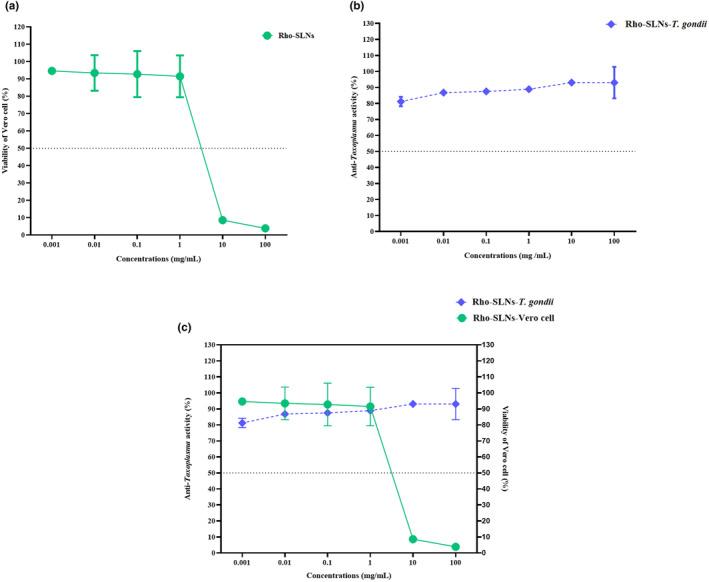
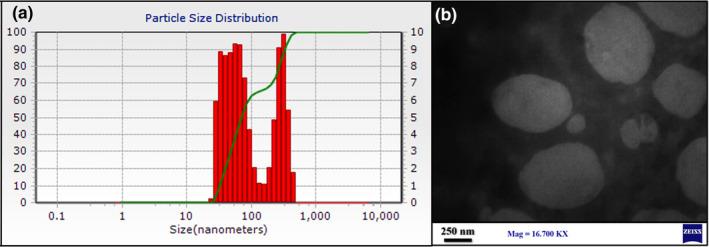
is a highly prevalent pathogen, reported from almost all geographical regions of the world. Current anti- drugs are not effective enough in immunocompromised patients, encephalitis, chorioretinitis, and congenital toxoplasmosis. Therefore, the prescription of these drugs has been limited. Rose hip oil (RhO) is a natural plant compound, which shows antibacterial, anticancer, and anti-inflammatory activities. In the current study, the anti- and cell toxicity effects of solid lipid nanoparticles (SLNs) loaded by RhO (RhO-SLNs) were evaluated. Emulsification sonicated-homogenization method was used to prepare SLNs. RhO-SLNs were characterized, and their anti- and cell toxicity effects were evaluated using in vitro analyses. The particle size and the zeta potential of the nanoparticles were 152.09 nm and -15.3 mV nm, respectively. The entrapment efficiency percentage was 79.1%. In the present study, the inhibitory concentration (IC) against was >1 μg/mL (-value <.0001). The cell toxicity assay showed cytotoxicity concentration (CC) >10 mg/mL (-value = .017). In addition, at least 75% of -infected Vero cells remained alive at concentrations >10 mg/mL. The concentration of 1 mg/mL showed highest anti- activity and lowest cell toxicity against the Vero cell. Our findings suggest that carrying natural plant compounds with SLNs could be considered an effective option for treatment strategies against infections.
是一种高度流行的病原体,几乎在世界所有地理区域都有报道。目前的抗药物在免疫功能低下的患者、脑炎、脉络膜视网膜炎和先天性弓形虫病中效果不够显著。因此,这些药物的处方受到限制。玫瑰果油(RhO)是一种天然植物化合物,具有抗菌、抗癌和抗炎活性。在本研究中,评估了负载RhO的固体脂质纳米粒(RhO-SLNs)的抗和细胞毒性作用。采用乳化超声均质法制备SLNs。对RhO-SLNs进行了表征,并通过体外分析评估了它们的抗和细胞毒性作用。纳米粒的粒径和zeta电位分别为152.09nm和-15.3mVnm。包封率为79.1%。在本研究中,对的抑制浓度(IC)>1μg/mL(-值<.0001)。细胞毒性试验显示细胞毒性浓度(CC)>10mg/mL(-值=.017)。此外,在浓度>10mg/mL时,至少75%的感染Vero细胞存活。1mg/mL的浓度对Vero细胞显示出最高的抗活性和最低的细胞毒性。我们的研究结果表明,用SLNs携带天然植物化合物可被认为是治疗感染的有效策略选择。
 Zotero 插件