
靶向 UCHL3 泛素水解酶的化学约束肽。
Targeting the UCHL3 ubiquitin hydrolase using chemically constrained peptides.
机构信息
Department of Pathology, University of Cambridge, Cambridge CB2 1QP, United Kingdom.
Department of Pharmacology, University of Cambridge, Cambridge CB2 1PD, United Kingdom.
出版信息
Proc Natl Acad Sci U S A. 2024 May 21;121(21):e2322923121. doi: 10.1073/pnas.2322923121. Epub 2024 May 13.
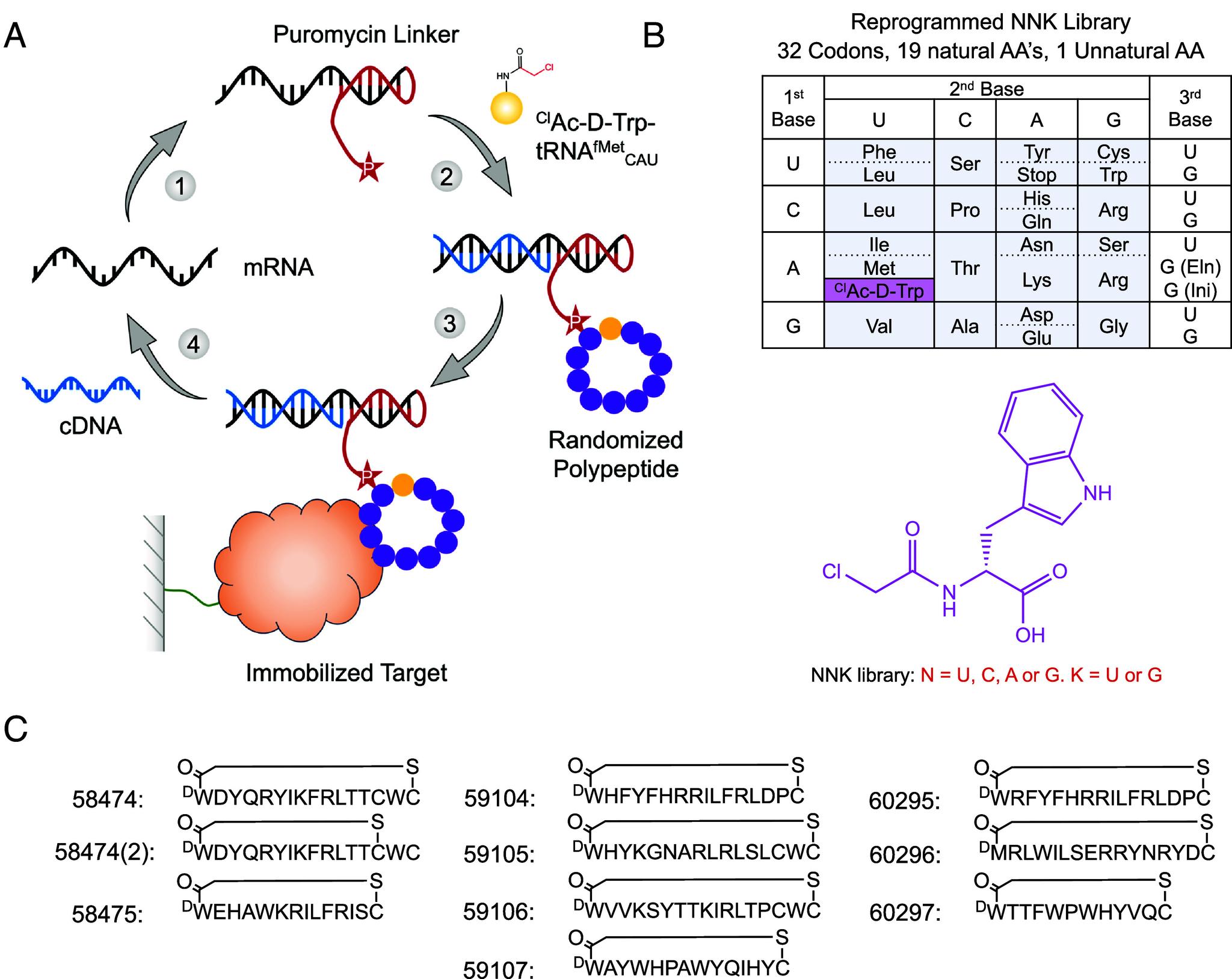
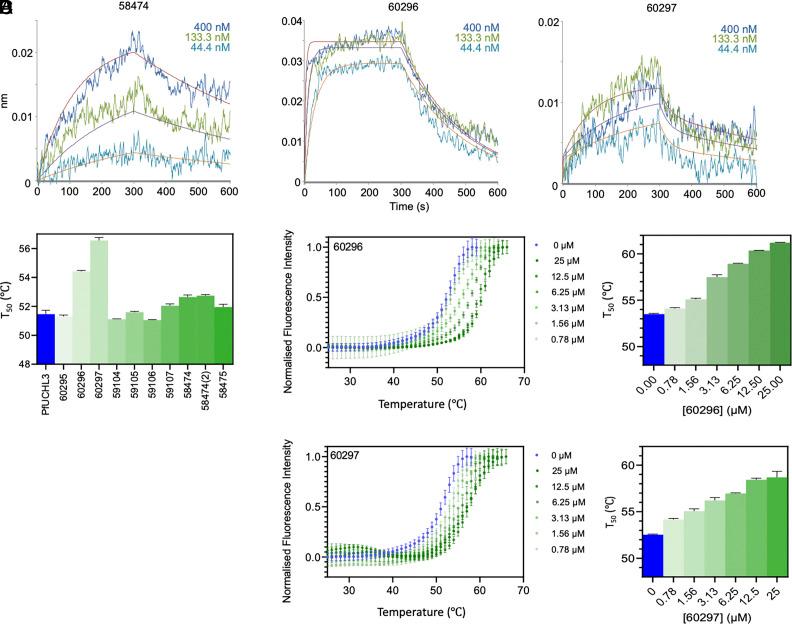
The ubiquitin-proteasome system is essential to all eukaryotes and has been shown to be critical to parasite survival as well, including , the causative agent of the deadliest form of malarial disease. Despite the central role of the ubiquitin-proteasome pathway to parasite viability across its entire life-cycle, specific inhibitors targeting the individual enzymes mediating ubiquitin attachment and removal do not currently exist. The ability to disrupt growth at multiple developmental stages is particularly attractive as this could potentially prevent both disease pathology, caused by asexually dividing parasites, as well as transmission which is mediated by sexually differentiated parasites. The deubiquitinating enzyme PfUCHL3 is an essential protein, transcribed across both human and mosquito developmental stages. PfUCHL3 is considered hard to drug by conventional methods given the high level of homology of its active site to human UCHL3 as well as to other UCH domain enzymes. Here, we apply the RaPID mRNA display technology and identify constrained peptides capable of binding to PfUCHL3 with nanomolar affinities. The two lead peptides were found to selectively inhibit the deubiquitinase activity of PfUCHL3 versus HsUCHL3. NMR spectroscopy revealed that the peptides do not act by binding to the active site but instead block binding of the ubiquitin substrate. We demonstrate that this approach can be used to target essential protein-protein interactions within the ubiquitin pathway, enabling the application of chemically constrained peptides as a novel class of antimalarial therapeutics.
泛素-蛋白酶体系统对所有真核生物都是必不可少的,并且已被证明对寄生虫的存活也至关重要,包括疟原虫,这是最致命形式的疟疾的病原体。尽管泛素-蛋白酶体途径在寄生虫的整个生命周期中对寄生虫的生存都起着核心作用,但目前还没有针对介导泛素附着和去除的单个酶的特异性抑制剂。能够在多个发育阶段破坏寄生虫的生长能力特别有吸引力,因为这可能防止由无性分裂寄生虫引起的疾病病理以及由有性分化寄生虫介导的传播。去泛素化酶 PfUCHL3 是一种必需蛋白,在人类和蚊子的发育阶段都有转录。鉴于其活性位点与人类 UCHL3 以及其他 UCH 结构域酶高度同源,PfUCHL3 被认为难以用传统方法进行药物治疗。在这里,我们应用 RaPID mRNA 显示技术,鉴定出能够与 PfUCHL3 以纳摩尔亲和力结合的约束肽。发现这两种先导肽能够选择性地抑制 PfUCHL3 对 HsUCHL3 的去泛素化酶活性。NMR 光谱学表明,这些肽不是通过结合活性位点起作用,而是阻止泛素底物的结合。我们证明,这种方法可用于靶向泛素途径中的必需蛋白-蛋白相互作用,使化学约束肽能够作为一类新型抗疟治疗药物。



 Zotero 插件