
UCH37 的蛋白酶体相关功能在疟原虫寄生虫中是进化保守的。
Proteasome associated function of UCH37 is evolutionarily conserved in Plasmodium parasites.
机构信息
Department of Pathology, University of Cambridge, Cambridge, UK.
出版信息
Sci Rep. 2024 Nov 27;14(1):29428. doi: 10.1038/s41598-024-80433-y.
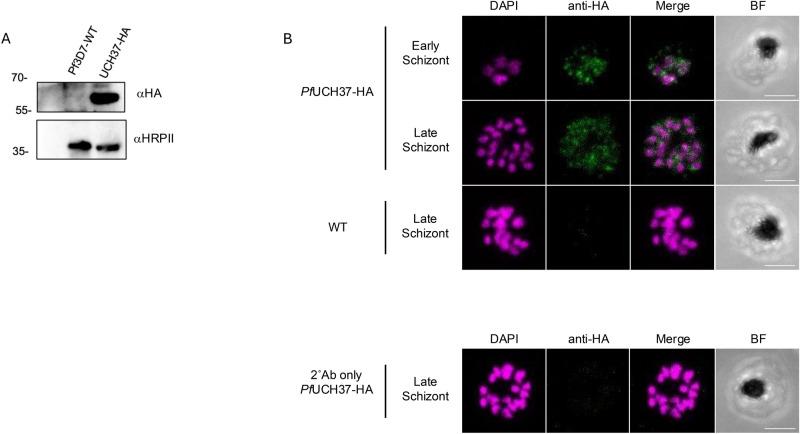
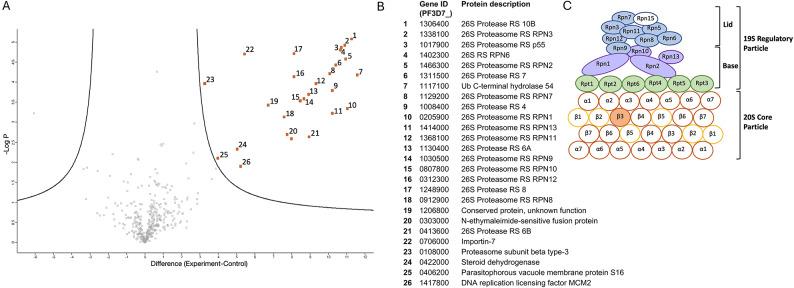
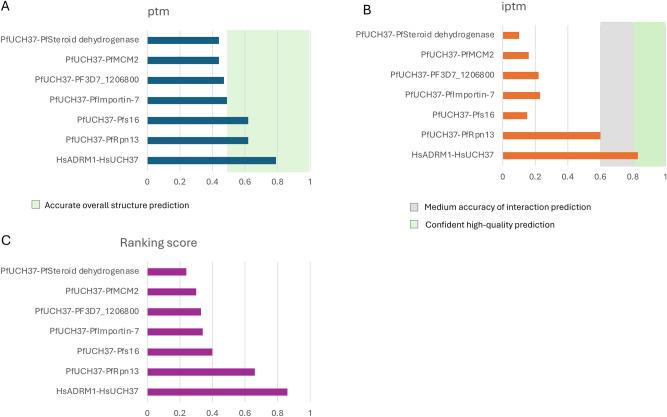
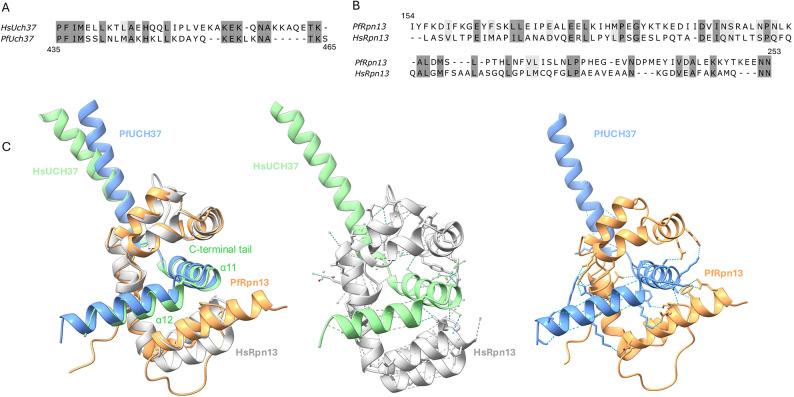
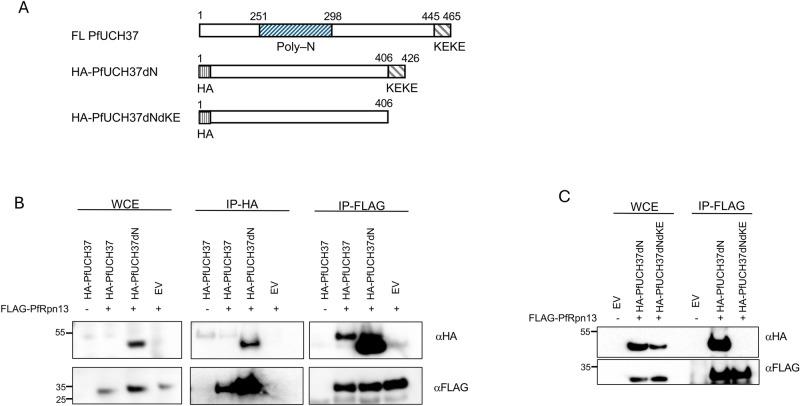
Ubiquitin C-terminal hydrolase 37 (UCH37 also known as UCHL5) is a conserved deubiquitinating enzyme (DUB) with dual roles in proteasomal degradation and chromatin remodeling in humans. Its Plasmodium falciparum ortholog, PfUCH37, is unusual in that it possesses both DUB and deneddylating activities. While PfUCH37 is enriched in proteasome preparations, its direct interaction and broader functions in Plasmodium remain unclear, particularly given the absence of the chromatin remodeling complex INO80 homologs. This study utilizes transgenic parasites and proteomics to identify PfUCH37-associating proteins. We confirm a direct interaction with the proteasome and demonstrate that the interaction mechanism is evolutionarily conserved. Notably, we discover a divergence in localization compared to the human enzyme and identify novel interacting partners, suggesting alternative functions for PfUCH37 in Plasmodium. These findings provide insights into the unique biology of this enzyme in malaria parasites, potentially opening avenues for targeted therapeutic interventions.
泛素 C-末端水解酶 37(UCH37 也称为 UCHL5)是一种保守的去泛素化酶(DUB),在人类中具有参与蛋白酶体降解和染色质重塑的双重作用。其疟原虫的同源物 PfUCH37 不同寻常的地方在于它同时具有 DUB 和去泛素化酶活性。虽然 PfUCH37 在蛋白酶体制剂中富集,但它在疟原虫中的直接相互作用和更广泛的功能仍不清楚,特别是由于缺乏 INO80 同源物的染色质重塑复合物。本研究利用转基因寄生虫和蛋白质组学来鉴定 PfUCH37 相关蛋白。我们证实了与蛋白酶体的直接相互作用,并证明了这种相互作用机制在进化上是保守的。值得注意的是,与人类酶相比,我们发现其定位存在差异,并鉴定出了新的相互作用伙伴,这表明 PfUCH37 在疟原虫中有替代功能。这些发现为理解这种酶在疟原虫中的独特生物学特性提供了线索,可能为靶向治疗干预开辟了途径。

 Zotero 插件