
MST-312对端粒酶的抑制作用使乳腺癌细胞对白花丹醌的抗癌特性敏感。
Telomerase Inhibition by MST-312 Sensitizes Breast Cancer Cells to the Anti-cancer Properties of Plumbagin.
作者信息
Sameni Safoura, Viswanathan Ramya, Ng Gavin Yong-Quan, Martinez-Lopez Wilner, Hande M Prakash
机构信息
Department of Physiology, Yong Loo Lin School of Medicine, National University of Singapore, Singapore.
Instituto de Investigaciones Biológicas Clemente Estable, Montevideo, Uruguay.
出版信息
Genome Integr. 2023 Sep 12;14:e20230002. doi: 10.14293/genint.14.1.003. eCollection 2023.
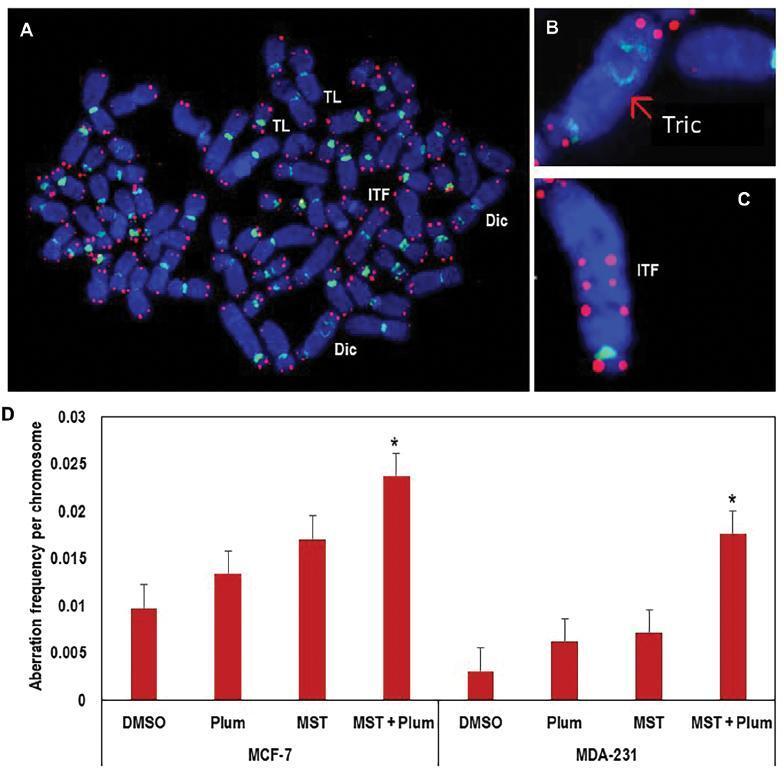
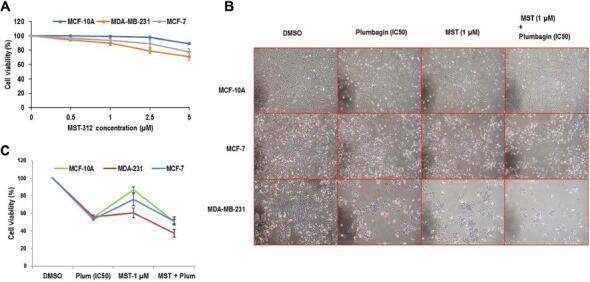
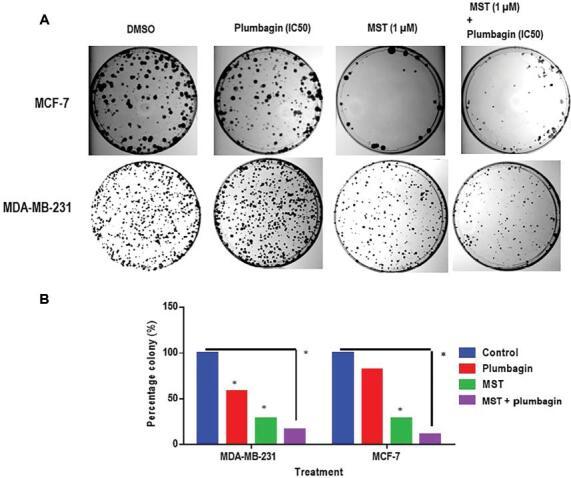
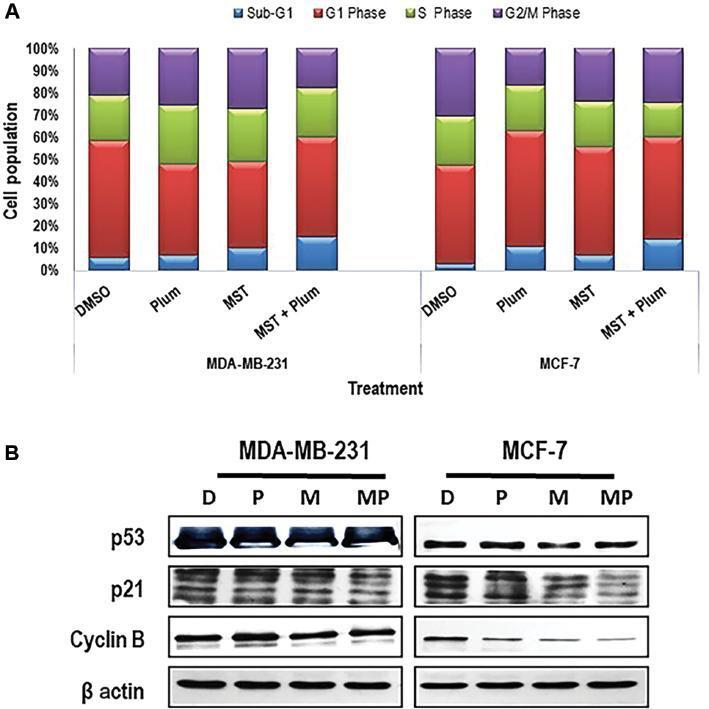
Breast cancer is the most common cause of malignancy and the second most common cause of death due to cancer in women. This heterogeneous disease is currently broadly classified as estrogen receptor (ER), progesterone receptor (PR) positive luminal tumors, human epidermal growth factor receptor 2 (HER2) amplified tumors and triple-negative breast cancers (TNBC). Phytochemicals are proven to be promising anti-cancer chemotherapeutics agents with minimal cytotoxic effects on normal cells. Plumbagin (5-hydroxy-2-methyl-1, 4-naphthoquinone) is a phytochemical derived from the roots of and it is known to possess anti-cancer properties similar to other compounds of naphthoquinones. In about 90% of cancer cells, the telomerase enzyme activity is revived to add telomeric repeats to evade apoptosis. In this study, a combinatorial approach of combining the anti-cancer compound plumbagin to induce genotoxicity and a potent telomerase inhibitor, MST-312 (synthetic derivative of tea catechins), was used to determine the combinational treatment-induced lethality in breast cancer cells such as MDA-MB-231 (TNBC) and MCF-7 (lumina) cells. MDA-MB-231 cells were responsive to combination treatment in both short-term (48 h) and long-term treatment (14 days) in a synergistic manner, whereas in MCF-7, the combination treatment was more effective in the long-term regimen. Furthermore, the cytotoxic effects of the plumbagin and MST-312 combination treatment were not recoverable after the short-term treatment. In conclusion, a combination treatment of MST-312 and plumbagin is proven to be more effective than a single plumbagin compound treatment in inducing DNA damage and telomere dysfunction leading to greater genome instability, cell cycle arrest and eventually cell death in cancer cells.
乳腺癌是女性恶性肿瘤的最常见病因,也是癌症死亡的第二大常见病因。这种异质性疾病目前大致分为雌激素受体(ER)、孕激素受体(PR)阳性的管腔型肿瘤、人表皮生长因子受体2(HER2)扩增型肿瘤和三阴性乳腺癌(TNBC)。植物化学物质被证明是很有前景的抗癌化疗药物,对正常细胞的细胞毒性作用极小。白花丹醌(5-羟基-2-甲基-1,4-萘醌)是一种从[植物名称缺失]根部提取的植物化学物质,已知它具有与其他萘醌类化合物相似的抗癌特性。在大约90%的癌细胞中,端粒酶活性被激活以添加端粒重复序列来逃避凋亡。在本研究中,采用了一种联合方法,即将抗癌化合物白花丹醌与一种有效的端粒酶抑制剂MST-312(茶儿茶素的合成衍生物)联合使用,以确定联合治疗对MDA-MB-231(TNBC)和MCF-7(管腔型)等乳腺癌细胞的致死率。MDA-MB-231细胞在短期(48小时)和长期治疗(14天)中对联合治疗均有协同反应,而在MCF-7细胞中,联合治疗在长期方案中更有效。此外,短期治疗后白花丹醌和MST-312联合治疗的细胞毒性作用无法恢复。总之,事实证明,MST-312和白花丹醌联合治疗在诱导DNA损伤和端粒功能障碍方面比单一白花丹醌化合物治疗更有效,从而导致癌细胞中更大的基因组不稳定、细胞周期停滞并最终导致细胞死亡。

 Zotero 插件