
自上而下与自下而上的交汇:胡须系统的细胞类型特异性连接图谱。
Where Top-Down Meets Bottom-Up: Cell-Type Specific Connectivity Map of the Whisker System.
机构信息
Donders Institute for Brain, Cognition and Behaviour, Radboud University, Nijmegen, The Netherlands.
Northwestern University, Chicago, IL, USA.
出版信息
Neuroinformatics. 2024 Jul;22(3):251-268. doi: 10.1007/s12021-024-09658-6. Epub 2024 May 20.
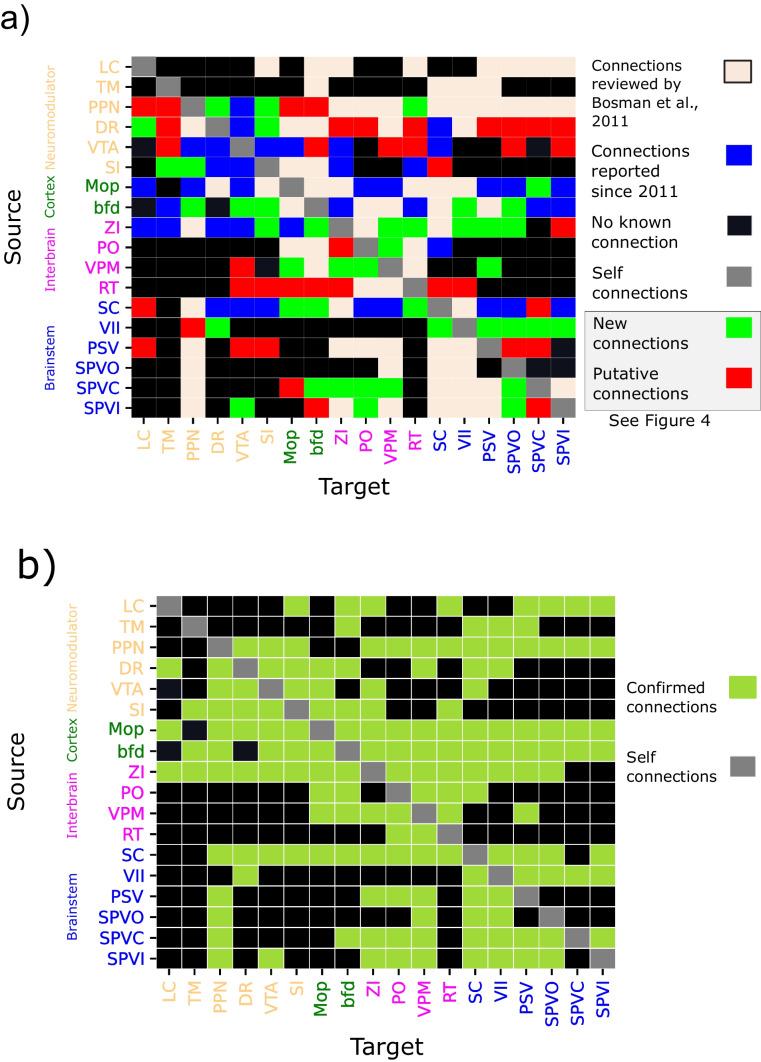
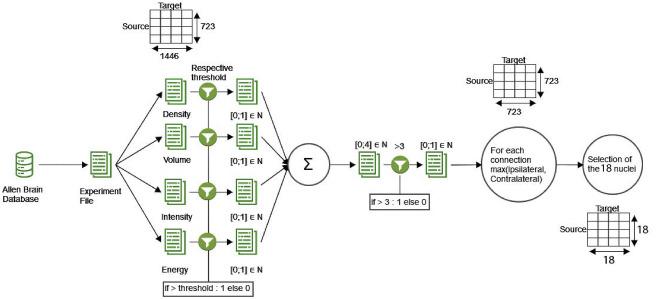
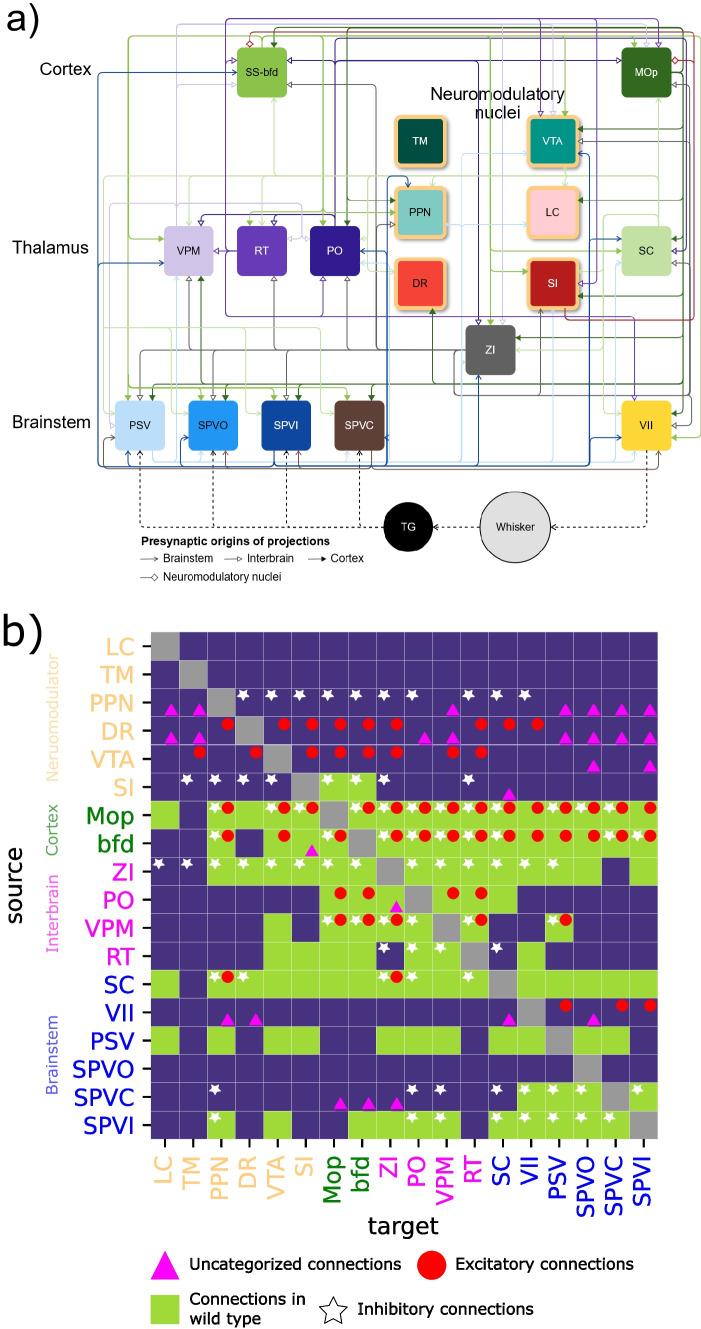
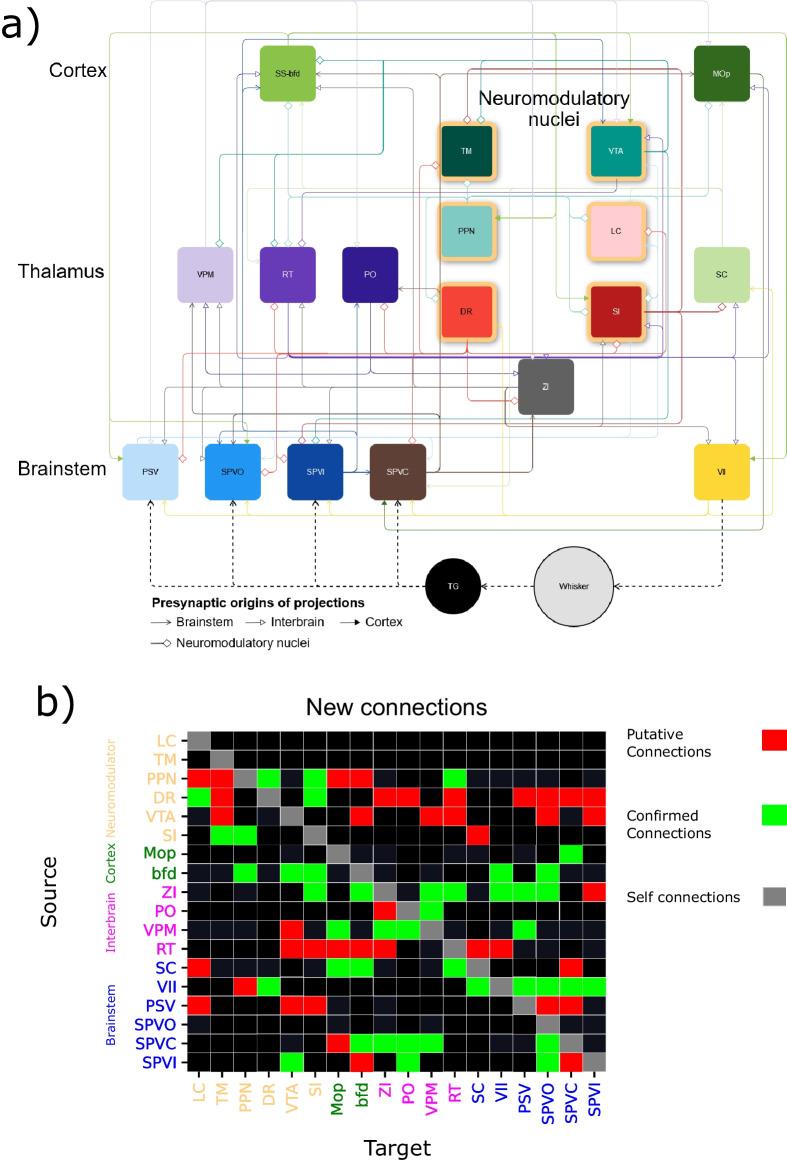
Sensorimotor computation integrates bottom-up world state information with top-down knowledge and task goals to form action plans. In the rodent whisker system, a prime model of active sensing, evidence shows neuromodulatory neurotransmitters shape whisker control, affecting whisking frequency and amplitude. Since neuromodulatory neurotransmitters are mostly released from subcortical nuclei and have long-range projections that reach the rest of the central nervous system, mapping the circuits of top-down neuromodulatory control of sensorimotor nuclei will help to systematically address the mechanisms of active sensing. Therefore, we developed a neuroinformatic target discovery pipeline to mine the Allen Institute's Mouse Brain Connectivity Atlas. Using network connectivity analysis, we identified new putative connections along the whisker system and anatomically confirmed the existence of 42 previously unknown monosynaptic connections. Using this data, we updated the sensorimotor connectivity map of the mouse whisker system and developed the first cell-type-specific map of the network. The map includes 157 projections across 18 principal nuclei of the whisker system and neuromodulatory neurotransmitter-releasing. Performing a graph network analysis of this connectome, we identified cell-type specific hubs, sources, and sinks, provided anatomical evidence for monosynaptic inhibitory projections into all stages of the ascending pathway, and showed that neuromodulatory projections improve network-wide connectivity. These results argue that beyond the modulatory chemical contributions to information processing and transfer in the whisker system, the circuit connectivity features of the neuromodulatory networks position them as nodes of sensory and motor integration.
感觉运动计算将自下而上的世界状态信息与自上而下的知识和任务目标结合起来,形成行动计划。在啮齿动物胡须系统中,一种主动感知的主要模型,有证据表明神经调质神经递质塑造了胡须控制,影响了胡须的频率和幅度。由于神经调质神经递质主要从皮质下核中释放出来,并具有到达中枢神经系统其余部分的长程投射,因此绘制感觉运动核的自上而下神经调质控制的回路将有助于系统地解决主动感知的机制。因此,我们开发了一种神经信息目标发现管道,以挖掘艾伦研究所的老鼠大脑连接图谱。使用网络连接分析,我们确定了在胡须系统中沿着新的可能连接,并在解剖学上证实了 42 个以前未知的单突触连接的存在。使用这些数据,我们更新了老鼠胡须系统的感觉运动连接图,并开发了该网络的第一个细胞类型特异性图。该图包括在胡须系统的 18 个主要核中跨越 157 个投射和神经调质神经递质释放。对这个连接组进行图网络分析,我们确定了细胞类型特异性的枢纽、源和汇,为进入上行通路所有阶段的单突触抑制性投射提供了解剖学证据,并表明神经调质投射提高了网络的整体连接性。这些结果表明,除了在胡须系统中对信息处理和传递的调制化学贡献之外,神经调质网络的连接特征使它们成为感觉和运动整合的节点。


 Zotero 插件