
口服和汉三才汤对急性术后疼痛的镇痛作用及对 5-羟色胺神经系统的影响:一项小鼠模型研究。
Analgesic effects of oral Yokukansan on acute postoperative pain and involvement of the serotonin nervous system: a mouse model study.
机构信息
Division of Anesthesiology, Niigata University Graduate School of Medical and Dental Sciences, 1-757 Asahimachi-dori, Chuo ward, Niigata, 951-8510, Japan.
Department of Anesthesiology and Pain Medicine, Gifu University Graduate School of Medicine, Yanagido 1-1, Gifu, 501-1194, Japan.
出版信息
BMC Complement Med Ther. 2024 May 21;24(1):198. doi: 10.1186/s12906-024-04501-6.
BACKGROUND
Yokukansan, a traditional Japanese medicine (Kampo), has been widely used to treat neurosis, dementia, and chronic pain. Previous in vitro studies have suggested that Yokukansan acts as a partial agonist of the 5-HT receptor, resulting in amelioration of chronic pain through inhibition of nociceptive neuronal activity. However, its effectiveness for treating postoperative pain remains unknown, although its analgesic mechanism of action has been suggested to involve serotonin and glutamatergic neurotransmission. This study aimed to investigate the effect of Yokukansan on postoperative pain in an animal model.
METHODS
A mouse model of postoperative pain was created by plantar incision, and Yokukansan was administered orally the day after paw incision. Pain thresholds for mechanical and heat stimuli were examined in a behavioral experiment. In addition, to clarify the involvement of the serotonergic nervous system, we examined the analgesic effects of Yokukansan in mice that were serotonin-depleted by para-chlorophenylalanine (PCPA) treatment and intrathecal administration of NAN-190, 5-HT receptor antagonist.
RESULTS
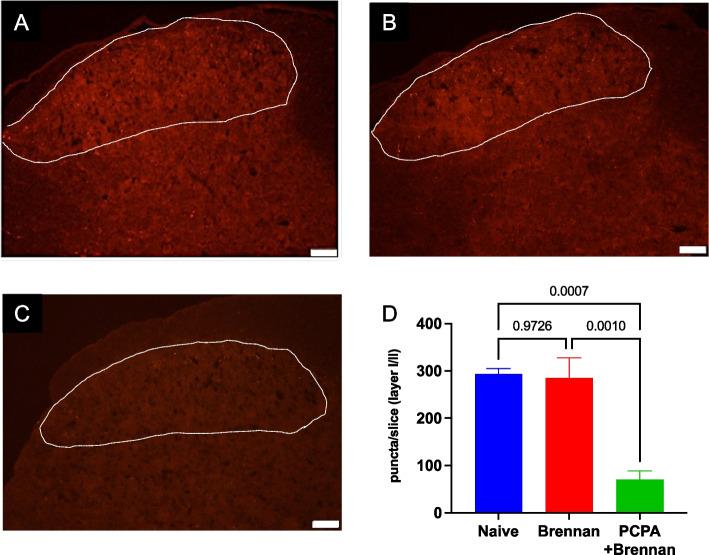
Orally administered Yokukansan increased the pain threshold dose-dependent in postoperative pain model mice. Pretreatment of para-chlorophenylalanine dramatically suppressed serotonin immunoreactivity in the spinal dorsal horn without changing the pain threshold after the paw incision. The analgesic effect of Yokukansan tended to be attenuated by para-chlorophenylalanine pretreatment and significantly attenuated by intrathecal administration of 2.5 µg of NAN-190 compared to that in postoperative pain model mice without para-chlorophenylalanine treatment and NAN-190 administration.
CONCLUSION
This study demonstrated that oral administration of Yokukansan has acute analgesic effects in postoperative pain model mice. Behavioral experiments using serotonin-depleted mice and mice intrathecally administered with a 5-HT receptor antagonist suggested that Yokukansan acts as an agonist at the 5-HT receptor, one of the serotonin receptors, to produce analgesia.
背景
和汉三才散(一种传统的日本药物,汉方)被广泛用于治疗神经症、痴呆和慢性疼痛。之前的体外研究表明,和汉三才散作为 5-HT 受体的部分激动剂,通过抑制伤害感受神经元的活性来改善慢性疼痛。然而,其治疗术后疼痛的效果尚不清楚,尽管其作用机制被认为涉及 5-羟色胺和谷氨酸能神经递质。本研究旨在探讨和汉三才散在动物模型中的术后疼痛的作用。
方法
通过足底切口建立术后疼痛的小鼠模型,并在足切口后第 1 天口服给予和汉三才散。在行为实验中检查机械和热刺激的疼痛阈值。此外,为了阐明 5-羟色胺能神经系统的参与,我们检查了 5-羟色胺耗竭的小鼠和鞘内给予 NAN-190(5-HT 受体拮抗剂)对和汉三才散镇痛作用的影响。
结果
口服给予和汉三才散可剂量依赖性地增加术后疼痛模型小鼠的疼痛阈值。对氯苯丙氨酸(PCPA)预处理可显著抑制脊髓背角中的 5-羟色胺免疫反应,但不会改变足切口后的疼痛阈值。与术后疼痛模型小鼠没有 PCPA 预处理和鞘内给予 NAN-190 相比,和汉三才散的镇痛作用在 PCPA 预处理时倾向于减弱,鞘内给予 2.5µg NAN-190 时明显减弱。
结论
本研究表明,口服给予和汉三才散对术后疼痛模型小鼠具有急性镇痛作用。使用 5-羟色胺耗竭小鼠和鞘内给予 5-HT 受体拮抗剂的行为实验表明,和汉三才散作为 5-HT 受体的激动剂,发挥镇痛作用。



 Zotero 插件