
脂多糖预处理可增加TRPV1通道的敏感性,并促进辣椒素激活的巨噬细胞的抗炎表型。
Lipopolysaccharide pretreatment increases the sensitivity of the TRPV1 channel and promotes an anti-inflammatory phenotype of capsaicin-activated macrophages.
作者信息
Vašek Daniel, Fikarová Natálie, Marková Vendula Nagy, Honc Ondřej, Pacáková Lenka, Porubská Bianka, Somova Veronika, Novotný Jiří, Melkes Barbora, Krulová Magdaléna
机构信息
Department of Cell Biology, Faculty of Science, Charles University, Vinicna 7, Prague, 2, 128 43, Czech Republic.
Department of Physiology, Faculty of Science, Charles University, Vinicna 7, Prague, 2, 128 43, Czech Republic.
出版信息
J Inflamm (Lond). 2024 May 24;21(1):17. doi: 10.1186/s12950-024-00391-0.
BACKGROUND
The transient receptor potential vanilloid 1 (TRPV1) is well-established in neuronal function, yet its role in immune reactions remains enigmatic. The conflicting data on its inflammatory role, suggesting both pro-inflammatory and anti-inflammatory effects upon TRPV1 stimulation in immune cells, adds complexity. To unravel TRPV1 immunomodulatory mechanisms, we investigated how the TRPV1 agonist capsaicin influences lipopolysaccharide (LPS)-induced pro-inflammatory macrophage phenotypes.
RESULTS
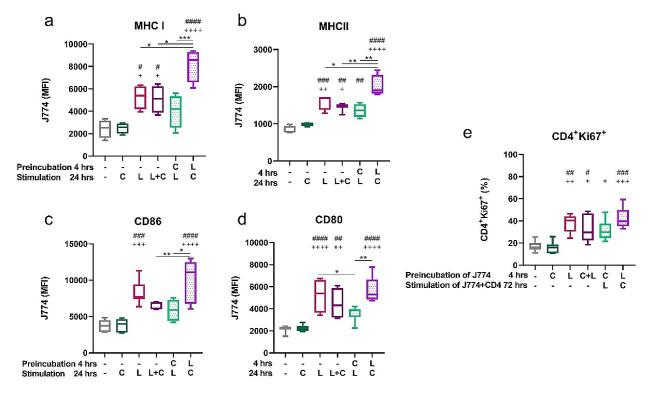
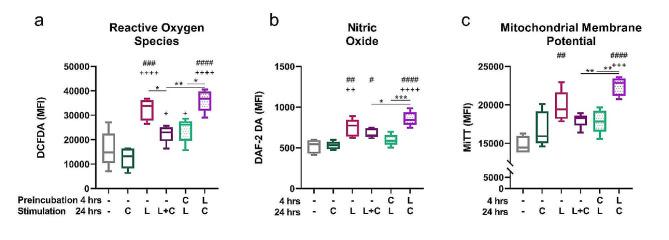
Changes in the surface molecules, cytokine production, and signaling cascades linked to the phenotype of M1 or M2 macrophages of the J774 macrophage cell line and bone marrow-derived macrophages, treated with capsaicin before or after the LPS-induced inflammatory reaction were determined. The functional capacity of macrophages was also assessed by infecting the stimulated macrophages with the intracellular parasite Leishmania mexicana.
CONCLUSION
Our findings reveal that TRPV1 activation yields distinct macrophage responses influenced by the inflammatory context. LPS pre-treatment followed by capsaicin activation prompted increased calcium influx, accompanied by a shift toward an anti-inflammatory M2b-like polarization state.
背景
瞬时受体电位香草酸受体1(TRPV1)在神经元功能方面已得到充分证实,但其在免疫反应中的作用仍不明确。关于其炎症作用的数据相互矛盾,表明在免疫细胞中刺激TRPV1时既有促炎作用又有抗炎作用,这增加了复杂性。为了阐明TRPV1的免疫调节机制,我们研究了TRPV1激动剂辣椒素如何影响脂多糖(LPS)诱导的促炎巨噬细胞表型。
结果
确定了在LPS诱导的炎症反应之前或之后用辣椒素处理的J774巨噬细胞系和骨髓来源巨噬细胞的表面分子、细胞因子产生以及与M1或M2巨噬细胞表型相关的信号级联反应的变化。还通过用细胞内寄生虫墨西哥利什曼原虫感染受刺激的巨噬细胞来评估巨噬细胞的功能能力。
结论
我们的研究结果表明,TRPV1的激活会产生受炎症环境影响的不同巨噬细胞反应。LPS预处理后再用辣椒素激活会促使钙内流增加,同时向抗炎的M2b样极化状态转变。

 Zotero 插件