
暴露于亚致死抗生素污染下的质外体微生物组的细菌动态。
Bacterial dynamics of the plastisphere microbiome exposed to sub-lethal antibiotic pollution.
机构信息
Université de Lyon, Université Claude Bernard Lyon 1, UMR CNRS 5557, UMR INRAe 1418, VetAgro Sup, Ecologie Microbienne, 69622, Villeurbanne, France.
出版信息
Microbiome. 2024 May 24;12(1):97. doi: 10.1186/s40168-024-01803-2.
BACKGROUND
Antibiotics and microplastics are two major aquatic pollutants that have been associated to antibiotic resistance selection in the environment and are considered a risk to human health. However, little is known about the interaction of these pollutants at environmental concentrations and the response of the microbial communities in the plastisphere to sub-lethal antibiotic pollution. Here, we describe the bacterial dynamics underlying this response in surface water bacteria at the community, resistome and mobilome level using a combination of methods (next-generation sequencing and qPCR), sequencing targets (16S rRNA gene, pre-clinical and clinical class 1 integron cassettes and metagenomes), technologies (short and long read sequencing), and assembly approaches (non-assembled reads, genome assembly, bacteriophage and plasmid assembly).
RESULTS
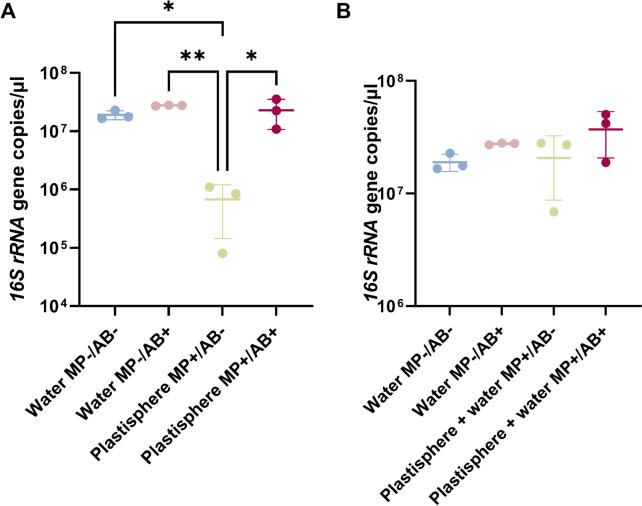
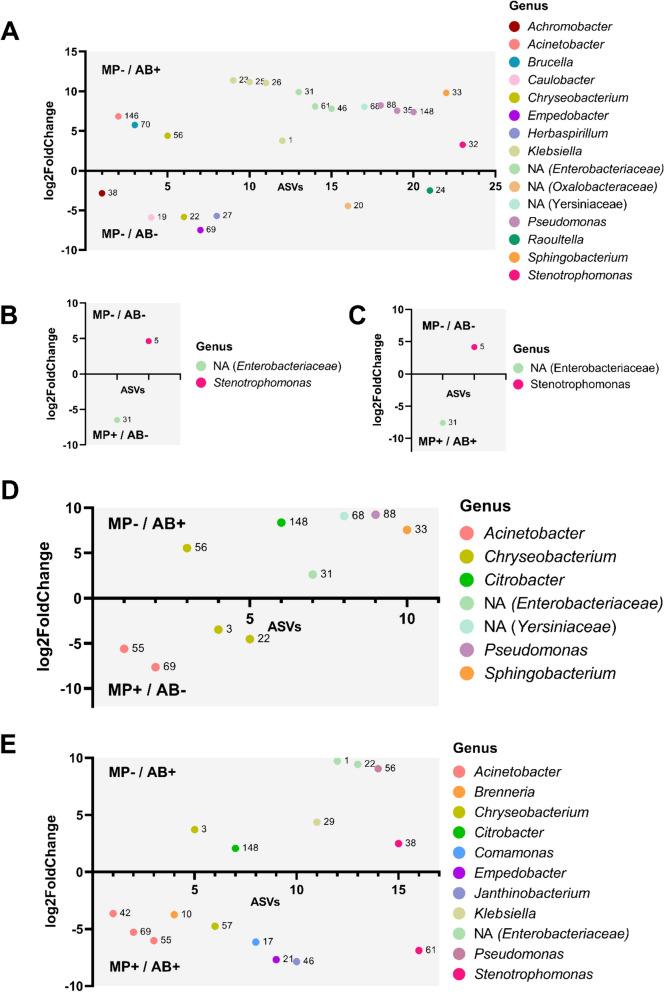
Our results show a shift in the microbial community response to antibiotics in the plastisphere microbiome compared to surface water communities and describe the bacterial subpopulations that respond differently to antibiotic and microplastic pollution. The plastisphere showed an increased tolerance to antibiotics and selected different antibiotic resistance bacteria (ARB) and antibiotic resistance genes (ARGs). Several metagenome assembled genomes (MAGs) derived from the antibiotic-exposed plastisphere contained ARGs, virulence factors, and genes involved in plasmid conjugation. These include Comamonas, Chryseobacterium, the opportunistic pathogen Stenotrophomonas maltophilia, and other MAGs belonging to genera that have been associated to human infections, such as Achromobacter. The abundance of the integron-associated ciprofloxacin resistance gene aac(6')-Ib-cr increased under ciprofloxacin exposure in both freshwater microbial communities and in the plastisphere. Regarding the antibiotic mobilome, although no significant changes in ARG load in class 1 integrons and plasmids were observed in polluted samples, we identified three ARG-containing viral contigs that were integrated into MAGs as prophages.
CONCLUSIONS
This study illustrates how the selective nature of the plastisphere influences bacterial response to antibiotics at sub-lethal selective pressure. The microbial changes identified here help define the selective role of the plastisphere and its impact on the maintenance of environmental antibiotic resistance in combination with other anthropogenic pollutants. This research highlights the need to evaluate the impact of aquatic pollutants in environmental microbial communities using complex scenarios with combined stresses. Video Abstract.
背景
抗生素和微塑料是两种主要的水生污染物,它们与环境中的抗生素耐药性选择有关,被认为对人类健康构成威胁。然而,人们对这些污染物在环境浓度下的相互作用以及亚致死抗生素污染对塑料体微生物群落的响应知之甚少。在这里,我们使用多种方法(下一代测序和 qPCR)、测序靶标(16S rRNA 基因、临床前和临床 1 类整合子盒和宏基因组)、技术(短读和长读测序)和组装方法(未组装的reads、基因组组装、噬菌体和质粒组装)来描述地表水细菌中这种反应的细菌动态。
结果
我们的结果表明,与地表水群落相比,抗生素在塑料体微生物组中的微生物群落对抗生素的反应发生了转变,并描述了对抗生素和微塑料污染有不同反应的细菌亚群。塑料体对抗生素的耐受性增加,并选择了不同的抗生素耐药细菌(ARB)和抗生素耐药基因(ARGs)。从暴露于抗生素的塑料体中获得的几个宏基因组组装基因组(MAGs)包含 ARGs、毒力因子和与质粒共轭有关的基因。其中包括贪噬菌属、黄杆菌属、机会性病原体嗜麦芽寡养单胞菌以及其他与人类感染有关的属的 MAGs,如不动杆菌属。在淡水微生物群落和塑料体中,环丙沙星暴露下整合子相关的环丙沙星耐药基因 aac(6')-Ib-cr 的丰度增加。关于抗生素移动组,虽然在污染样本中未观察到 1 类整合子和质粒中 ARG 负荷的显著变化,但我们鉴定了三个包含 ARG 的病毒片段,它们作为噬菌体整合到 MAGs 中。
结论
这项研究说明了塑料体的选择性如何影响亚致死选择压力下细菌对抗生素的反应。这里确定的微生物变化有助于定义塑料体的选择作用及其与其他人为污染物结合对维持环境抗生素耐药性的影响。这项研究强调了需要使用组合压力的复杂情况来评估水生污染物对环境微生物群落的影响。



 Zotero 插件