
基于植物化学的湿疹局部治疗应用的最新进展:综述。
Recent Advances in Phytochemical-Based Topical Applications for the Management of Eczema: A Review.
机构信息
Department of Plant, Food, and Environmental Sciences, Faculty of Agriculture, Dalhousie University, Truro, NS B2N 5E3, Canada.
Department of Pathology, Faculty of Medicine, Dalhousie University, Halifax, NS B3H 2Y9, Canada.
出版信息
Int J Mol Sci. 2024 May 15;25(10):5375. doi: 10.3390/ijms25105375.
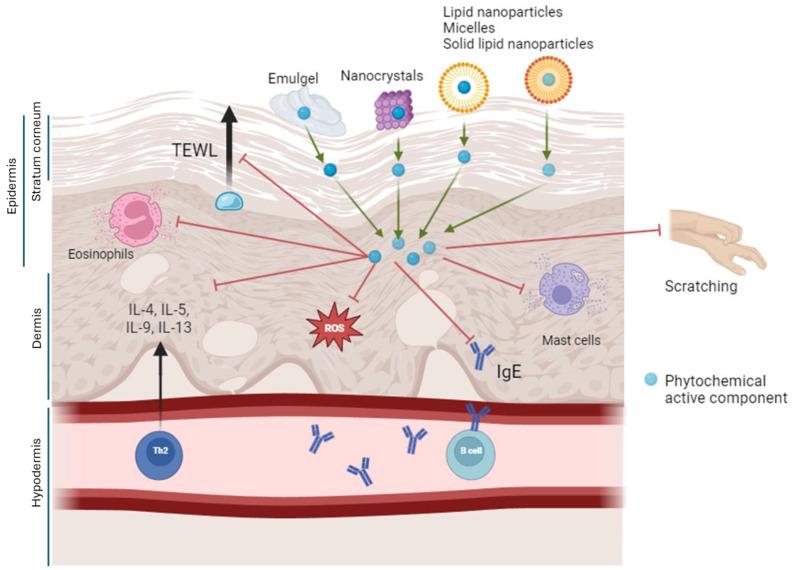
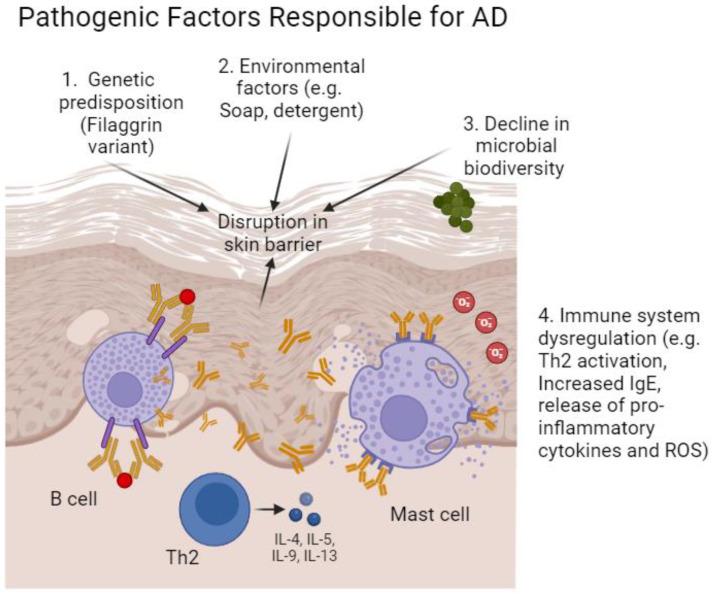
Eczema (atopic dermatitis, AD) is a skin disease characterized by skin barrier dysfunction due to various factors, including genetics, immune system abnormalities, and environmental triggers. Application of emollients and topical drugs such as corticosteroids and calcineurin inhibitors form the mainstay of treatments for this challenging condition. This review aims to summarize the recent advances made in phytochemical-based topical applications to treat AD and the different carriers that are being used. In this review, the clinical efficacy of several plant extracts and bioactive phytochemical compounds in treating AD are discussed. The anti-atopic effects of the herbs are evident through improvements in the Scoring Atopic Dermatitis (SCORAD) index, reduced epidermal thickness, decreased transepidermal water loss, and alleviated itching and dryness in individuals affected by AD as well as in AD mouse models. Histopathological studies and serum analyses conducted in AD mouse models demonstrated a reduction in key inflammatory factors, including thymic stromal lymphopoietin (TSLP), serum immunoglobulin E (IgE), and interleukins (IL). Additionally, there was an observed upregulation of the filaggrin (FLG) gene, which regulates the proteins constituting the stratum corneum, the outermost layer of the epidermis. Carriers play a crucial role in topical drug applications, influencing dose delivery, retention, and bioavailability. This discussion delves into the efficacy of various nanocarriers, including liposomes, ethosomes, nanoemulsions, micelles, nanocrystals, solid-lipid nanoparticles, and polymeric nanoparticles. Consequently, the potential long-term side effects such as atrophy, eruptions, lymphoma, pain, and allergic reactions that are associated with current topical treatments, including emollients, topical corticosteroids, topical calcineurin inhibitors, and crisaborole, can potentially be mitigated through the use of phytochemical-based natural topical treatments.
湿疹(特应性皮炎,AD)是一种皮肤疾病,其特征是皮肤屏障功能障碍,这是由多种因素引起的,包括遗传、免疫系统异常和环境触发因素。应用保湿剂和局部药物,如皮质类固醇和钙调神经磷酸酶抑制剂,是治疗这种具有挑战性疾病的主要方法。本综述旨在总结基于植物化学物质的局部应用治疗 AD 的最新进展,以及正在使用的不同载体。在本综述中,讨论了几种植物提取物和生物活性植物化学化合物治疗 AD 的临床疗效。这些草药的抗特应性作用通过改善特应性皮炎评分(SCORAD)指数、降低表皮厚度、减少经表皮水分流失以及减轻 AD 患者和 AD 小鼠模型的瘙痒和干燥来体现。在 AD 小鼠模型中进行的组织病理学研究和血清分析表明,关键炎症因子(包括胸腺基质淋巴细胞生成素(TSLP)、血清免疫球蛋白 E(IgE)和白细胞介素(IL))的水平降低。此外,还观察到丝聚合蛋白(FLG)基因的上调,该基因调节构成表皮最外层角质层的蛋白质。载体在局部药物应用中起着至关重要的作用,影响剂量传递、保留和生物利用度。本讨论深入探讨了各种纳米载体的疗效,包括脂质体、醇质体、纳米乳液、胶束、纳米晶体、固体脂质纳米粒和聚合物纳米粒。因此,通过使用基于植物化学物质的天然局部治疗,可以减轻当前局部治疗(包括保湿剂、局部皮质类固醇、局部钙调神经磷酸酶抑制剂和克立硼罗)相关的长期潜在副作用,如萎缩、发作、淋巴瘤、疼痛和过敏反应。
 Zotero 插件