
揭示天然产物在阿尔茨海默病中的治疗潜力:来自……及临床研究的见解
Unveiling the therapeutic potential of natural products in Alzheimer's disease: insights from , , and clinical studies.
作者信息
Aktary Nahida, Jeong Yerim, Oh Seungji, Shin Yeju, Sung Yoonsoo, Rahman Muntajin, Ramos Santiago Livia, Choi Jinwon, Song Han Gyeul, Nurkolis Fahrul, Ribeiro Rosy Iara Maciel Azambuja, Park Moon Nyeo, Kim Bonglee
机构信息
College of Korean Medicine, Kyung Hee University, Seoul, Republic of Korea.
Department of Biological Sciences, State Islamic University of Sunan Kalijaga (UIN Sunan Kalijaga), Yogyakarta, Indonesia.
出版信息
Front Pharmacol. 2025 Jun 23;16:1601712. doi: 10.3389/fphar.2025.1601712. eCollection 2025.
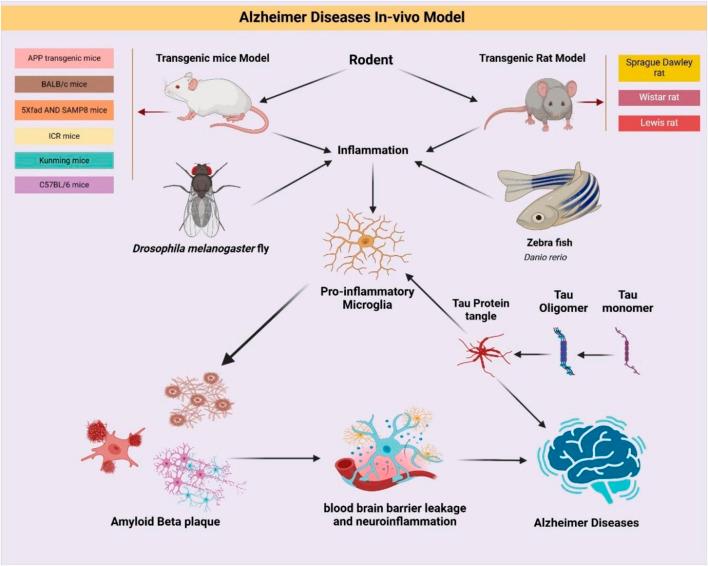
Alzheimer's disease (AD) is a multifactorial neurodegenerative disorder described as progressive cognitive decline and neuronal dysfunction, affecting millions globally. While current pharmacological treatments provide symptomatic relief and modestly slow disease progression, they fail to address the underlying pathophysiology and are often accompanied by severe adverse effects. This underscores the urgent need for innovative, multi-target therapeutic strategies that can effectively step in AD's complex pathogenesis. Emerging evidence highlights the therapeutic potential of natural products, particularly herbal medicines, as versatile modulators of key pathogenic processes in AD. These compounds exert neuroprotective effects by mitigating oxidative stress, suppressing neuroinflammation, inhibiting tau hyperphosphorylation, and reducing amyloid-beta aggregation. Additionally, they strengthen synaptic plasticity and stabilize mitochondrial function, offering a holistic approach to disease control. This comprehensive review synthesizes findings from network pharmacology, and studies, and clinical trials to evaluate the role of natural products in AD treatment. Advances in bioinformatics and systems biology facilitate the mapping of intricate protein-protein interactions, the identification of potential biomarkers, and the clarification of molecular mechanisms underlying AD progression. Integrating phytochemicals with conventional AD medications may improve therapeutic efficacy through synergistic mechanisms; however, pharmacokinetic interactions and safety considerations must be rigorously assessed. Notably, clinical trials investigating compounds such as curcumin, resveratrol, and ginsenosides suggest promising adjunctive benefits when incorporated into established treatment regimens. Furthermore, the convergence of herbal therapeutics with modern pharmacology presents an avenue for customized and integrative AD management. This review also emphasizes advancements in experimental models, including brain organoids and transgenic animals, which serve as crucial platforms for mechanistic studies and therapeutic validation. Ongoing trials on plant-derived compounds continue to pave the way for translational applications, reinforcing the viability of natural product-based interventions. By advocating a multidisciplinary framework that merges traditional medicine, modern pharmacology, and precision medicine, this work contributes to reshaping the AD landscape of therapy. It provides a roadmap for future research, fostering novel treatment paradigms that prioritize efficacy, safety, and sustainability in combating this disastrous disorder.
阿尔茨海默病(AD)是一种多因素神经退行性疾病,其特征为进行性认知衰退和神经元功能障碍,全球数百万人受其影响。虽然目前的药物治疗可缓解症状并适度减缓疾病进展,但它们无法解决潜在的病理生理学问题,且常伴有严重的不良反应。这凸显了迫切需要创新的多靶点治疗策略,以有效干预AD复杂的发病机制。新出现的证据表明天然产物,特别是草药,作为AD关键致病过程的多功能调节剂具有治疗潜力。这些化合物通过减轻氧化应激、抑制神经炎症、抑制tau蛋白过度磷酸化和减少β-淀粉样蛋白聚集发挥神经保护作用。此外,它们增强突触可塑性并稳定线粒体功能,提供了一种全面的疾病控制方法。这篇综述综合了网络药理学、研究和临床试验的结果,以评估天然产物在AD治疗中的作用。生物信息学和系统生物学的进展有助于绘制复杂的蛋白质-蛋白质相互作用图谱、识别潜在的生物标志物以及阐明AD进展的分子机制。将植物化学物质与传统AD药物相结合可能通过协同机制提高治疗效果;然而,必须严格评估药代动力学相互作用和安全性。值得注意的是,对姜黄素、白藜芦醇和人参皂苷等化合物的临床试验表明,将它们纳入既定治疗方案时具有有前景的辅助益处。此外,草药疗法与现代药理学的融合为定制化和综合化的AD管理提供了一条途径。本综述还强调了实验模型的进展,包括脑类器官和转基因动物,它们是机制研究和治疗验证的关键平台。对植物源化合物的正在进行的试验继续为转化应用铺平道路,加强了基于天然产物的干预措施的可行性。通过倡导将传统医学、现代药理学和精准医学相结合的多学科框架,这项工作有助于重塑AD治疗格局。它为未来的研究提供了路线图,促进了新的治疗模式,这些模式在对抗这种灾难性疾病时优先考虑疗效、安全性和可持续性。


 Zotero 插件