
迈向针对糖尿病足溃疡患者的综合风险评估的远程患者监测平台。
Towards a Remote Patient Monitoring Platform for Comprehensive Risk Evaluations for People with Diabetic Foot Ulcers.
机构信息
Digital Health and Access Center (DiHAC), Michael E. DeBakey Department of Surgery, Baylor College of Medicine, Houston, TX 77030, USA.
Southwestern Academic Limb Salvage Alliance (SALSA), Department of Surgery, Keck School of Medicine of University of Southern California, Los Angeles, CA 90033, USA.
出版信息
Sensors (Basel). 2024 May 8;24(10):2979. doi: 10.3390/s24102979.
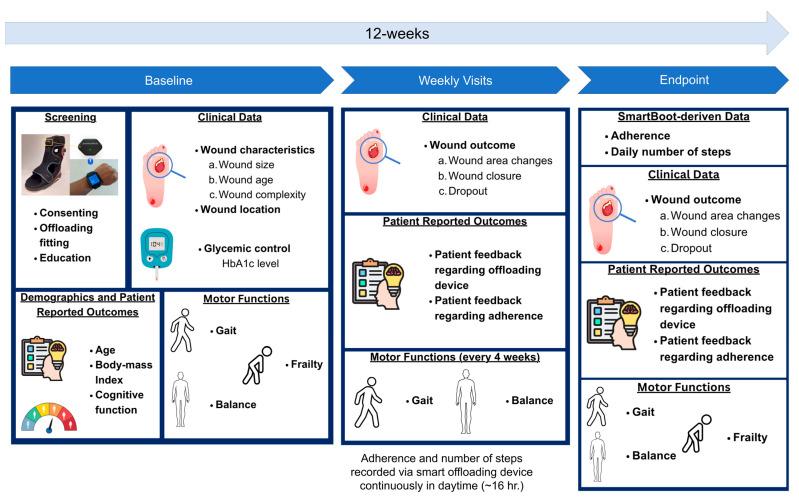
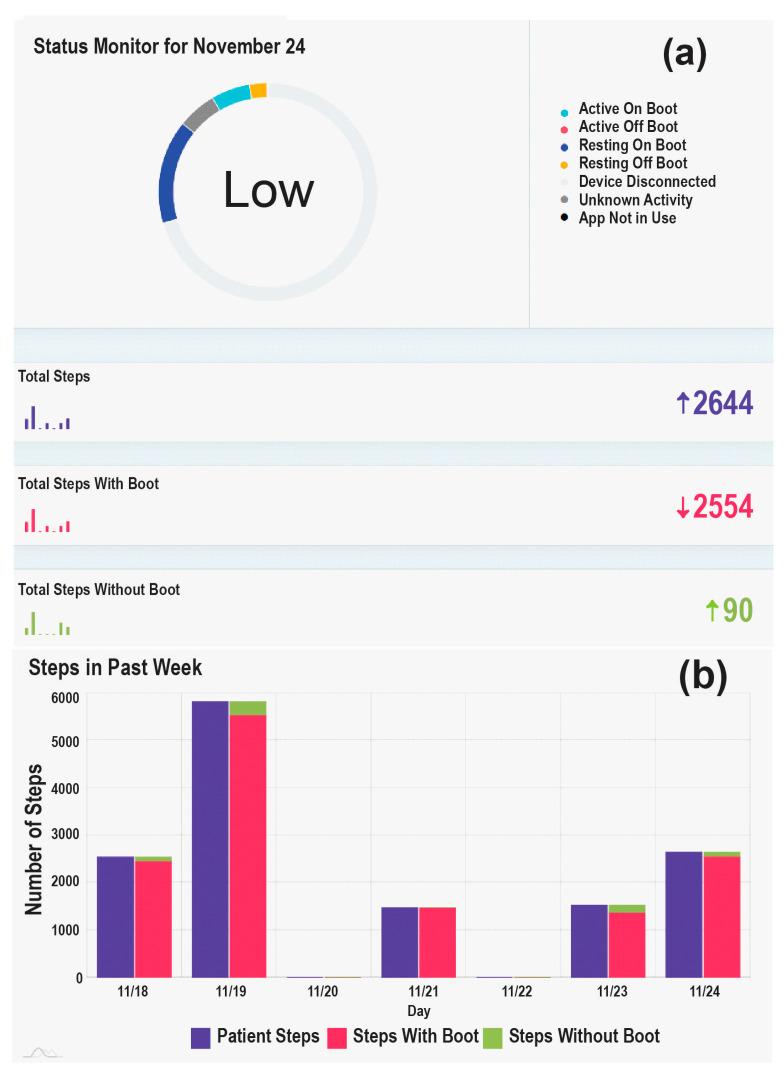
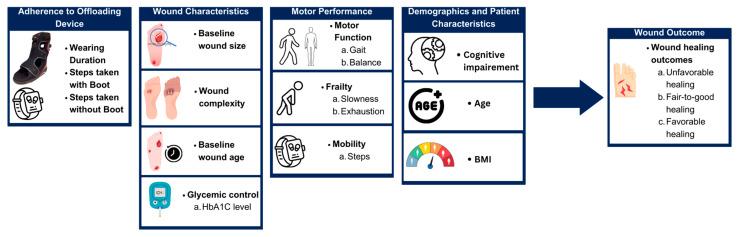
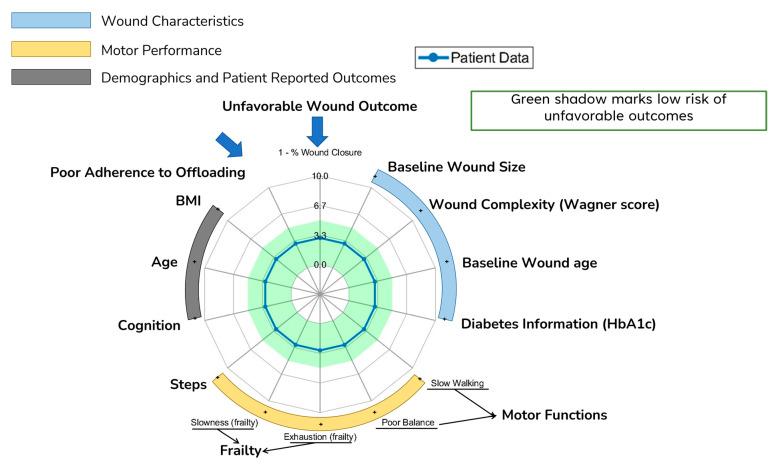
Diabetic foot ulcers (DFUs) significantly affect the lives of patients and increase the risk of hospital stays and amputation. We suggest a remote monitoring platform for better DFU care. This system uses digital health metrics (scaled from 0 to 10, where higher scores indicate a greater risk of slow healing) to provide a comprehensive overview through a visual interface. The platform features smart offloading devices that capture behavioral metrics such as offloading adherence, daily steps, and cadence. Coupled with remotely measurable frailty and phenotypic metrics, it offers an in-depth patient profile. Additional demographic data, characteristics of the wound, and clinical parameters, such as cognitive function, were integrated, contributing to a comprehensive risk factor profile. We evaluated the feasibility of this platform with 124 DFU patients over 12 weeks; 39% experienced unfavorable outcomes such as dropout, adverse events, or non-healing. Digital biomarkers were benchmarked (0-10); categorized as low, medium, and high risk for unfavorable outcomes; and visually represented using color-coded radar plots. The initial results of the case reports illustrate the value of this holistic visualization to pinpoint the underlying risk factors for unfavorable outcomes, including a high number of steps, poor adherence, and cognitive impairment. Although future studies are needed to validate the effectiveness of this visualization in personalizing care and improving wound outcomes, early results in identifying risk factors for unfavorable outcomes are promising.
糖尿病足溃疡(DFUs)显著影响患者的生活,并增加住院和截肢的风险。我们建议建立一个远程监测平台,以更好地管理 DFU。该系统使用数字健康指标(从 0 到 10 进行缩放,分数越高表示愈合缓慢的风险越大),通过可视化界面提供全面的概述。该平台具有智能减压设备,可以捕获行为指标,如减压依从性、每日步数和步频。结合可远程测量的脆弱性和表型指标,提供深入的患者概况。此外,还整合了其他人口统计学数据、伤口特征以及临床参数,如认知功能,以形成全面的风险因素概况。我们对 124 名 DFU 患者进行了为期 12 周的平台可行性评估;39%的患者出现不良结局,如脱落、不良事件或不愈合。数字生物标志物(0-10)进行了基准测试;根据不良结局的风险程度分为低、中、高风险,并使用彩色雷达图进行可视化表示。病例报告的初步结果说明了这种整体可视化的价值,它可以确定不良结局的潜在风险因素,包括高步数、低依从性和认知障碍。尽管需要进一步的研究来验证这种可视化在个性化护理和改善伤口结局方面的有效性,但早期确定不良结局风险因素的结果是有希望的。

 Zotero 插件