
遗传密码扩展与医学交叉领域的抑制性tRNA
Suppressor tRNAs at the interface of genetic code expansion and medicine.
作者信息
Awawdeh Aya, Radecki Alexander A, Vargas-Rodriguez Oscar
机构信息
Department of Molecular Biology and Biophysics, University of Connecticut School of Medicine, Farmington, CT, United States.
出版信息
Front Genet. 2024 May 10;15:1420331. doi: 10.3389/fgene.2024.1420331. eCollection 2024.
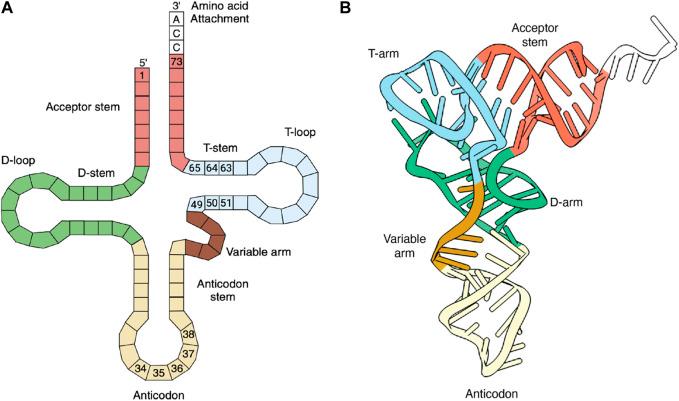
Suppressor transfer RNAs (sup-tRNAs) are receiving renewed attention for their promising therapeutic properties in treating genetic diseases caused by nonsense mutations. Traditionally, sup-tRNAs have been created by replacing the anticodon sequence of native tRNAs with a suppressor sequence. However, due to their complex interactome, considering other structural and functional tRNA features for design and engineering can yield more effective sup-tRNA therapies. For over 2 decades, the field of genetic code expansion (GCE) has created a wealth of knowledge, resources, and tools to engineer sup-tRNAs. In this Mini Review, we aim to shed light on how existing knowledge and strategies to develop sup-tRNAs for GCE can be adopted to accelerate the discovery of efficient and specific sup-tRNAs for medical treatment options. We highlight methods and milestones and discuss how these approaches may enlighten the research and development of tRNA medicines.
抑制性转移核糖核酸(sup-tRNAs)因其在治疗由无义突变引起的遗传疾病方面具有前景广阔的治疗特性而重新受到关注。传统上,sup-tRNAs是通过用抑制序列替换天然tRNAs的反密码子序列而产生的。然而,由于它们复杂的相互作用组,在设计和工程中考虑其他结构和功能tRNA特征可以产生更有效的sup-tRNA疗法。二十多年来,遗传密码扩展(GCE)领域已经创造了丰富的知识、资源和工具来设计sup-tRNAs。在本综述中,我们旨在阐明如何采用现有的开发用于GCE的sup-tRNAs的知识和策略,以加速发现用于医疗选择的高效且特异的sup-tRNAs。我们重点介绍了方法和里程碑,并讨论了这些方法如何为tRNA药物的研发提供启示。

 Zotero 插件