
蜂王浆诱导急性淋巴细胞白血病(ALL)来源的Nalm-6细胞发生活性氧介导的凋亡:为ALL的新型治疗方法提供线索。
Royal jelly induces ROS-mediated apoptosis in acute lymphoblastic leukemia (ALL)-derived Nalm-6 cells: Shedding light on novel therapeutic approaches for ALL.
作者信息
Yazdanparast Somayeh, Bashash Davood, Nikkhah Bahrami Amirsalar, Ghorbani Mohammad, Izadirad Mehrdad, Bakhtiyaridovvombaygi Mehdi, Hasanpour Seyede Zahra, Gharehbaghian Ahmad
机构信息
Laboratory Hematology and Blood Bank Department, School of Allied Medical Sciences, Shahid Beheshti University of Medical Sciences, Tehran, Iran.
Laboratory Hematology and Blood Bank Department, School of Allied Medical Sciences, Mashhad University of Medical Sciences, Mashhad, Iran.
出版信息
Iran J Basic Med Sci. 2024;27(7):801-812. doi: 10.22038/IJBMS.2024.76261.16498.
OBJECTIVES
Until recently, a conventional chemotherapy regimen for Acute lymphoblastic leukemia (ALL) is considered an efficient therapeutic method in children. However, suboptimal long-term survival rates in adults, disease relapse, and drug-induced toxicities require novel therapeutic agents for ALL treatments. Today, natural products with pharmacological benefits play a significant role in treating different cancers. Among the most valued natural products, honey bees' royal jelly (RJ) is one of the most appreciated which has revealed anti-tumor activity against different human cancers. This study aimed to evaluate anti-leukemic properties and the molecular mechanisms of RJ cytotoxicity on ALL-derived Nalm-6 cells.
MATERIALS AND METHODS
The metabolic activity was measured by MTT assay. Apoptosis, cell distribution in the cell cycle, and intracellular reactive oxygen species (ROS) level were investigated using flow cytometry analysis. Moreover, quantitative real-time PCR (qRT-PCR) was performed to scrutinize the expression of various regulatory genes.
RESULTS
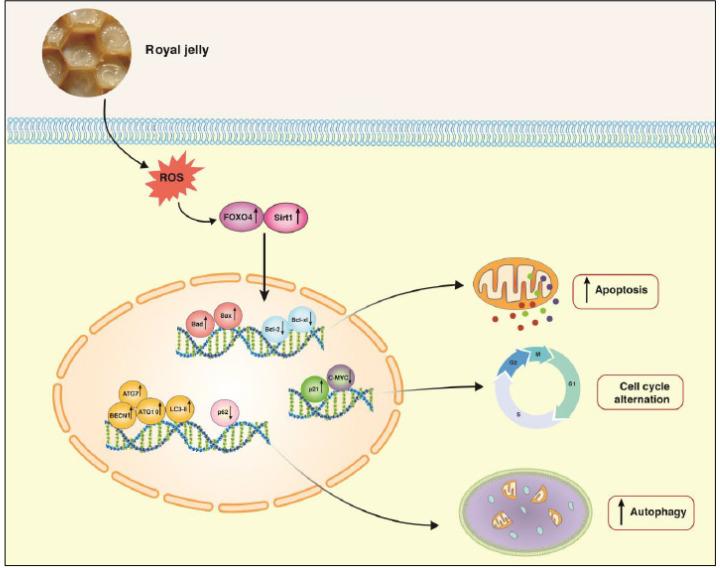
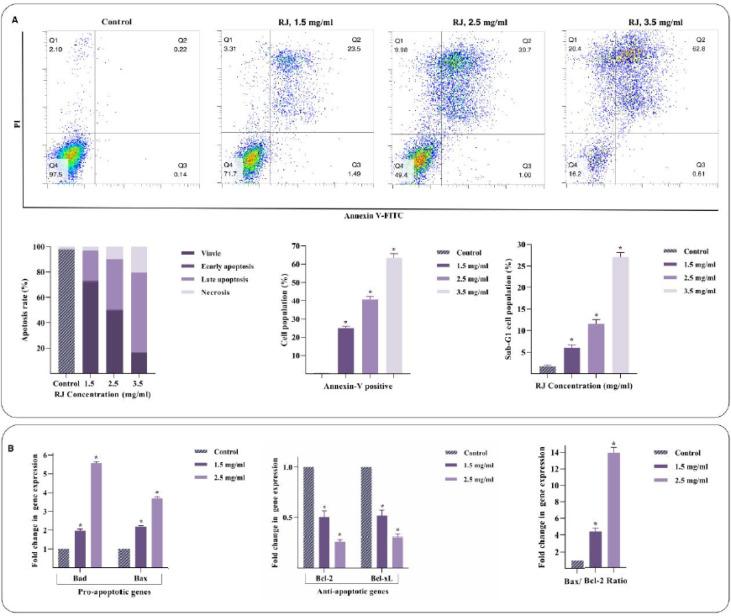
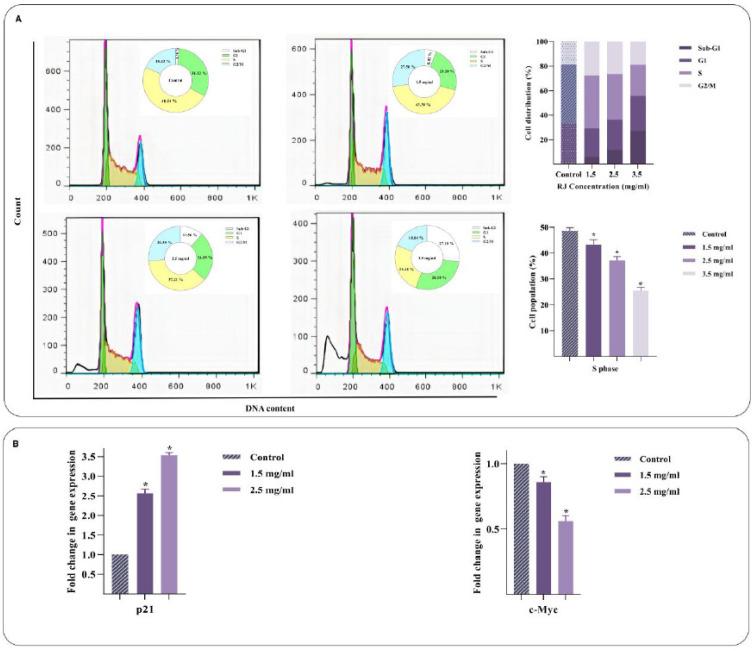
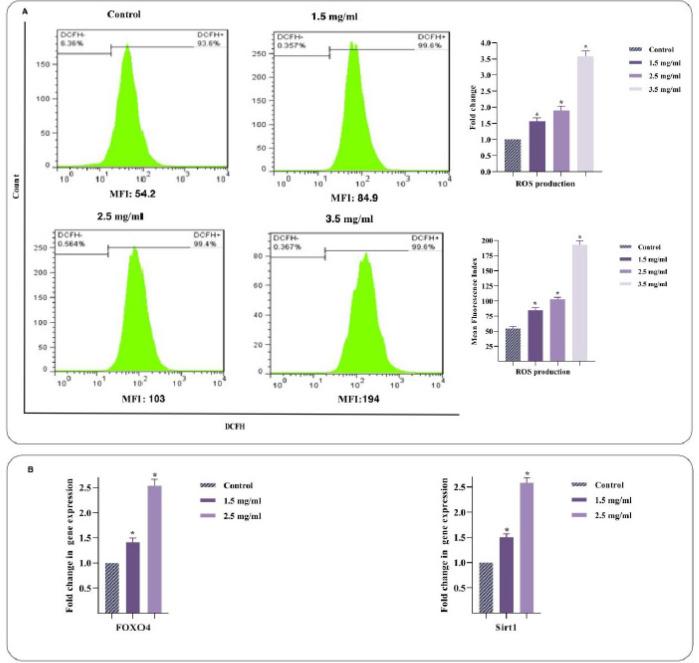
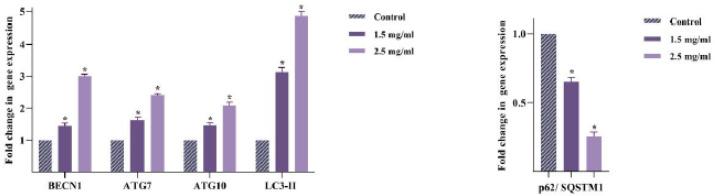
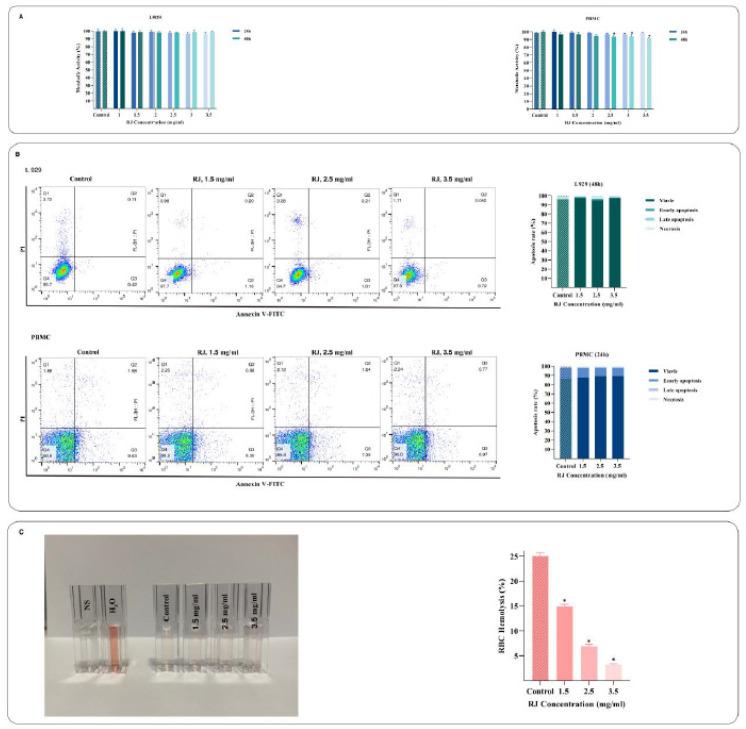
RJ significantly decreased the viability of Nalm-6 cells but had no cytotoxic effect on normal cells. In addition, RJ induced ROS-mediated apoptosis by up-regulating pro-apoptotic genes while decreasing anti-apoptotic gene expression. The results outlined that ROS-dependent up-regulation of FOXO4 and Sirt1 inhibits the cells' transition to the S phase of the cell cycle through p21 up-regulation. The qRT-PCR analysis of autophagy-related gene expression also demonstrated that RJ induced BECN1 mediated autophagy in Naml-6 cells.
CONCLUSION
Taken together, this study showed that RJ can be utilized as a potent natural substance to induce ALL cells' programmed cell death. However, further studies are required to examine this compound's pharmaceutical application.
目的
直到最近,传统的急性淋巴细胞白血病(ALL)化疗方案仍被认为是治疗儿童ALL的有效方法。然而,成人ALL的长期生存率不理想、疾病复发以及药物诱导的毒性反应,都需要新的治疗药物来治疗ALL。如今,具有药理益处的天然产物在治疗不同癌症方面发挥着重要作用。在最有价值的天然产物中,蜜蜂蜂王浆(RJ)是最受赞赏的之一,它已显示出对不同人类癌症的抗肿瘤活性。本研究旨在评估RJ对ALL来源的Nalm-6细胞的抗白血病特性及其细胞毒性的分子机制。
材料与方法
通过MTT法测定代谢活性。使用流式细胞术分析研究细胞凋亡、细胞周期中的细胞分布以及细胞内活性氧(ROS)水平。此外,进行定量实时PCR(qRT-PCR)以检测各种调控基因的表达。
结果
RJ显著降低了Nalm-6细胞的活力,但对正常细胞没有细胞毒性作用。此外,RJ通过上调促凋亡基因同时降低抗凋亡基因表达来诱导ROS介导的凋亡。结果表明,ROS依赖性上调的FOXO4和Sirt1通过上调p21抑制细胞向细胞周期S期的转变。自噬相关基因表达的qRT-PCR分析也表明,RJ在Naml-6细胞中诱导了BECN1介导的自噬。
结论
综上所述,本研究表明RJ可作为一种有效的天然物质诱导ALL细胞的程序性细胞死亡。然而,需要进一步研究来检验该化合物的药物应用。

 Zotero 插件