
进行性核上性麻痹综合征概述
Progressive Supranuclear Palsy Syndrome: An Overview.
作者信息
Ichikawa-Escamilla Eduardo, Velasco-Martínez Rodrigo A, Adalid-Peralta Laura
机构信息
Laboratorio de Reprogramación Celular del Instituto de Fisiología Celular, UNAM, en el Instituto Nacional de Neurología y Neurocirugía "Manuel Velasco Suarez", Mexico City 14269, Mexico.
出版信息
IBRO Neurosci Rep. 2024 May 6;16:598-608. doi: 10.1016/j.ibneur.2024.04.008. eCollection 2024 Jun.
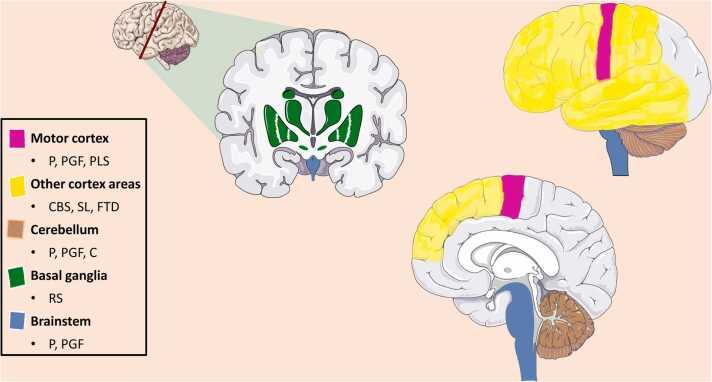
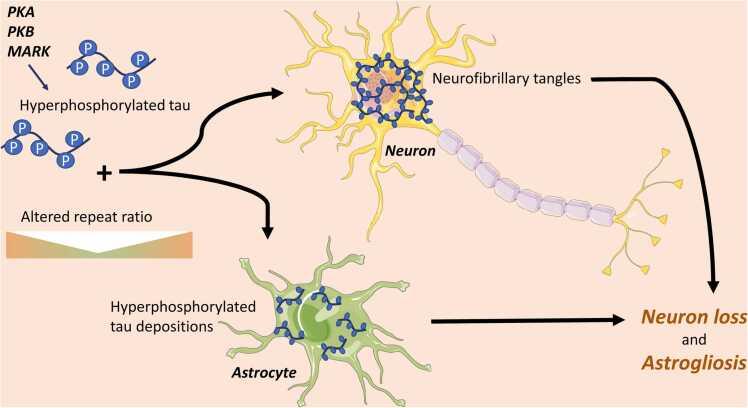
Progressive supranuclear palsy (PSP) is a neurodegenerative disease, commonly observed as a movement disorder in the group of parkinsonian diseases. The term PSP usually refers to PSP-Richardson's syndrome (PSP-RS), the most typical clinical presentation. However, the broad concept of progressive supranuclear palsy syndrome (PSP-S) applies to a set of clinical entities that share a pathophysiological origin and some symptoms. According to its clinical predominance, PSP-S is divided into subtypes. PSP-S has clinical similarities with Parkinson's disease, and both pathologies are classified in the group of parkinsonisms, but they do not share pathophysiological traits. By contrast, the pathophysiology of corticobasal syndrome (CBS) depends on tau expression and shares similarities with PSP-S in both pathophysiology and clinical picture. An involvement of the immune system has been proposed as a cause of neurodegeneration. The role of neuroinflammation in PSP-S has been studied by neuroimaging, among other methods. As it is the case in other neurodegenerative pathologies, microglial cells have been attributed a major role in PSP-S. While various studies have explored the detection and use of possible inflammatory biomarkers in PSP-S, no significant advances have been made in this regard. This review is aimed at highlighting the most relevant information on neuroinflammation and peripheral inflammation in the development and progression of PSP-S, to lay the groundwork for further research on the pathophysiology, potential biomarkers, and therapeutic strategies for PSP-S.
进行性核上性麻痹(PSP)是一种神经退行性疾病,通常表现为帕金森病组中的运动障碍。术语PSP通常指PSP-理查森综合征(PSP-RS),这是最典型的临床表现。然而,进行性核上性麻痹综合征(PSP-S)的广义概念适用于一组具有共同病理生理起源和一些症状的临床实体。根据其临床优势,PSP-S可分为亚型。PSP-S与帕金森病有临床相似性,这两种疾病都被归类于帕金森综合征组,但它们不具有共同的病理生理特征。相比之下,皮质基底节综合征(CBS)的病理生理学取决于tau蛋白表达,并且在病理生理学和临床表现上都与PSP-S有相似之处。免疫系统的参与被认为是神经退行性变的一个原因。神经炎症在PSP-S中的作用已通过神经影像学等方法进行了研究。与其他神经退行性疾病一样,小胶质细胞在PSP-S中被认为起主要作用。虽然各种研究已经探索了PSP-S中可能的炎症生物标志物的检测和应用,但在这方面尚未取得重大进展。这篇综述旨在突出关于神经炎症和外周炎症在PSP-S发生和发展中最相关的信息,为进一步研究PSP-S的病理生理学、潜在生物标志物和治疗策略奠定基础。

 Zotero 插件