
从饲料角度看控制仔猪断奶后腹泻的营养策略
Nutrition strategies to control post-weaning diarrhea of piglets: From the perspective of feeds.
作者信息
Tang Qingsong, Lan Tianyi, Zhou Chengyu, Gao Jingchun, Wu Liuting, Wei Haiyang, Li Wenxue, Tang Zhiru, Tang Wenjie, Diao Hui, Xu Yetong, Peng Xie, Pang Jiaman, Zhao Xuan, Sun Zhihong
机构信息
Laboratory for Bio-Feed and Molecular Nutrition, College of Animal Science and Technology, Southwest University, Chongqing 400715, China.
Animal Breeding and Genetics Key Laboratory of Sichuan Province, Sichuan Animal Science Academy, Chengdu 610066, China.
出版信息
Anim Nutr. 2024 Mar 26;17:297-311. doi: 10.1016/j.aninu.2024.03.006. eCollection 2024 Jun.
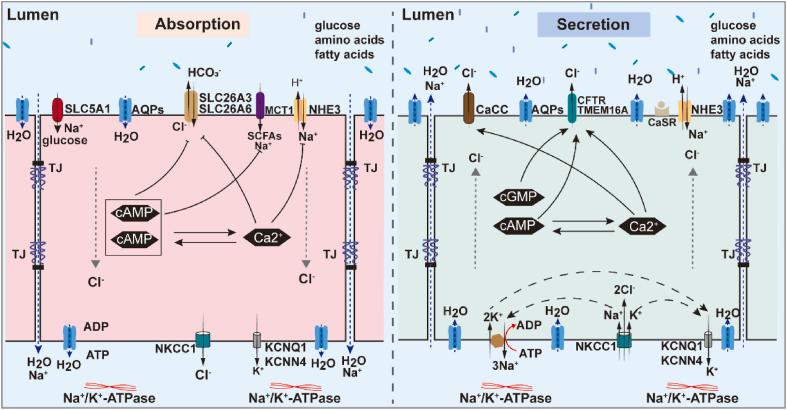
Post-weaning diarrhea (PWD) is a globally significant threat to the swine industry. Historically, antibiotics as well as high doses of zinc oxide and copper sulfate have been commonly used to control PWD. However, the development of bacterial resistance and environmental pollution have created an interest in alternative strategies. In recent years, the research surrounding these alternative strategies and the mechanisms of piglet diarrhea has been continually updated. Mechanically, diarrhea in piglets is a result of an imbalance in intestinal fluid and electrolyte absorption and secretion. In general, enterotoxigenic (ETEC) and diarrheal viruses are known to cause an imbalance in the absorption and secretion of intestinal fluids and electrolytes in piglets, resulting in diarrhea when Cl secretion-driven fluid secretion surpasses absorptive capacity. From a perspective of feedstuffs, factors that contribute to imbalances in fluid absorption and secretion in the intestines of weaned piglets include high levels of crude protein (CP), stimulation by certain antigenic proteins, high acid-binding capacity (ABC), and contamination with deoxynivalenol (DON) in the diet. In response, efforts to reduce CP levels in diets, select feedstuffs with lower ABC values, and process feedstuffs using physical, chemical, and biological approaches are important strategies for alleviating PWD in piglets. Additionally, the diet supplementation with additives such as vitamins and natural products can also play a role in reducing the diarrhea incidence in weaned piglets. Here, we examine the mechanisms of absorption and secretion of intestinal fluids and electrolytes in piglets, summarize nutritional strategies to control PWD in piglets from the perspective of feeds, and provide new insights towards future research directions.
断奶后腹泻(PWD)是全球养猪业面临的重大威胁。历史上,抗生素以及高剂量的氧化锌和硫酸铜一直被普遍用于控制断奶后腹泻。然而,细菌耐药性的发展和环境污染引发了人们对替代策略的兴趣。近年来,围绕这些替代策略以及仔猪腹泻机制的研究不断更新。从机制上讲,仔猪腹泻是肠道液体和电解质吸收与分泌失衡的结果。一般来说,产肠毒素大肠杆菌(ETEC)和腹泻病毒会导致仔猪肠道液体和电解质吸收与分泌失衡,当氯离子分泌驱动的液体分泌超过吸收能力时就会导致腹泻。从饲料角度来看,导致断奶仔猪肠道液体吸收与分泌失衡的因素包括高蛋白(CP)水平、某些抗原性蛋白质的刺激、高酸结合能力(ABC)以及日粮中脱氧雪腐镰刀菌烯醇(DON)的污染。对此,降低日粮中CP水平、选择ABC值较低的饲料原料以及采用物理、化学和生物学方法加工饲料原料是缓解仔猪断奶后腹泻的重要策略。此外,日粮中添加维生素和天然产物等添加剂也可以在降低断奶仔猪腹泻发生率方面发挥作用。在此,我们研究了仔猪肠道液体和电解质的吸收与分泌机制,从饲料角度总结了控制仔猪断奶后腹泻的营养策略,并为未来的研究方向提供了新的见解。



 Zotero 插件