
皮质类固醇对小鼠肺炎链球菌肺炎的生物学作用——转化意义。
Biological effects of corticosteroids on pneumococcal pneumonia in Mice-translational significance.
机构信息
Department of Medicine, University of California, 513 Parnassus Avenue, HSE RM-760, San Francisco, CA, 94143, USA.
Department of Anesthesia, Cardiovascular Research Institute, University of California, San Francisco, CA, USA.
出版信息
Crit Care. 2024 May 29;28(1):185. doi: 10.1186/s13054-024-04956-6.
BACKGROUND
Streptococcus pneumoniae is the most common bacterial cause of community acquired pneumonia and the acute respiratory distress syndrome (ARDS). Some clinical trials have demonstrated a beneficial effect of corticosteroid therapy in community acquired pneumonia, COVID-19, and ARDS, but the mechanisms of this benefit remain unclear. The primary objective of this study was to investigate the effects of corticosteroids on the pulmonary biology of pneumococcal pneumonia in a mouse model. A secondary objective was to identify shared transcriptomic features of pneumococcal pneumonia and steroid treatment in the mouse model and clinical samples.
METHODS
We carried out comprehensive physiologic, biochemical, and histological analyses in mice to identify the mechanisms of lung injury in Streptococcus pneumoniae with and without adjunctive steroid therapy. We also studied lower respiratory tract gene expression from a cohort of 15 mechanically ventilated patients (10 with Streptococcus pneumoniae and 5 controls) to compare with the transcriptional studies in the mice.
RESULTS
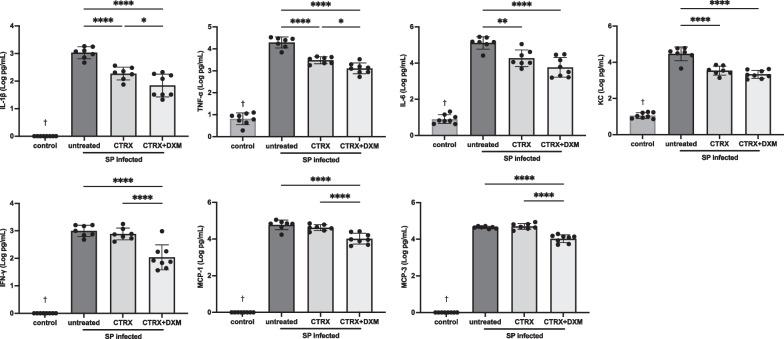
In mice with pneumonia, dexamethasone in combination with ceftriaxone reduced (1) pulmonary edema formation, (2) alveolar protein permeability, (3) proinflammatory cytokine release, (4) histopathologic lung injury score, and (5) hypoxemia but did not increase bacterial burden. Transcriptomic analyses identified effects of steroid therapy in mice that were also observed in the clinical samples.
CONCLUSIONS
In combination with appropriate antibiotic therapy in mice, treatment of pneumococcal pneumonia with steroid therapy reduced hypoxemia, pulmonary edema, lung permeability, and histologic criteria of lung injury, and also altered inflammatory responses at the protein and gene expression level. The transcriptional studies in patients suggest that the mouse model replicates some of the features of pneumonia in patients with Streptococcus pneumoniae and steroid treatment. Overall, these studies provide evidence for the mechanisms that may explain the beneficial effects of glucocorticoid therapy in patients with community acquired pneumonia from Streptococcus Pneumoniae.
背景
肺炎链球菌是社区获得性肺炎和急性呼吸窘迫综合征(ARDS)最常见的细菌病因。一些临床试验表明,皮质类固醇治疗在社区获得性肺炎、COVID-19 和 ARDS 中具有有益作用,但这种益处的机制仍不清楚。本研究的主要目的是在小鼠模型中研究皮质类固醇对肺炎链球菌性肺炎的肺部生物学的影响。次要目的是确定在小鼠模型和临床样本中肺炎链球菌性肺炎和类固醇治疗的共享转录组特征。
方法
我们对小鼠进行了全面的生理、生化和组织学分析,以确定有和没有辅助皮质类固醇治疗的肺炎链球菌性肺炎的肺损伤机制。我们还研究了 15 名机械通气患者(10 名患有肺炎链球菌和 5 名对照)的下呼吸道基因表达,以与小鼠的转录研究进行比较。
结果
在肺炎小鼠中,地塞米松联合头孢曲松减少了(1)肺水肿形成,(2)肺泡蛋白通透性,(3)促炎细胞因子释放,(4)组织病理学肺损伤评分,(5)低氧血症,但没有增加细菌负荷。转录组分析确定了皮质类固醇治疗在小鼠中的作用,这些作用也在临床样本中观察到。
结论
在小鼠中与适当的抗生素治疗联合使用,皮质类固醇治疗肺炎链球菌性肺炎可减少低氧血症、肺水肿、肺通透性和组织学肺损伤标准,并改变蛋白质和基因表达水平的炎症反应。患者的转录组研究表明,该小鼠模型复制了一些肺炎链球菌和皮质类固醇治疗患者肺炎的特征。总体而言,这些研究为解释皮质类固醇治疗社区获得性肺炎链球菌肺炎患者的有益作用的机制提供了证据。


 Zotero 插件