
高体脂作为绝经后女性骨质疏松症风险的预测指标:来自印度南部农村一项基于社区的横断面研究的见解
High Body Fat as a Predictor of Osteoporosis Risk in Postmenopausal Women: Insights From a Community-Based Cross-Sectional Study in Rural South India.
作者信息
Yuvaraja Sahanaa, Daniel Roy A, Murugan Yuvaraja, Sridharan Vijayalakshmi, Latha Kokilaa G, Palanisamy Kavya, Arumugaperumal Rathibala, Thanikachalam Vinoth
机构信息
Community Medicine, Chettinad Hospital & Research Institute, Chennai, IND.
Orthopaedics, Chettinad Hospital & Research Institute, Chennai, IND.
出版信息
Cureus. 2024 Apr 28;16(4):e59239. doi: 10.7759/cureus.59239. eCollection 2024 Apr.
INTRODUCTION
Osteoporosis poses a significant health burden, particularly among postmenopausal women. While obesity in the form of BMI has been implicated in various health conditions, the relationship between waist-hip ratio (WHR) and osteoporosis remains debated. This study aims to estimate the prevalence of osteoporosis risk and explore the association between WHR and osteoporosis risk among postmenopausal women in rural South India.
METHODS
A community-based cross-sectional study was conducted in the Chengalpattu district of Tamil Nadu. The study enrolled 435 postmenopausal women aged 45 years and above and the data were collected on socio-demographic characteristics, anthropometric measurements, and osteoporosis risk assessment using the Osteoporosis Self-assessment Tool for Asian Women (OSTA) scale. Logistic regression analysis was performed to identify factors associated with osteoporosis risk with 95%CI.
RESULTS
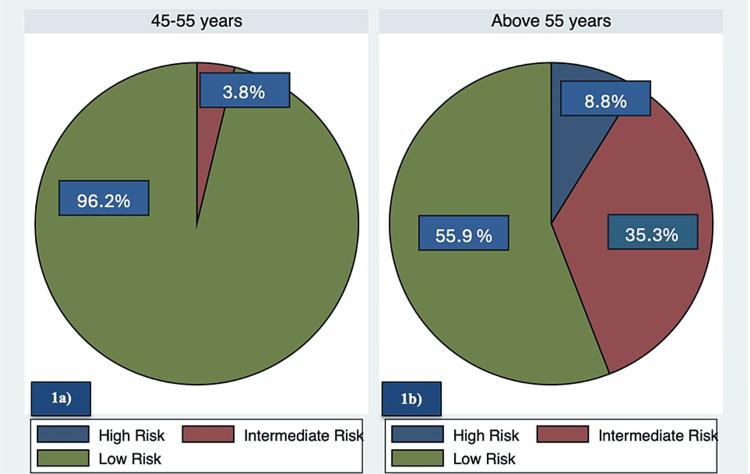
The mean (SD) age of participants was 54.5 (8.6) years, 87% were married, 33% were illiterate with mean (SD) WHR of 0.88 (0.1). Around 80.5% of the participants were categorized as low risk, 16.1% as intermediate risk, and 3.5% as high risk based on OSTA scores. Older age, lower educational attainment, and higher waist-hip ratio were significantly associated with increased osteoporosis risk.
CONCLUSION
This community-based study found a 20% osteoporosis risk among postmenopausal women using the OSTA scale, with age, lower education, and waist-hip ratio as key determinants. Early identification and interventions, particularly targeting older and obese individuals, are crucial to alleviate the burden and complications of osteoporosis.
引言
骨质疏松症带来了重大的健康负担,尤其是在绝经后女性中。虽然以体重指数(BMI)形式存在的肥胖与多种健康状况有关,但腰臀比(WHR)与骨质疏松症之间的关系仍存在争议。本研究旨在估计印度南部农村绝经后女性骨质疏松症风险的患病率,并探讨WHR与骨质疏松症风险之间的关联。
方法
在泰米尔纳德邦的钦格洛普图区进行了一项基于社区的横断面研究。该研究纳入了435名年龄在45岁及以上的绝经后女性,并收集了社会人口学特征、人体测量数据以及使用亚洲女性骨质疏松自我评估工具(OSTA)量表进行的骨质疏松症风险评估数据。进行逻辑回归分析以确定与骨质疏松症风险相关的因素,并给出95%置信区间。
结果
参与者的平均(标准差)年龄为54.5(8.6)岁,87%已婚,33%为文盲,平均(标准差)WHR为0.88(0.1)。根据OSTA评分,约80.5%的参与者被归类为低风险,16.1%为中度风险,3.5%为高风险。年龄较大、受教育程度较低和腰臀比更高与骨质疏松症风险增加显著相关。
结论
这项基于社区的研究发现,使用OSTA量表,绝经后女性中有20%存在骨质疏松症风险,年龄、低教育程度和腰臀比是关键决定因素。早期识别和干预,特别是针对年龄较大和肥胖个体的干预,对于减轻骨质疏松症的负担和并发症至关重要。
 Zotero 插件