
帕博利珠单抗治疗晚期尿路上皮癌:KEYNOTE-361 3期试验的探索性循环肿瘤DNA生物标志物分析
Pembrolizumab for advanced urothelial carcinoma: exploratory ctDNA biomarker analyses of the KEYNOTE-361 phase 3 trial.
作者信息
Powles Thomas, Chang Yen-Hwa, Yamamoto Yoshiaki, Munoz Jose, Reyes-Cosmelli Felipe, Peer Avivit, Cohen Graham, Yu Evan Y, Lorch Anja, Bavle Abhishek, Homet Moreno Blanca, Markensohn Julia, Edmondson Mackenzie, Chen Cai, Cristescu Razvan, Peña Carol, Lunceford Jared, Gunduz Seyda
机构信息
Barts Cancer Institute, Queen Mary University of London, London, UK.
Taipei Veterans General Hospital, Taipei, Taiwan.
出版信息
Nat Med. 2024 Sep;30(9):2508-2516. doi: 10.1038/s41591-024-03091-7. Epub 2024 Jun 1.
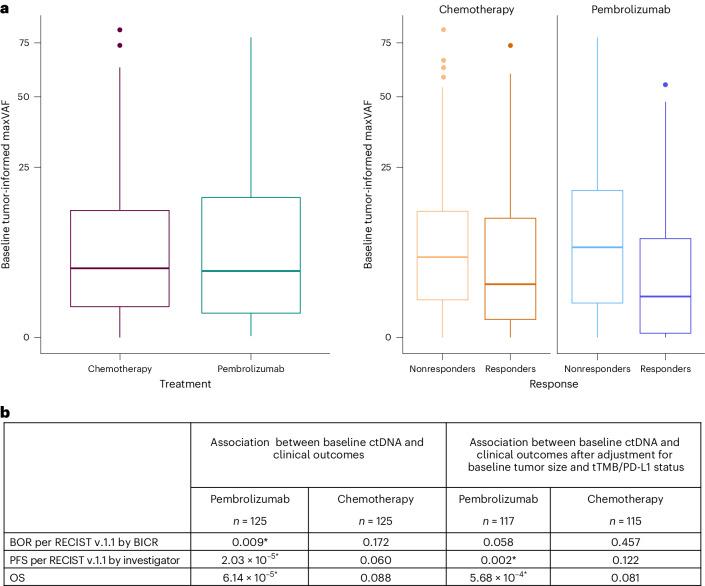
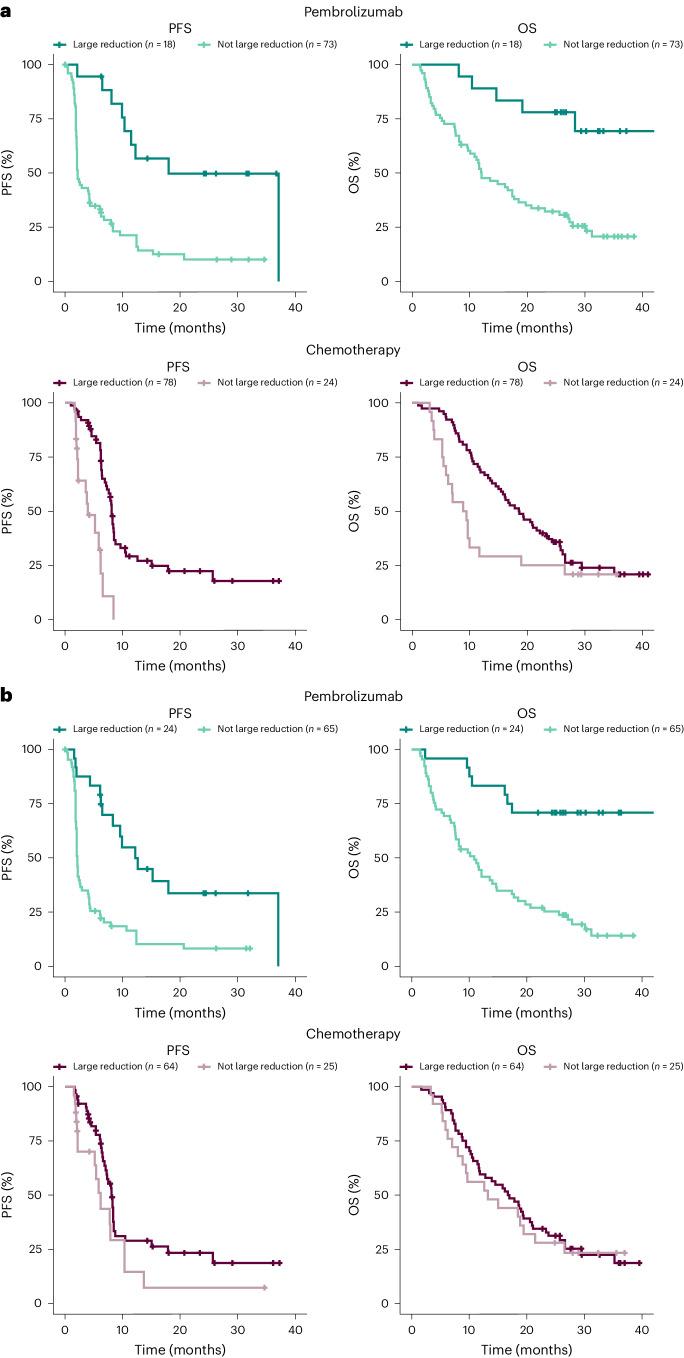
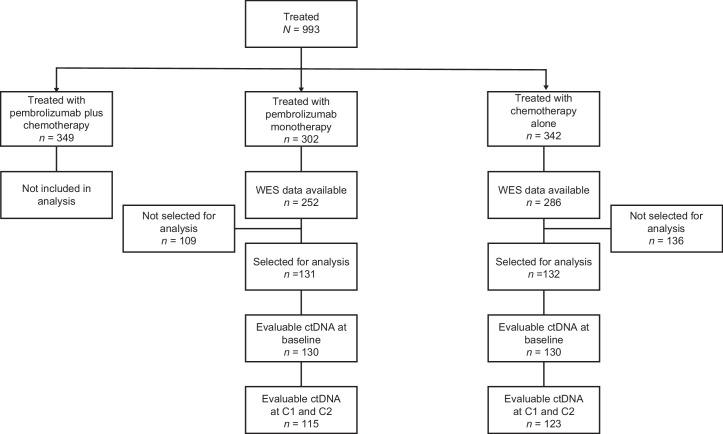
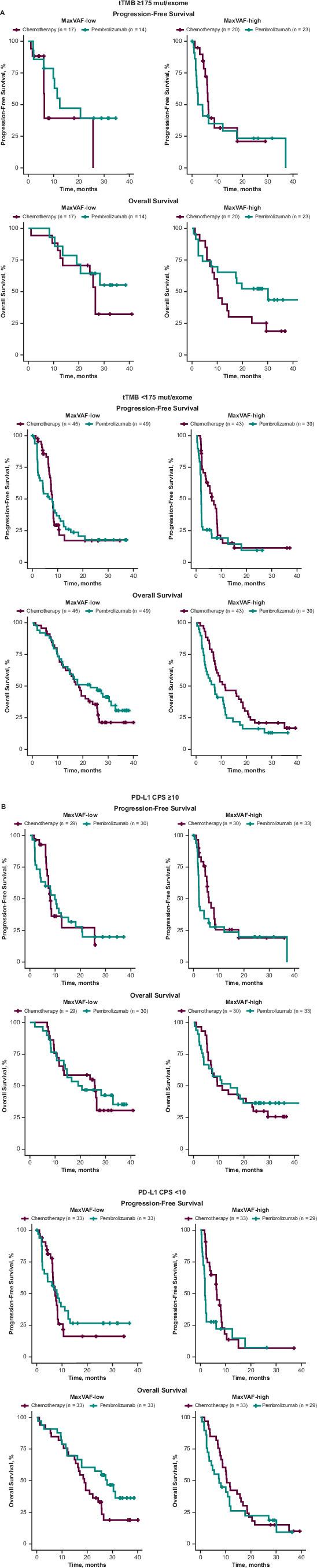
Circulating tumor DNA (ctDNA) is emerging as a potential biomarker in early-stage urothelial cancer, but its utility in metastatic disease remains unknown. In the phase 3 KEYNOTE-361 study, pembrolizumab with and without chemotherapy was compared with chemotherapy alone in patients with metastatic urothelial cancer. The study did not meet prespecified efficacy thresholds for statistical significance. To identify potential biomarkers of response, we retrospectively evaluated the association of pre- and posttreatment ctDNA with clinical outcomes in a subset of patients who received pembrolizumab (n = 130) or chemotherapy (n = 130) in KEYNOTE-361. Baseline ctDNA was associated with best overall response (BOR; P = 0.009), progression-free survival (P < 0.001) and overall survival (OS; P < 0.001) for pembrolizumab but not for chemotherapy (all; P > 0.05). Chemotherapy induced larger ctDNA decreases from baseline to treatment cycle 2 than pembrolizumab; however, change with pembrolizumab (n = 87) was more associated with BOR (P = 4.39 × 10) and OS (P = 7.07 × 10) than chemotherapy (n = 102; BOR: P = 1.01 × 10; OS: P = 0.018). Tumor tissue-informed versions of ctDNA change metrics were most associated with clinical outcomes but did not show a statistically significant independent value for explaining OS beyond radiographic change by RECIST v.1.1 when jointly modeled (pembrolizumab P = 0.364; chemotherapy P = 0.823). These results suggest distinct patterns in early ctDNA changes with immunotherapy and chemotherapy and differences in their association with long-term outcomes, which provide preliminary insights into the utility of liquid biopsies for treatment monitoring in metastatic urothelial cancer. Clinical trial registration: NCT02853305 .
循环肿瘤DNA(ctDNA)正逐渐成为早期尿路上皮癌的一种潜在生物标志物,但其在转移性疾病中的效用仍不明确。在3期KEYNOTE-361研究中,将帕博利珠单抗联合或不联合化疗与单纯化疗在转移性尿路上皮癌患者中进行了比较。该研究未达到预设的统计学显著疗效阈值。为了确定潜在的反应生物标志物,我们回顾性评估了在KEYNOTE-361中接受帕博利珠单抗(n = 130)或化疗(n = 130)的部分患者中,治疗前和治疗后ctDNA与临床结局的关联。基线ctDNA与帕博利珠单抗的最佳总体反应(BOR;P = 0.009)、无进展生存期(P < 0.001)和总生存期(OS;P < 0.001)相关,但与化疗无关(所有P > 0.05)。化疗诱导的ctDNA从基线到治疗周期2的下降幅度大于帕博利珠单抗;然而,帕博利珠单抗组(n = 87)的变化与BOR(P = 4.39×10)和OS(P = 7.07×10)的相关性高于化疗组(n = 102;BOR:P = 1.01×10;OS:P = 0.018)。ctDNA变化指标的肿瘤组织信息版本与临床结局最相关,但在与RECIST v.1.1的影像学变化联合建模时,对于解释OS并未显示出超出影像学变化的统计学显著独立价值(帕博利珠单抗P = 0.364;化疗P = 0.823)。这些结果表明免疫疗法和化疗在早期ctDNA变化方面存在不同模式,以及它们与长期结局的关联存在差异,这为液体活检在转移性尿路上皮癌治疗监测中的效用提供了初步见解。临床试验注册号:NCT02853305 。






 Zotero 插件