
中低收入国家生育极高龄产妇的新生儿死亡率及其决定因素。
Neonatal mortality rate and determinants among births of mothers at extreme ages of reproductive life in low and middle income countries.
机构信息
Department of Pediatrics and Child Health Nursing, College of Medicine and Health Sciences, University of Gondar, Gondar, Ethiopia.
出版信息
Sci Rep. 2024 Jun 1;14(1):12596. doi: 10.1038/s41598-024-61867-w.
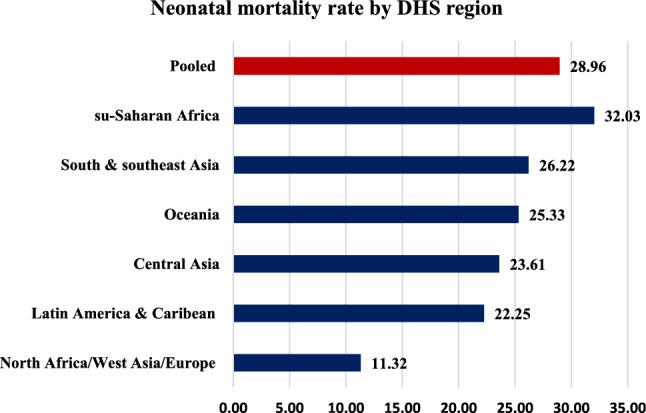
Neonatal mortality, which refers to the death of neonates during the first 28 completed days of life, is a critical global public health concern. The neonatal period is widely recognized as one of the most precarious phases in human life. Research has indicated that maternal extreme ages during reproductive years significantly impact neonatal survival, particularly in low- and middle-income countries. Consequently, this study aims to evaluate the neonatal mortality rate and determinants among neonates born to mothers at extreme reproductive ages within these countries. A secondary analysis of demographic and health surveys conducted between 2015 and 2022 in 43 low- and middle-income countries was performed. The study included a total sample of 151,685 live births. Researchers utilized a multilevel mixed-effects model to identify determinants of neonatal mortality. The measures of association were evaluated using the adjusted odds ratio within a 95% confidence interval. The neonatal mortality rate among neonates born to mothers at extreme ages of reproductive life in low- and middle-income countries was 28.96 neonatal deaths per 1000 live births (95% CI 28.13-29.82). Factors associated with higher rates of neonatal mortality include male gender, low and high birth weight, maternal education (no or low), home deliveries, multiple births, short preceding birth intervals, lack of postnatal checkups, and countries with high fertility and low literacy rates. This study sheds light on the neonatal mortality rates among neonates born to mothers at extreme ages of reproductive life in low- and middle-income countries. Notably, we found that neonatal mortality was significantly higher in this group compared to neonatal mortality rates reported regardless of maternal ages. Male babies, low and high birth-weighted babies, those born to mothers with no or low education, delivered at home, singletons, babies born with a small preceding birth interval, and those without postnatal checkups faced elevated risks of neonatal mortality. Additionally, neonates born in countries with high fertility and low literacy rates were also vulnerable. These findings underscore the urgent need for targeted interventions tailored to mothers at extreme ages. Policymakers and healthcare providers should prioritize strategies that address specific risk factors prevalent in these vulnerable populations. By doing so, we can improve neonatal outcomes and ensure the survival of these newborns during the critical neonatal period.
新生儿死亡率是指新生儿在生命的头 28 天内死亡的比率,这是一个全球性的重大公共卫生问题。新生儿期被广泛认为是人类生命中最脆弱的阶段之一。研究表明,产妇在生育年龄处于极端年龄会显著影响新生儿的存活率,尤其是在低收入和中等收入国家。因此,本研究旨在评估这些国家中产妇处于极端生育年龄时新生儿的死亡率及其决定因素。对 2015 年至 2022 年期间在 43 个低收入和中等收入国家进行的人口与健康调查的二次分析。该研究共纳入了 151685 例活产儿。研究人员利用多水平混合效应模型来确定新生儿死亡率的决定因素。使用调整后的比值比和 95%置信区间来评估关联度。在低收入和中等收入国家,产妇处于生育年龄极端状态下出生的新生儿的新生儿死亡率为每 1000 例活产儿 28.96 例(95%CI28.13-29.82)。与较高的新生儿死亡率相关的因素包括男性性别、低体重和高体重、母亲受教育程度(无或低)、家庭分娩、多胎分娩、前次分娩间隔较短、缺乏产后检查以及生育率高和识字率低的国家。本研究揭示了在低收入和中等收入国家中产妇处于生育年龄极端状态下出生的新生儿的新生儿死亡率。值得注意的是,我们发现与报告的无论产妇年龄如何的新生儿死亡率相比,该组的新生儿死亡率显著更高。男婴、低体重和高体重儿、母亲受教育程度无或低、家庭分娩、单胎、前次分娩间隔较短以及无产后检查的婴儿面临更高的新生儿死亡风险。此外,在生育率高和识字率低的国家出生的新生儿也很脆弱。这些发现强调了针对处于生育年龄极端状态的母亲采取有针对性的干预措施的迫切需要。政策制定者和医疗保健提供者应优先考虑针对这些弱势群体中普遍存在的特定风险因素的策略。通过这样做,我们可以改善新生儿的结局并确保这些新生儿在关键的新生儿期存活。

 Zotero 插件