
多发性硬化症中关键的炎症衰老相关风险因素的识别
Identification of crucial inflammaging related risk factors in multiple sclerosis.
作者信息
Xu Mengchu, Wang Huize, Ren Siwei, Wang Bing, Yang Wenyan, Lv Ling, Sha Xianzheng, Li Wenya, Wang Yin
机构信息
Department of Biomedical Engineering, School of Intelligent Sciences, China Medical University, Shenyang, Liaoning, China.
Department of Nursing, First Affiliated Hospital of China Medical University, Shenyang, Liaoning, China.
出版信息
Front Mol Neurosci. 2024 May 21;17:1398665. doi: 10.3389/fnmol.2024.1398665. eCollection 2024.
BACKGROUND
Multiple sclerosis (MS) is an immune-mediated disease characterized by inflammatory demyelinating lesions in the central nervous system. Studies have shown that the inflammation is vital to both the onset and progression of MS, where aging plays a key role in it. However, the potential mechanisms on how aging-related inflammation (inflammaging) promotes MS have not been fully understood. Therefore, there is an urgent need to integrate the underlying mechanisms between inflammaging and MS, where meaningful prediction models are needed.
METHODS
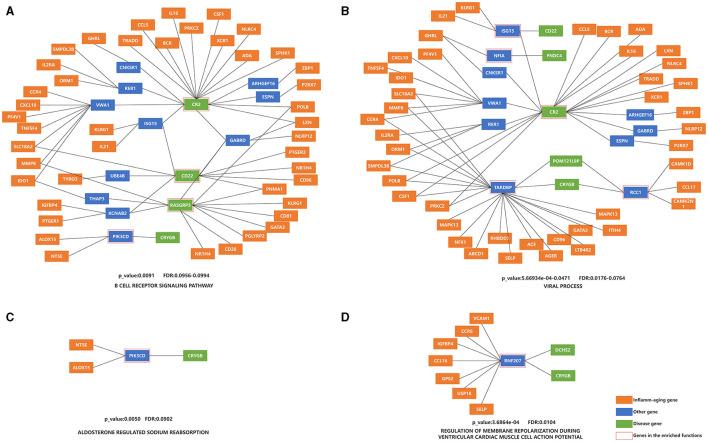
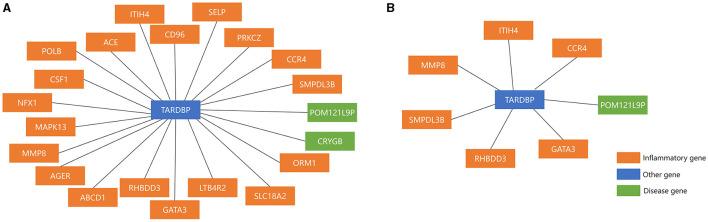
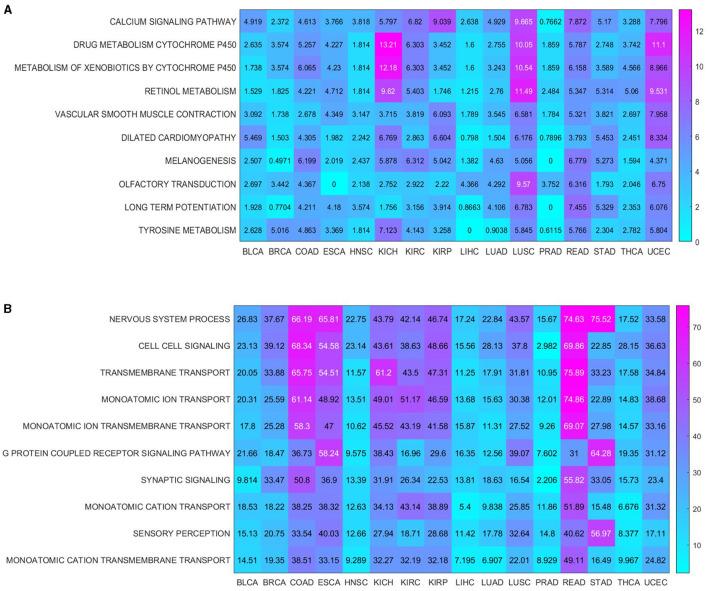
First, both aging and disease models were developed using machine learning methods, respectively. Then, an integrated inflammaging model was used to identify relative risk factors, by identifying essential "aging-inflammation-disease" triples. Finally, a series of bioinformatics analyses (including network analysis, enrichment analysis, sensitivity analysis, and pan-cancer analysis) were further used to explore the potential mechanisms between inflammaging and MS.
RESULTS
A series of risk factors were identified, such as the protein homeostasis, cellular homeostasis, neurodevelopment and energy metabolism. The inflammaging indices were further validated in different cancer types. Therefore, various risk factors were integrated, and even both the theories of inflammaging and immunosenescence were further confirmed.
CONCLUSION
In conclusion, our study systematically investigated the potential relationships between inflammaging and MS through a series of computational approaches, and could present a novel thought for other aging-related diseases.
背景
多发性硬化症(MS)是一种免疫介导的疾病,其特征是中枢神经系统出现炎性脱髓鞘病变。研究表明,炎症对MS的发病和进展都至关重要,而衰老在其中起关键作用。然而,衰老相关炎症(炎性衰老)促进MS的潜在机制尚未完全阐明。因此,迫切需要整合炎性衰老与MS之间的潜在机制,这需要有意义的预测模型。
方法
首先,分别使用机器学习方法构建衰老模型和疾病模型。然后,通过识别关键的“衰老-炎症-疾病”三元组,使用整合的炎性衰老模型来识别相关风险因素。最后,进一步进行一系列生物信息学分析(包括网络分析、富集分析、敏感性分析和泛癌分析),以探索炎性衰老与MS之间的潜在机制。
结果
识别出一系列风险因素,如蛋白质稳态、细胞稳态、神经发育和能量代谢。炎性衰老指标在不同癌症类型中得到进一步验证。因此,整合了各种风险因素,甚至进一步证实了炎性衰老和免疫衰老的理论。
结论
总之,我们的研究通过一系列计算方法系统地研究了炎性衰老与MS之间的潜在关系,并可为其他衰老相关疾病提供新的思路。



 Zotero 插件