
急性 5-羟色胺再摄取抑制对与注意力相关的内脏感觉相关的神经反应的一般和焦虑相关影响。
General and anxiety-linked influences of acute serotonin reuptake inhibition on neural responses associated with attended visceral sensation.
机构信息
School of Psychology, University of Sussex, Brighton, UK.
Heinrich Heine Universität, Düsseldorf, Germany.
出版信息
Transl Psychiatry. 2024 Jun 6;14(1):241. doi: 10.1038/s41398-024-02971-3.
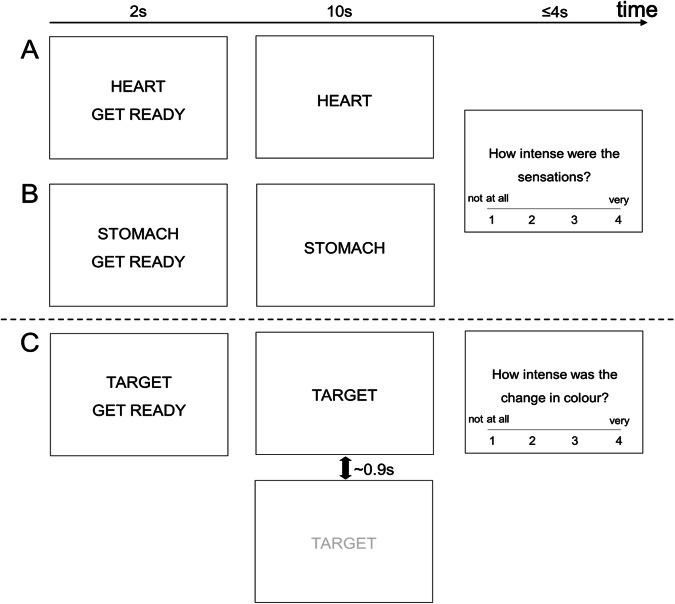
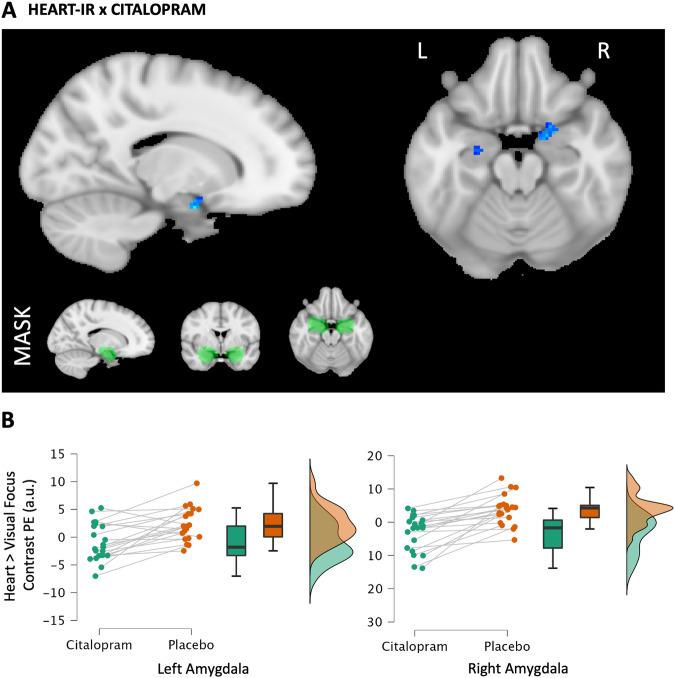
Ordinary sensations from inside the body are important causes and consequences of our affective states and behaviour, yet the roles of neurotransmitters in interoceptive processing have been unclear. With a within-subjects design, this experiment tested the impacts of acute increases of endogenous extracellular serotonin on the neural processing of attended internal sensations and the links of these effects to anxiety using a selective serotonin reuptake inhibitor (SSRI) (20 mg CITALOPRAM) and a PLACEBO. Twenty-one healthy volunteers (fourteen female, mean age 23.9) completed the Visceral Interoceptive Attention (VIA) task while undergoing functional magnetic resonance imaging (fMRI) with each treatment. The VIA task required focused attention on the heart, stomach, or visual sensation. The relative neural interoceptive responses to heart sensation [heart minus visual attention] (heart-IR) and stomach sensation [stomach minus visual attention] (stomach-IR) were compared between treatments. Visual attention subtraction controlled for the general effects of CITALOPRAM on sensory processing. CITALOPRAM was associated with lower interoceptive processing in viscerosensory (the stomach-IR of bilateral posterior insular cortex) and integrative/affective (the stomach-IR and heart-IR of bilateral amygdala) components of interoceptive neural pathways. In anterior insular cortex, CITALOPRAM reductions of heart-IR depended on anxiety levels, removing a previously known association between anxiety and the region's response to attended heart sensation observed with PLACEBO. Preliminary post hoc analysis indicated that CITALOPRAM effects on the stomach-IR of the amygdalae corresponded to acute anxiety changes. This direct evidence of general and anxiety-linked serotonergic influence on neural interoceptive processes advances our understanding of interoception, its regulation, and anxiety.
内脏感觉是我们情感状态和行为的重要原因和结果,但神经递质在内脏感觉加工中的作用尚不清楚。本实验采用内源性细胞外 5-羟色胺(5-HT)急性增加的被试内设计,使用选择性 5-羟色胺再摄取抑制剂(SSRI)(西酞普兰 20mg)和安慰剂,测试了急性增加内源性细胞外 5-HT 对注意内脏感觉的神经加工的影响,以及这些效应与焦虑的关系。21 名健康志愿者(14 名女性,平均年龄 23.9 岁)在进行功能磁共振成像(fMRI)时完成了内脏内感受注意(VIA)任务,每次治疗后进行一次。VIA 任务要求集中注意力于心脏、胃部或视觉感觉。在治疗之间比较了心脏感觉[心脏减去视觉注意](心脏-IR)和胃部感觉[胃部减去视觉注意](胃部-IR)的相对神经内脏反应。视觉注意力减去控制了西酞普兰对感觉加工的一般影响。西酞普兰与内脏感觉(双侧后岛叶皮质的胃-IR)和整合/情感(双侧杏仁核的胃-IR 和心脏-IR)内脏感觉神经通路成分的内感受加工降低有关。在岛叶前皮质中,西酞普兰降低心脏-IR 的作用取决于焦虑水平,消除了先前用安慰剂观察到的焦虑与该区域对注意心脏感觉反应之间的已知关联。初步事后分析表明,西酞普兰对杏仁核胃-IR 的影响与急性焦虑变化相对应。这一关于一般和焦虑相关 5-HT 对神经内脏感觉过程影响的直接证据,增进了我们对内感受、其调节和焦虑的理解。


 Zotero 插件