
嵌合抗原受体T细胞疗法在血液系统恶性肿瘤治疗中取得的空前成功。
The Unprecedented Success of Chimeric Antigen Receptor T-Cell Therapy in the Treatment of Hematological Malignancies.
作者信息
Dhaliwal Sargam, Gill Fatehpal S, Hamid Pousette
机构信息
Internal Medicine, California Institute of Behavioral Neurosciences & Psychology, Fairfield, USA.
Neurology, California Institute of Behavioral Neurosciences & Psychology, Fairfield, USA.
出版信息
Cureus. 2024 May 9;16(5):e59951. doi: 10.7759/cureus.59951. eCollection 2024 May.
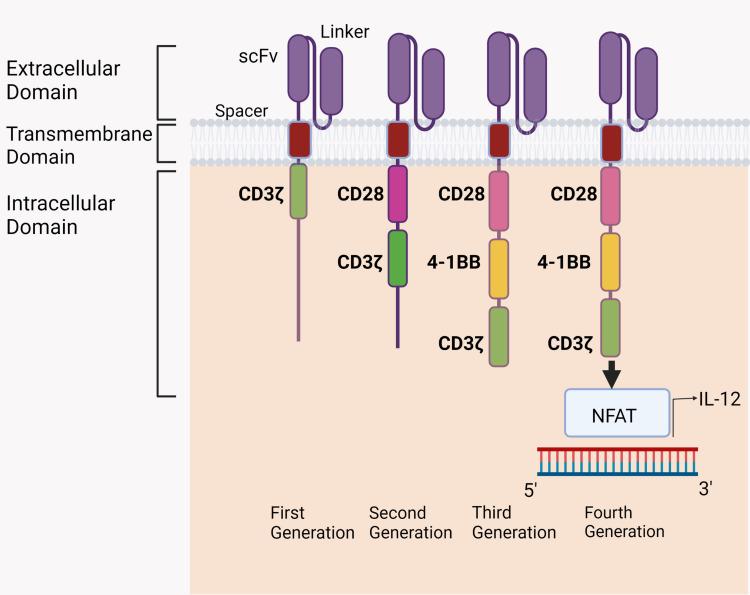
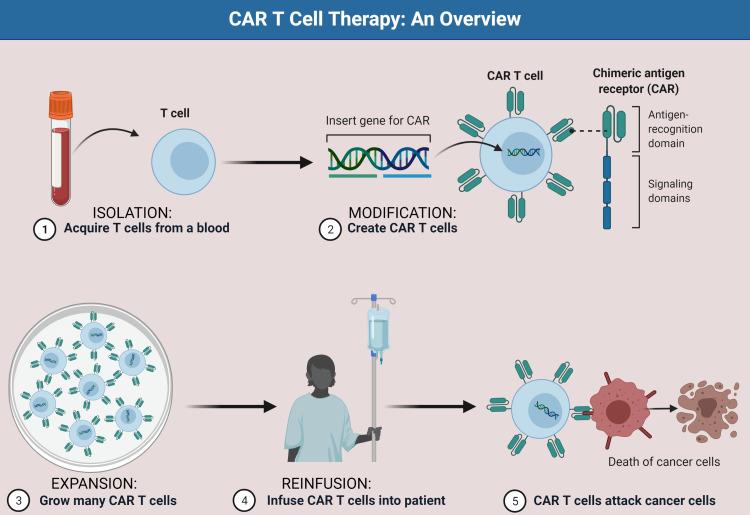
Chimeric antigen receptor (CAR) therapy is one of the most unprecedented advancements in the treatment of hematological malignancies, especially B-cell malignancies. The fundamental notion behind the success of this therapy is to generate a synthetic protein (CAR) capable of redirecting T lymphocytes to act against cancer cells. New insights into the genetic and molecular base of hematological malignancies have more recently given rise to the development of targeted treatments. CAR T-cell therapy is one of these immunological treatment techniques that has recently received a lot of attention and paved a light of hope for the effective cure of relapsed and refractory hematological malignancies and some solid malignancies. Researchers of today might not know what the future holds for CAR T-cell therapy, but from whatever research has been done so far, this therapy has proven to be a success despite its limitations, and it can be assumed that the spectrum of its application is expanding with each passing day.
嵌合抗原受体(CAR)疗法是血液系统恶性肿瘤,尤其是B细胞恶性肿瘤治疗中最前所未有的进展之一。该疗法成功背后的基本理念是生成一种能够重定向T淋巴细胞以对抗癌细胞的合成蛋白(CAR)。最近,对血液系统恶性肿瘤的遗传和分子基础的新见解推动了靶向治疗的发展。CAR T细胞疗法是这些免疫治疗技术之一,最近受到了广泛关注,并为有效治愈复发和难治性血液系统恶性肿瘤以及一些实体恶性肿瘤带来了希望之光。当今的研究人员可能不知道CAR T细胞疗法的未来会怎样,但从目前已完成的所有研究来看,尽管存在局限性,这种疗法已被证明是成功的,而且可以预计其应用范围正在日益扩大。
 Zotero 插件