
微卫星断裂诱导复制产生高度诱变的染色体外环状DNA。
Microsatellite break-induced replication generates highly mutagenized extrachromosomal circular DNAs.
作者信息
Gadgil Rujuta Yashodhan, Rider S Dean, Shrestha Resha, Alhawach Venicia, Hitch David C, Leffak Michael
机构信息
Department of Biochemistry and Molecular Biology, Boonshoft School of Medicine, Wright State University, Dayton, OH 45435, USA.
出版信息
NAR Cancer. 2024 Jun 8;6(2):zcae027. doi: 10.1093/narcan/zcae027. eCollection 2024 Jun.
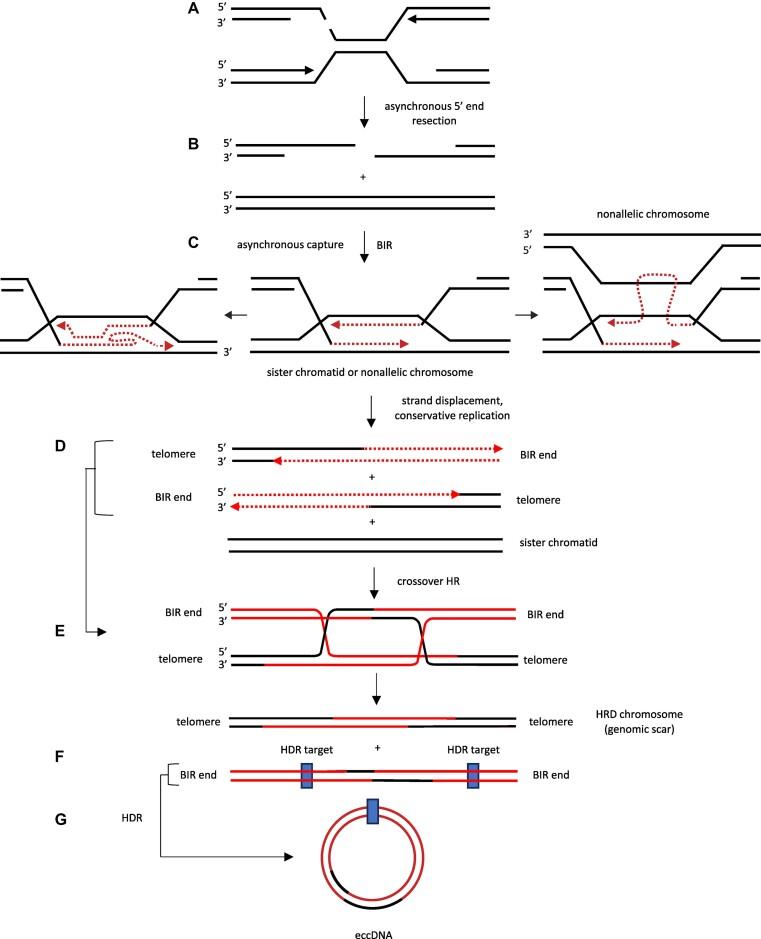
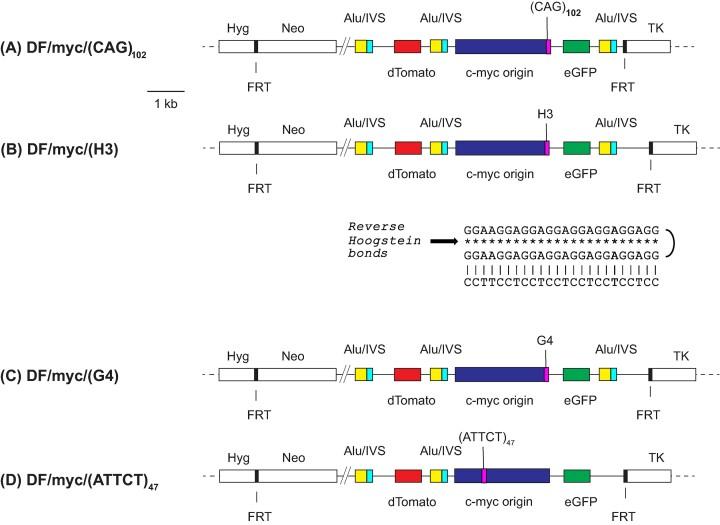
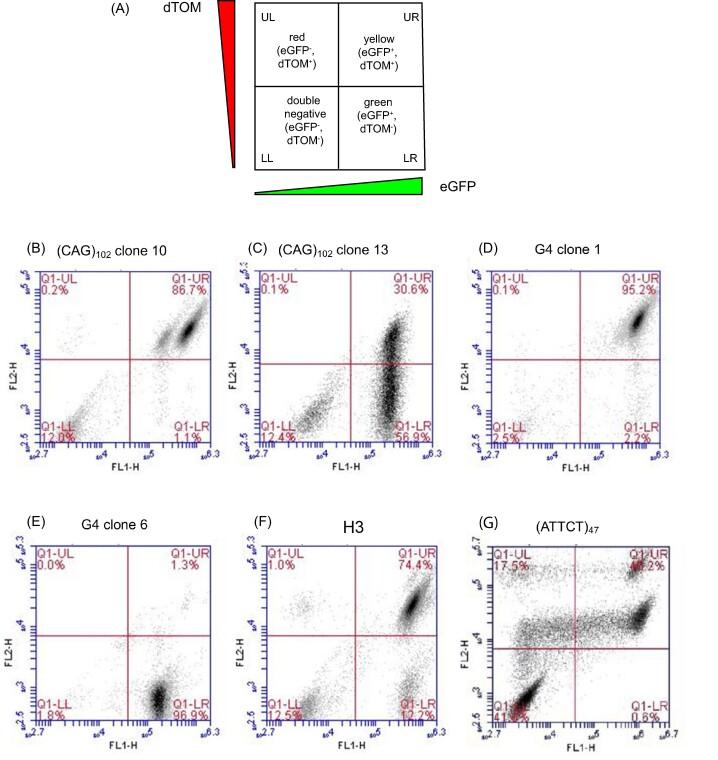
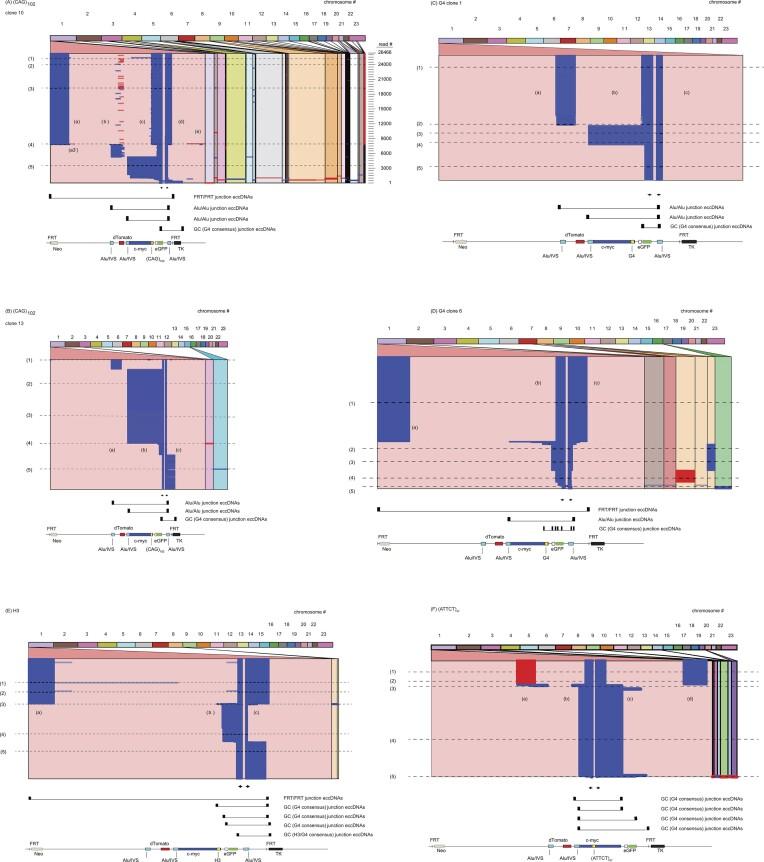
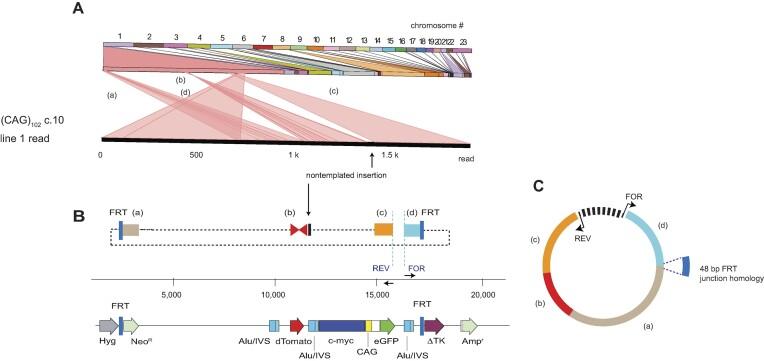
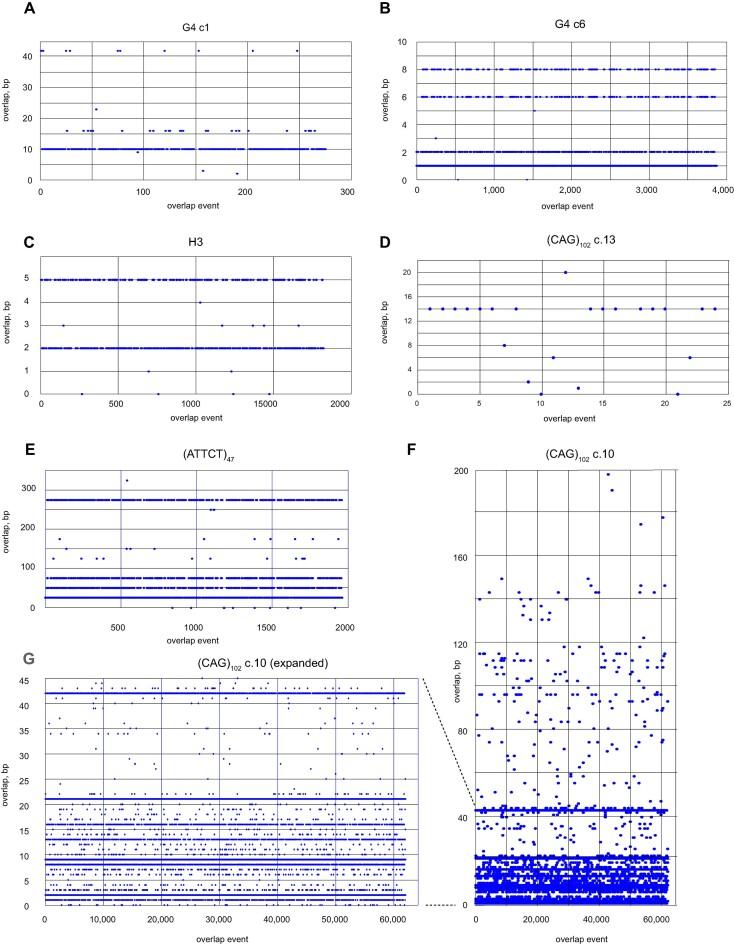
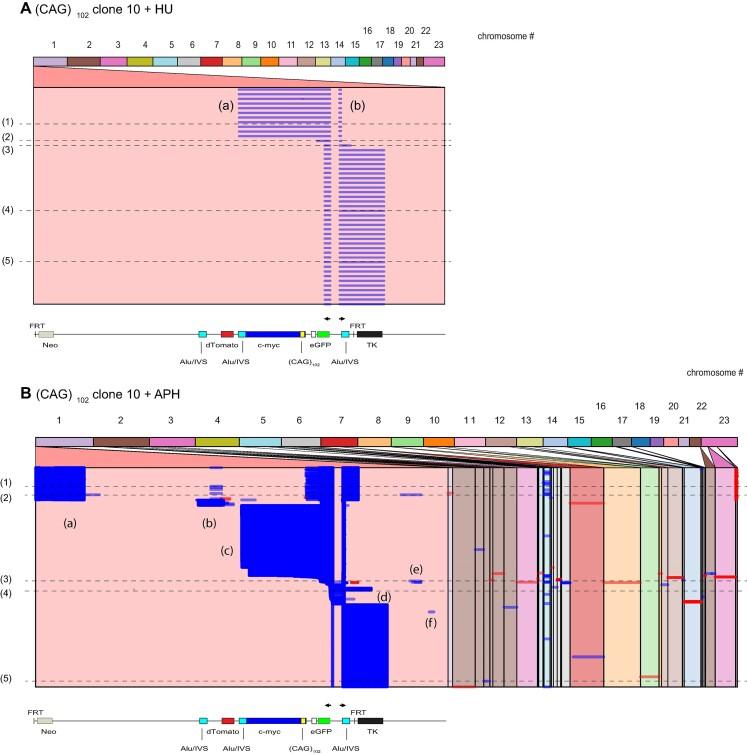
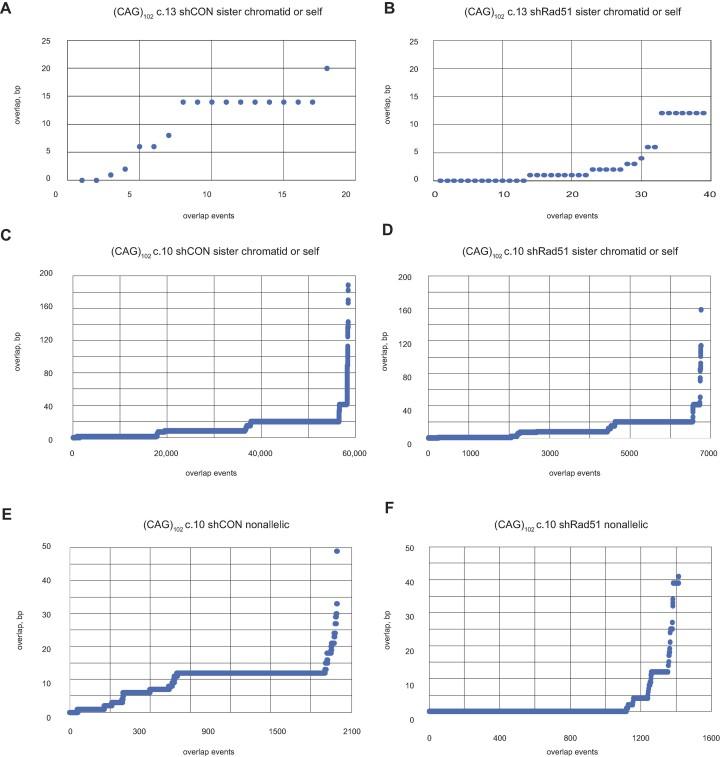
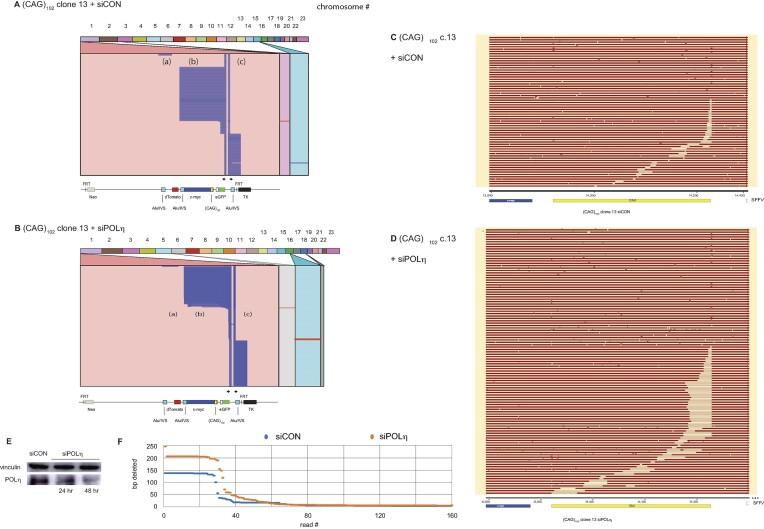
Extrachromosomal circular DNAs (eccDNAs) are produced from all regions of the eucaryotic genome. We used inverse PCR of non-B microsatellites capable of forming hairpin, triplex, quadruplex and AT-rich structures integrated at a common ectopic chromosomal site to show that these non-B DNAs generate highly mutagenized eccDNAs by replication-dependent mechanisms. Mutagenesis occurs within the non-B DNAs and extends several kilobases bidirectionally into flanking and nonallelic DNA. Each non-B DNA exhibits a different pattern of mutagenesis, while sister clones containing the same non-B DNA also display distinct patterns of recombination, microhomology-mediated template switching and base substitutions. Mutations include mismatches, short duplications, long nontemplated insertions, large deletions and template switches to sister chromatids and nonallelic chromosomes. Drug-induced replication stress or the depletion of DNA repair factors Rad51, the COPS2 signalosome subunit or POLη change the pattern of template switching and alter the eccDNA mutagenic profiles. We propose an asynchronous capture model based on break-induced replication from microsatellite-induced DNA double strand breaks to account for the generation and circularization of mutagenized eccDNAs and the appearance of genomic homologous recombination deficiency (HRD) scars. These results may help to explain the appearance of tumor eccDNAS and their roles in neoantigen production, oncogenesis and resistance to chemotherapy.
染色体外环状DNA(eccDNA)由真核基因组的所有区域产生。我们利用能够形成发夹、三链体、四链体和富含AT结构的非B微卫星进行反向PCR,这些微卫星整合在一个常见的异位染色体位点上,结果表明这些非B DNA通过依赖复制的机制产生高度诱变的eccDNA。诱变发生在非B DNA内部,并双向延伸数千碱基对进入侧翼和非等位基因DNA。每个非B DNA表现出不同的诱变模式,而含有相同非B DNA的姐妹克隆也表现出不同的重组、微同源性介导的模板转换和碱基替换模式。突变包括错配、短重复、长的非模板插入、大的缺失以及向姐妹染色单体和非等位染色体的模板转换。药物诱导的复制应激或DNA修复因子Rad51、COPS2信号体亚基或POLη的缺失会改变模板转换模式,并改变eccDNA诱变谱。我们提出了一个基于微卫星诱导的DNA双链断裂引发的复制的异步捕获模型,以解释诱变eccDNA的产生和环化以及基因组同源重组缺陷(HRD)疤痕的出现。这些结果可能有助于解释肿瘤eccDNA的出现及其在新抗原产生、肿瘤发生和化疗耐药中的作用。




 Zotero 插件