
体外非酒精性脂肪性肝病模型:阐明免疫环境对疾病进展和缓解的影响
In Vitro Nonalcoholic Fatty Liver Disease Model Elucidating the Effect of Immune Environment on Disease Progression and Alleviation.
作者信息
Kim Inhye, Kyun Mi-Lang, Jung Hyewon, Kwon Ji-In, Kim Jeongha, Kim Ju-Kang, Lee Yu Bin, Kwon Young-In, Moon Kyoung-Sik
机构信息
Department of Advanced Toxicology Research, Korea Institute of Toxicology, Daejeon 34114, Republic of Korea.
Department of Food and Nutrition, Hannam University, Daejeon 34430, Republic of Korea.
出版信息
ACS Omega. 2024 May 27;9(23):25094-25105. doi: 10.1021/acsomega.4c02433. eCollection 2024 Jun 11.
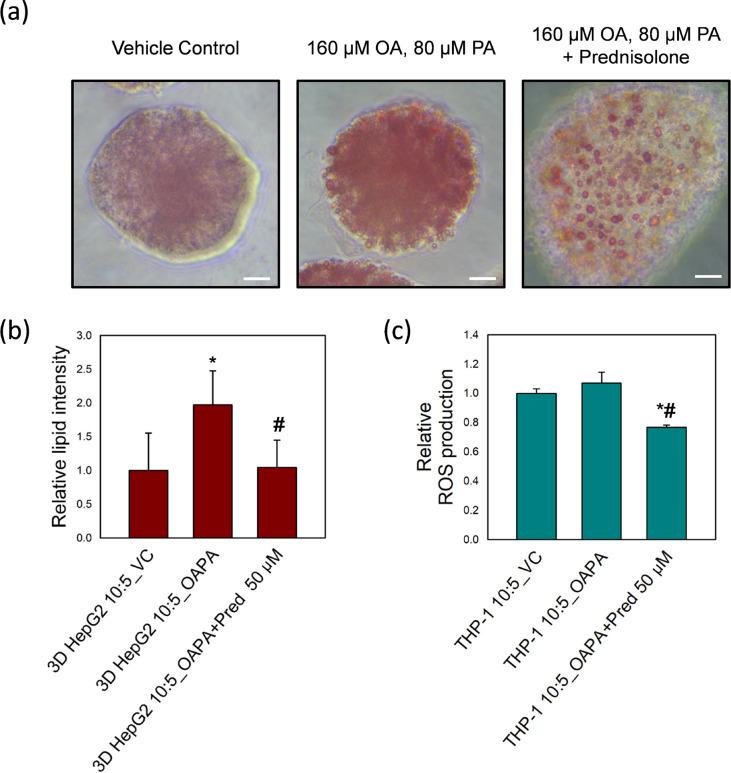
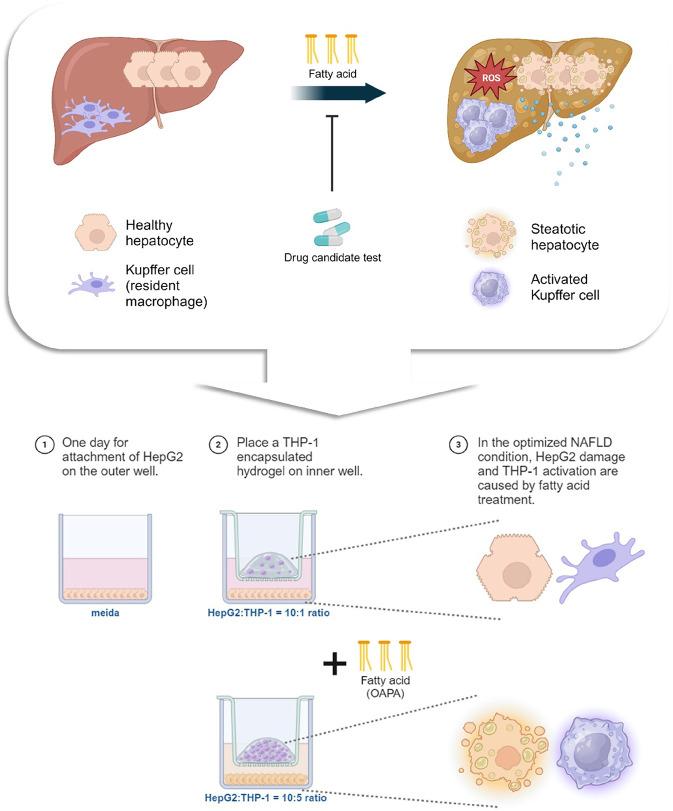
Nonalcoholic fatty liver disease (NAFLD), which is a major cause of chronic liver disease, is characterized by fat accumulation in the liver. Existing models struggle to assess medication effects on liver function in the context of NAFLD's unique inflammatory environment. We address this by developing a 3D in vitro NAFLD model using HepG2 and THP-1 cells (mimicking liver and Kupffer cells) cocultured using transwell and hydrogel system. This mimics liver architecture and allows for manipulation of the immune environment. We demonstrate that the model recapitulates key NAFLD features: steatosis (induced by fatty acids), oxidative stress, inflammation, and impaired liver function embodying the interrelationship between NAFLD and the surrounding immune environment. This versatile model offers a valuable tool for preclinical NAFLD research by incorporating a disease-relevant immune environment.
非酒精性脂肪性肝病(NAFLD)是慢性肝病的主要病因,其特征是肝脏中脂肪堆积。在NAFLD独特的炎症环境下,现有模型难以评估药物对肝功能的影响。我们通过使用HepG2和THP-1细胞(模拟肝脏细胞和库普弗细胞),利用Transwell和水凝胶系统共培养,开发出一种3D体外NAFLD模型来解决这一问题。这模拟了肝脏结构,并允许对免疫环境进行操控。我们证明该模型概括了NAFLD的关键特征:脂肪变性(由脂肪酸诱导)、氧化应激、炎症以及肝功能受损,体现了NAFLD与周围免疫环境之间的相互关系。这个多功能模型通过纳入与疾病相关的免疫环境,为临床前NAFLD研究提供了一个有价值的工具。


 Zotero 插件