
缅甸仰光地区 18-49 岁男女的教育不平等与自报健康:基于人群的横断面研究分析。
Educational inequalities and self-reported health among men and women aged 18-49 years in Yangon Region, Myanmar: analysis of a population-based, cross-sectional study.
机构信息
Department of Community Medicine and Global Health, Institute of Health and Society, Faculty of Medicine, University of Oslo, Oslo, Norway.
Department of Epidemiology, Faculty of Medicine, Prince of Songkla University, Hat Yai, Songkhla, Thailand.
出版信息
BMJ Open. 2024 Jun 18;14(6):e074468. doi: 10.1136/bmjopen-2023-074468.
OBJECTIVES
To estimate the prevalence of good self-reported health (SRH) in subpopulations based on the social determinants of health and to investigate the association between education (measured in years of schooling) and good SRH among men and women aged 18-49 years in Yangon Region, Myanmar.
DESIGN
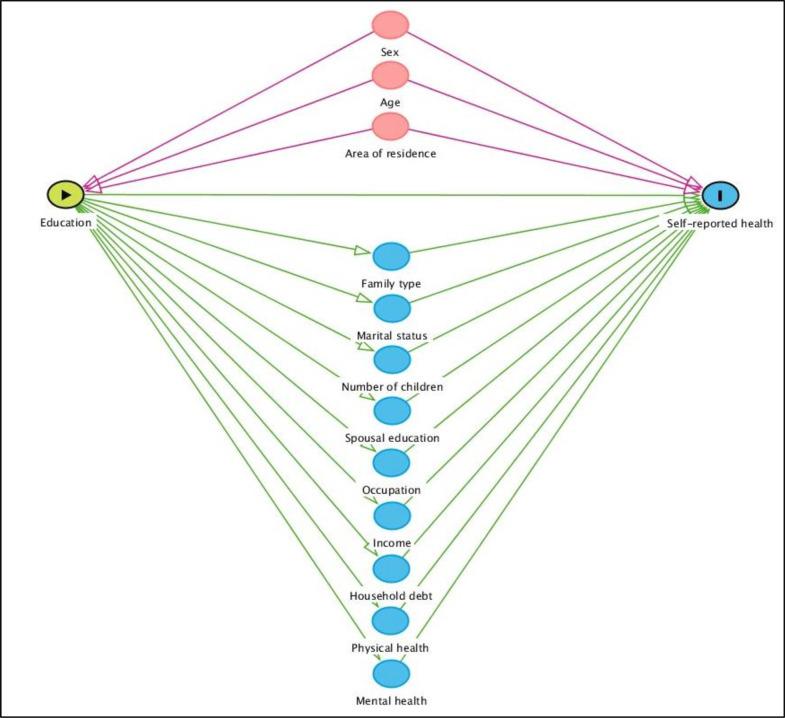
Analysis of data from a population-based, cross-sectional study conducted in Yangon, Myanmar, from October to November 2016. A multistage sampling procedure was employed, and structured face-to-face interviews were conducted with standardised questions adapted from the Myanmar Demographic and Health Survey. Prevalence ratios (PRs) with 95% CIs were estimated using Poisson regression analyses by sex.
SETTING
Urban and rural areas of Yangon Region, Myanmar.
PARTICIPANTS
The sample included 2,506 participants (91.8% response rate) aged 18-49 years and excluded nuns, monks, soldiers, institutionalised people and individuals deemed too ill physically and/or mentally to participate.
RESULTS
The prevalence of good SRH was 61.2% (95% CI 59.3 to 63.1), with higher rates among men (72.0%, 95% CI 69.3 to 74.5), younger individuals (69.2%, 95% CI 66.2 to 72.1), urban residents (63.6%, 95% CI 60.8 to 66.3), extended family dwellers (66.6%, 95% CI 63.7 to 69.4) and those with a higher level of education (66.0%, 95% CI 61.3 to 70.5). After adjusting for confounders (age and area of residence), the association between years of schooling and SRH (PR) was 1.01 (95% CI 1.01 to 1.02, p=0.002) in men and 1.01 (95% CI 0.99 to 1.02, p=0.415) in women.
CONCLUSIONS
Good SRH was more prevalent among men than among women. Additionally, a 1-year increase in education was associated with a 1% increase in the prevalence of good SRH among men, whereas the association was not statistically significant among women. In order to enhance the educational benefits of health in Myanmar, we recommend a higher focus on the length of education and addressing gender inequalities in wage return from education.
目的
根据健康的社会决定因素,估计特定人群中自我报告健康状况良好(SRH)的流行率,并调查教育(以受教育年限衡量)与缅甸仰光地区 18-49 岁男女良好 SRH 之间的关系。
设计
对 2016 年 10 月至 11 月在缅甸仰光进行的一项基于人群的横断面研究的数据进行分析。采用多阶段抽样程序,对来自城市和农村地区的 2506 名 18-49 岁参与者进行了标准问卷调查。通过泊松回归分析按性别估计了患病率比(PR)及其 95%置信区间(CI)。
地点
缅甸仰光地区的城市和农村地区。
参与者
该样本包括 2506 名 18-49 岁的参与者(91.8%的回复率),不包括修女、僧侣、士兵、被监禁者以及被认为身体和/或精神上太虚弱而无法参与的人。
结果
良好 SRH 的流行率为 61.2%(95%CI 59.3-63.1),男性(72.0%,95%CI 69.3-74.5)、年轻人(69.2%,95%CI 66.2-72.1)、城市居民(63.6%,95%CI 60.8-66.3)、大家庭居住者(66.6%,95%CI 63.7-69.4)和教育程度较高者(66.0%,95%CI 61.3-70.5)的比率更高。在调整了混杂因素(年龄和居住地区)后,在校年限与 SRH(PR)的关联在男性中为 1.01(95%CI 1.01-1.02,p=0.002),在女性中为 1.01(95%CI 0.99-1.02,p=0.415)。
结论
良好的 SRH 在男性中比在女性中更为普遍。此外,教育年限每增加 1 年,男性良好 SRH 的流行率就会增加 1%,而女性的关联则无统计学意义。为了提高缅甸教育对健康的益处,我们建议更加关注教育年限,并解决教育回报方面的性别不平等问题。
 Zotero 插件