
壳聚糖纳米结构中包含的间充质干细胞条件培养基对体外和体内常见肠胃炎细菌的清除作用。
The effect of mesenchymal stem cell conditioned medium incorporated within chitosan nanostructure in clearance of common gastroenteritis bacteria in-vitro and in-vivo.
机构信息
Infectious Diseases Research Center, Kashan University of Medical Sciences, Kashan, Iran.
Department of Microbiology and Immunology, Faculty of Medicine, Kashan University of Medical Sciences, Kashan, Iran.
出版信息
Sci Rep. 2024 Jun 20;14(1):14274. doi: 10.1038/s41598-024-64465-y.
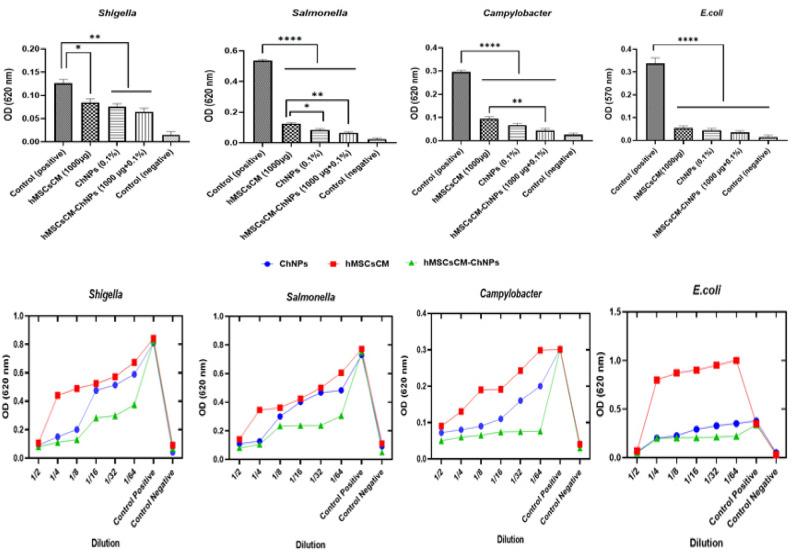
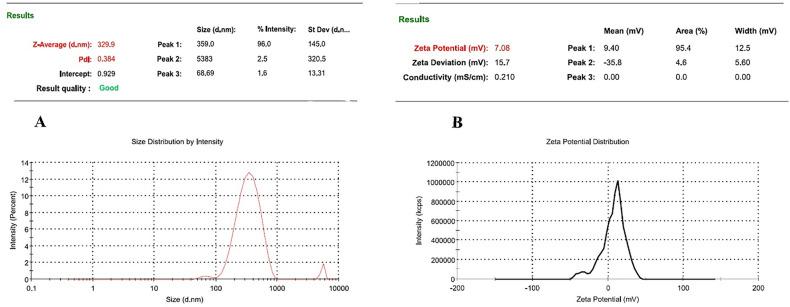
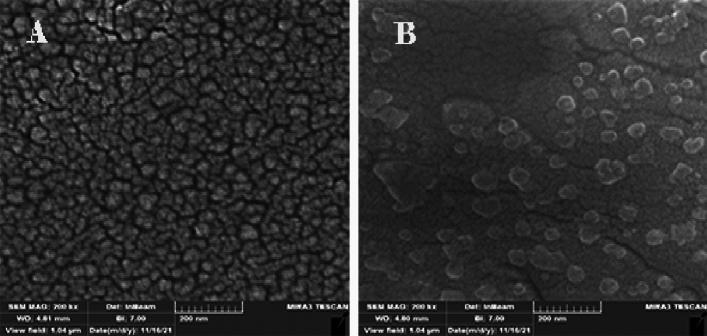
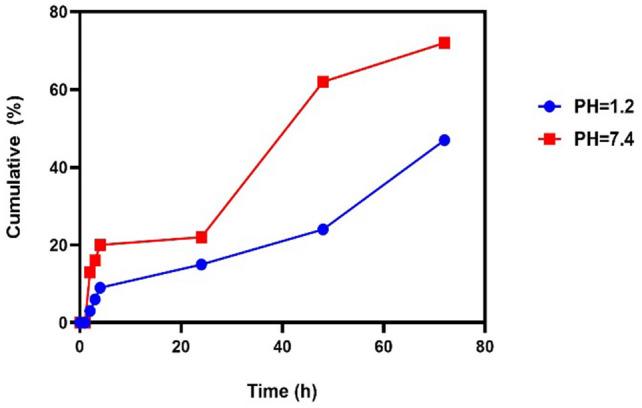
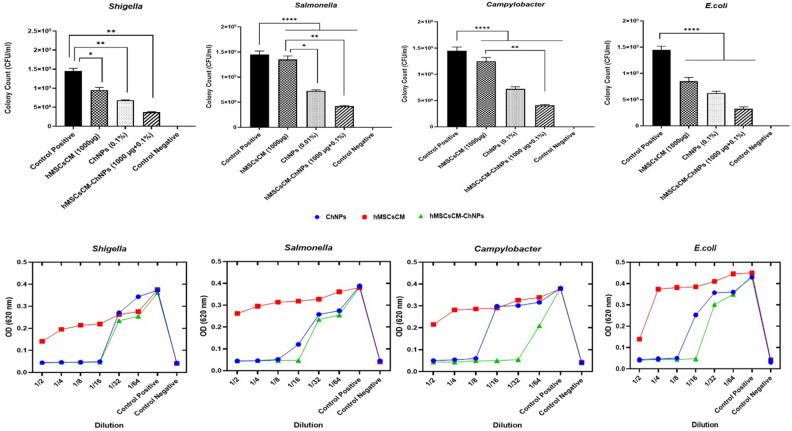
Gastroenteritis infection is a major public health concern worldwide, especially in developing countries due to the high annual mortality rate. The antimicrobial and antibiofilm activity of human mesenchymal stem cell-derived conditioned medium (hMSCsCM) encapsulated in chitosan nanoparticles (ChNPs) was studied in vitro and in vivo against common gastroenteritis bacteria. The synthesized ChNPs were characterized using Zeta potential, scanning electron microscopy (SEM), and dynamic light scattering (DLS) techniques. HMSC-derived conditioned medium incorporated into chitosan NPs (hMSCsCM-ChNPs) composite was fabricated by chitosan nanoparticles loaded with BM-MSCs (positive for CD73 and CD44 markers). The antimicrobial and antibiofilm activity of composite was investigated against four common gastroenteritis bacteria (Campylobacter jejuni ATCC29428, Salmonella enteritidis ATCC13076, Shigella dysenteriae PTCC1188, and E. coli ATCC25922) in-vitro and in-vivo. Majority of ChNPs (96%) had an average particle size of 329 nm with zeta potential 7.08 mV. The SEM images confirmed the synthesis of spherical shape for ChNPs and a near-spherical shape for hMSCsCM-ChNPs. Entrapment efficiency of hMSCsCM-ChNPs was 75%. Kinetic profiling revealed that the release rate of mesenchymal stem cells was reduced following the pH reduction. The antibacterial activity of hMSCsCM-ChNPs was significantly greater than that of hMSCsCM and ChNPs at dilutions of 1:2 to 1:8 (P < 0.05) against four common gastroenteritis bacteria. The number of bacteria present decreased more significantly in the group of mice treated with the hMSCsCM-ChNPs composite than in the groups treated with hMSCsCM and ChNPs. The antibacterial activity of hMSCsCM against common gastroenteritis bacteria in an in vivo assay decreased from > 10 CFU/ml to approximately (102 to 10) after 72 h. Both in vitro and in vivo assays demonstrated the antimicrobial and antibiofilm activities of ChNPs at a concentration of 0.1% and hMSCsCM at a concentration of 1000 μg/ml to be inferior to that of hMSCsCM-ChNPs (1000 μg/ml + 0.1%) composite. These results indicated the existence of a synergistic effect between ChNPs and hMSCsCM. The designed composite exhibited notable antibiofilm and antibacterial activities, demonstrating optimal release in simulated intestinal lumen conditions. The utilization of this composite is proposed as a novel treatment approach to combat gastroenteritis bacteria in the context of more challenging infections.
肠胃炎感染是全球范围内一个主要的公共卫生关注点,特别是在发展中国家,因为其每年的高死亡率。本研究旨在探讨人骨髓间充质干细胞来源的条件培养基(hMSCsCM)包被壳聚糖纳米粒(ChNPs)在体外和体内对常见肠胃炎细菌的抗菌和抗生物膜活性。通过 Zeta 电位、扫描电子显微镜(SEM)和动态光散射(DLS)技术对合成的 ChNPs 进行了表征。通过壳聚糖纳米粒负载 BM-MSCs(CD73 和 CD44 标志物阳性)制备了壳聚糖纳米粒负载 hMSCsCM 的复合材料(hMSCsCM-ChNPs)。通过体外和体内实验研究了该复合材料对四种常见肠胃炎细菌(空肠弯曲菌 ATCC29428、肠炎沙门氏菌 ATCC13076、志贺氏菌 PTCC1188 和大肠杆菌 ATCC25922)的抗菌和抗生物膜活性。大多数 ChNPs(96%)的平均粒径为 329nm,zeta 电位为 7.08mV。SEM 图像证实了 ChNPs 呈球形,而 hMSCsCM-ChNPs 呈近球形。hMSCsCM-ChNPs 的包封效率为 75%。动力学分析表明,随着 pH 值的降低,间充质干细胞的释放速度降低。hMSCsCM-ChNPs 的抗菌活性明显大于 hMSCsCM 和 ChNPs 稀释度为 1:2 至 1:8(P<0.05)对四种常见肠胃炎细菌的抗菌活性。与用 hMSCsCM 和 ChNPs 处理的组相比,用 hMSCsCM-ChNPs 复合处理的组中存在的细菌数量减少更为显著。在体内实验中,hMSCsCM 对常见肠胃炎细菌的抗菌活性从>10 CFU/ml 降低至约(102 到 10)72 小时后。体外和体内实验均表明,ChNPs 浓度为 0.1%和 hMSCsCM 浓度为 1000μg/ml 的抗菌和抗生物膜活性均低于 hMSCsCM-ChNPs(1000μg/ml+0.1%)复合物。这些结果表明 ChNPs 和 hMSCsCM 之间存在协同作用。设计的复合材料表现出显著的抗生物膜和抗菌活性,在模拟肠道腔条件下表现出最佳的释放。该复合材料的应用被提议作为一种新的治疗方法,以对抗更具挑战性感染情况下的肠胃炎细菌。
 Zotero 插件