
整合转录组和蛋白质组数据集的重新分析揭示了寨卡病毒在神经母细胞瘤溶瘤治疗中的潜在机制。
Integrated re-analysis of transcriptomic and proteomic datasets reveals potential mechanisms for Zika viral-based oncolytic therapy in neuroblastoma.
机构信息
School of Biological Sciences, Faculty of Environmental and Life Sciences, University of Southampton, Southampton, England, SO17 1BJ, UK.
Human Genome and Stem-Cell Center (HUG-CELL), Biosciences Institute, Universidade de Sao Paulo, São Paulo, State of São Paulo, Brazil.
出版信息
F1000Res. 2024 May 21;12:719. doi: 10.12688/f1000research.132627.3. eCollection 2023.
BACKGROUND
Paediatric neuroblastoma and brain tumours account for a third of all childhood cancer-related mortality. High-risk neuroblastoma is highly aggressive and survival is poor despite intensive multi-modal therapies with significant toxicity. Novel therapies are desperately needed. The Zika virus (ZIKV) can access the nervous system and there is growing interest in employing ZIKV as a potential therapy against paediatric nervous system tumours, including neuroblastoma.
METHODS
Here, we perform extensive data mining, integration and re-analysis of ZIKV infection datasets to highlight molecular mechanisms that may govern the oncolytic response in neuroblastoma cells. We collate infection data of multiple neuroblastoma cell lines by different ZIKV strains from a body of published literature to inform the susceptibility of neuroblastoma to the ZIKV oncolytic response. Integrating published transcriptomics, interaction proteomics, dependency factor and compound datasets we propose the involvement of multiple host systems during ZIKV infection.
RESULTS
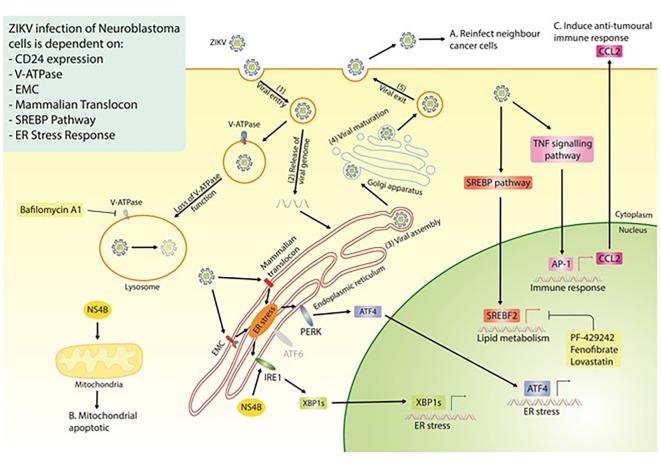
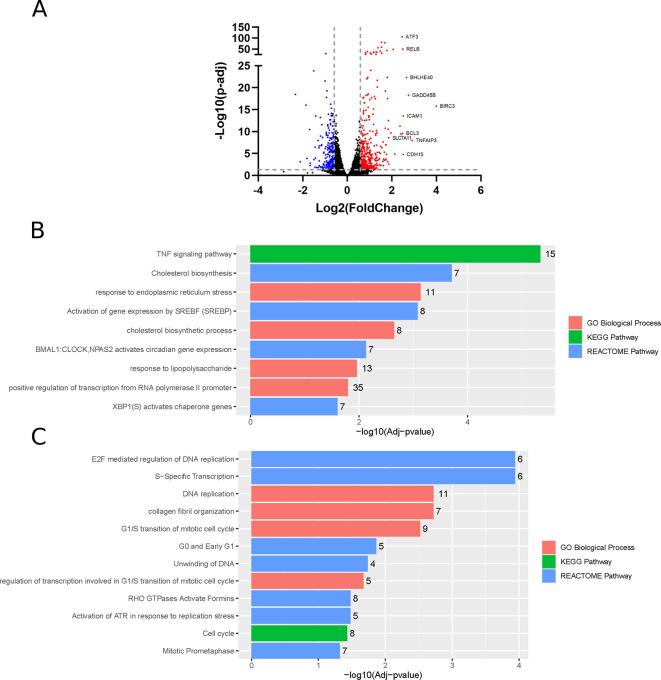
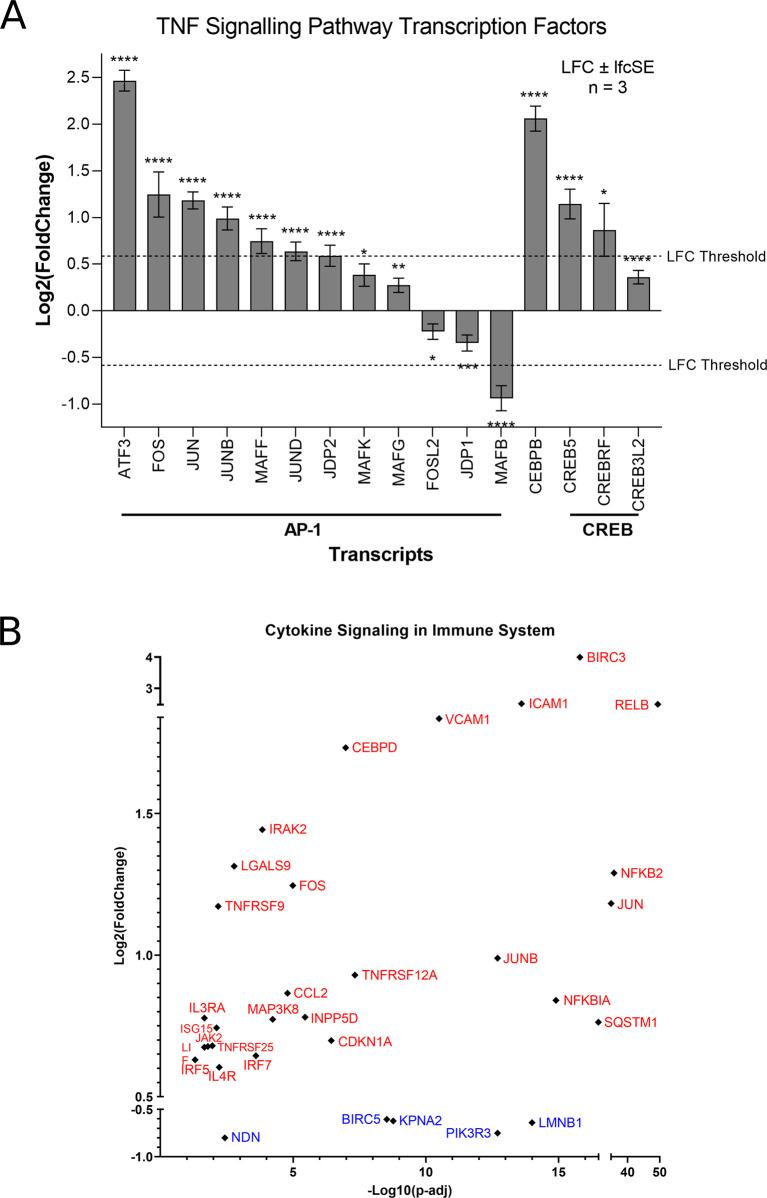
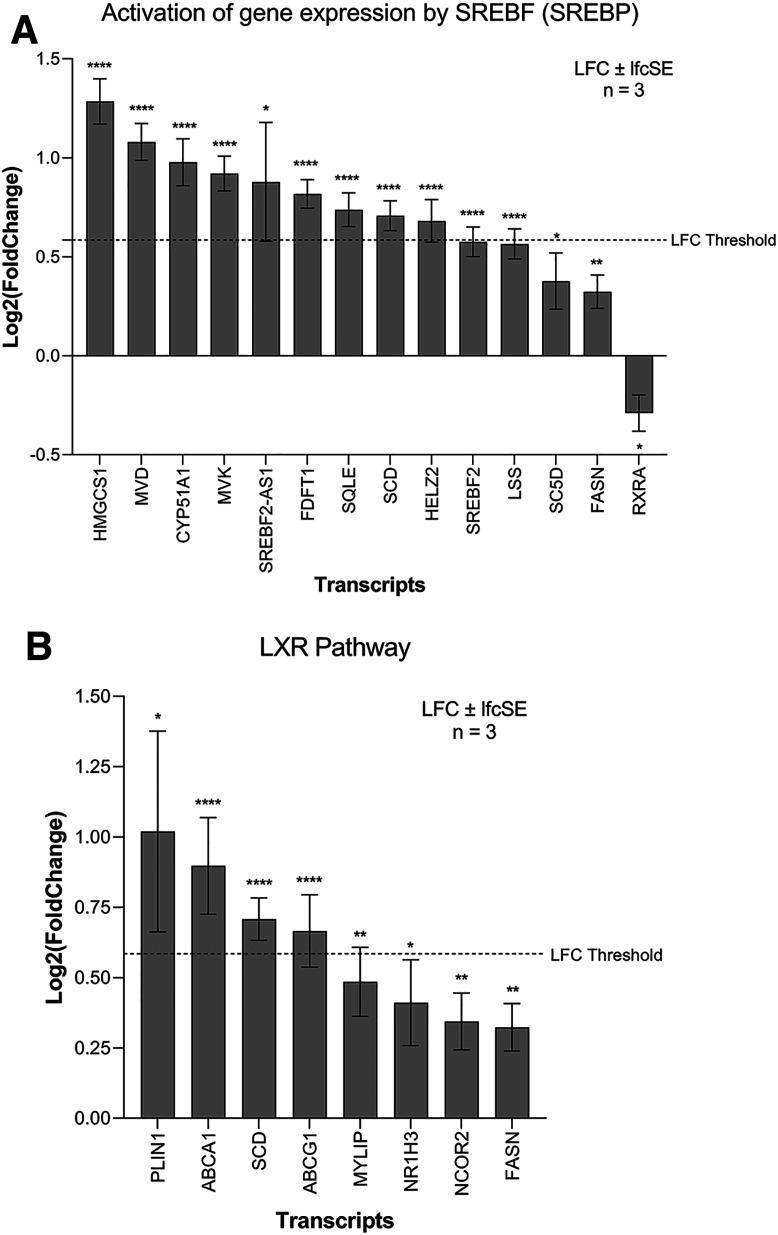
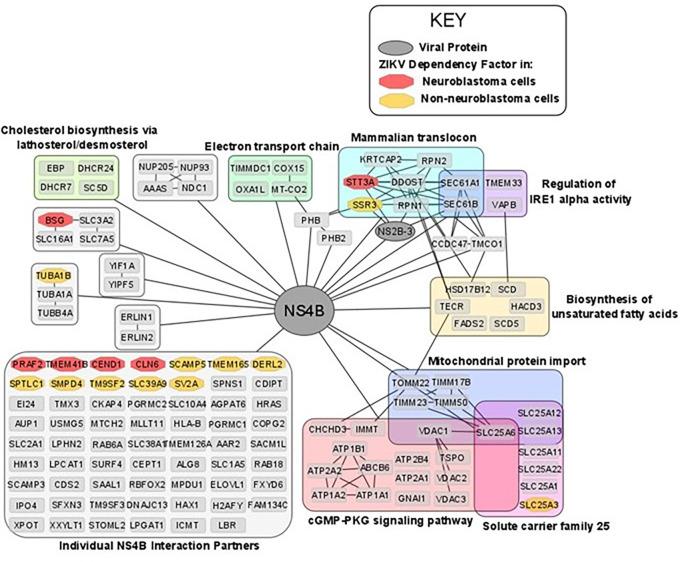
Through data mining of published literature, we observed most paediatric neuroblastoma cell lines to be highly susceptible to ZIKV infection and propose the PRVABC59 ZIKV strain to be the most promising candidate for neuroblastoma oncolytic virotherapy. ZIKV induces TNF signalling, lipid metabolism, the Unfolded Protein Response (UPR), and downregulates cell cycle and DNA replication processes. ZIKV infection is dependent on sterol regulatory element binding protein (SREBP)-regulated lipid metabolism and three protein complexes; V-ATPase, ER Membrane Protein Complex (EMC) and mammalian translocon. We propose ZIKV non-structural protein 4B (NS4B) as a likely mediator of ZIKVs interaction with IRE1-mediated UPR, lipid metabolism and mammalian translocon.
CONCLUSIONS
Our work provides a significant understanding of ZIKV infection in neuroblastoma cells, which will facilitate the progression of ZIKV-based oncolytic virotherapy through pre-clinical research and clinical trials.
背景
小儿神经母细胞瘤和脑肿瘤占所有儿童癌症相关死亡人数的三分之一。尽管采用高强度多模式治疗,毒性大,但高危神经母细胞瘤侵袭性高,生存率低。迫切需要新的治疗方法。寨卡病毒(ZIKV)可以进入神经系统,人们越来越有兴趣将 ZIKV 用作治疗小儿神经系统肿瘤(包括神经母细胞瘤)的潜在疗法。
方法
在这里,我们进行了广泛的数据挖掘、整合和重新分析 ZIKV 感染数据集,以突出可能控制神经母细胞瘤细胞溶瘤反应的分子机制。我们从已发表的文献中整理了多种神经母细胞瘤细胞系被不同 ZIKV 株感染的数据,以了解神经母细胞瘤对 ZIKV 溶瘤反应的敏感性。整合已发表的转录组学、相互作用蛋白质组学、依赖性因子和化合物数据集,我们提出在 ZIKV 感染过程中涉及多个宿主系统。
结果
通过对已发表文献的数据挖掘,我们观察到大多数小儿神经母细胞瘤细胞系对 ZIKV 感染高度敏感,并提出 PRVABC59 ZIKV 株是神经母细胞瘤溶瘤病毒治疗最有前途的候选者。ZIKV 诱导 TNF 信号转导、脂质代谢、未折叠蛋白反应(UPR),并下调细胞周期和 DNA 复制过程。ZIKV 感染依赖于固醇调节元件结合蛋白(SREBP)调节的脂质代谢和三个蛋白质复合物;V-ATPase、内质网膜蛋白复合物(EMC)和哺乳动物易位复合物。我们提出 ZIKV 非结构蛋白 4B(NS4B)可能是 ZIKV 与 IRE1 介导的 UPR、脂质代谢和哺乳动物易位复合物相互作用的介导物。
结论
我们的工作对 ZIKV 在神经母细胞瘤细胞中的感染有了重要的认识,这将通过临床前研究和临床试验促进基于 ZIKV 的溶瘤病毒治疗的进展。



 Zotero 插件