
自身免疫性疾病合并咯血的急性肺栓塞患者的临床特征和预后。
Clinical Characteristics and Prognosis of Acute Pulmonary Embolism with Hemoptysis in Autoimmune Disease Patients.
机构信息
Department of Pulmonary and Critical Care Medicine, State Key Laboratory of Complex Severe and Rare Diseases, Peking Union Medical College Hospital, Beijing, China.
Chinese Academy of Medical Sciences, Peking Union Medical College, Beijing, China.
出版信息
Int J Med Sci. 2024 May 19;21(8):1399-1407. doi: 10.7150/ijms.94052. eCollection 2024.
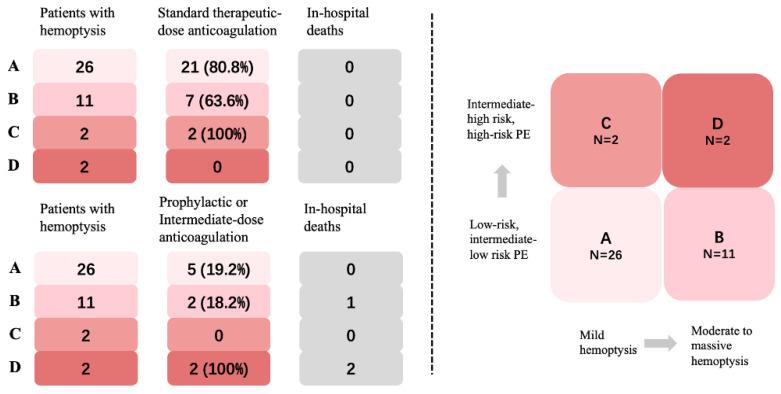
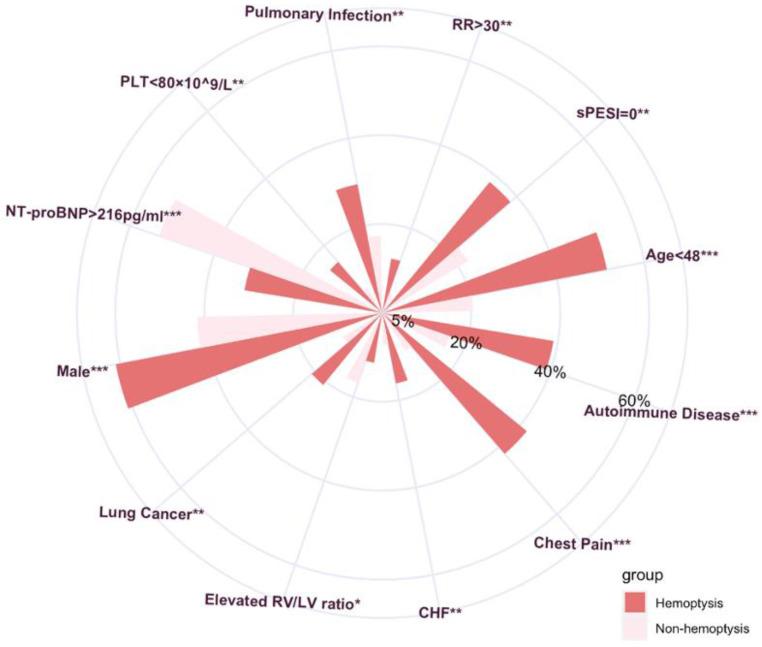
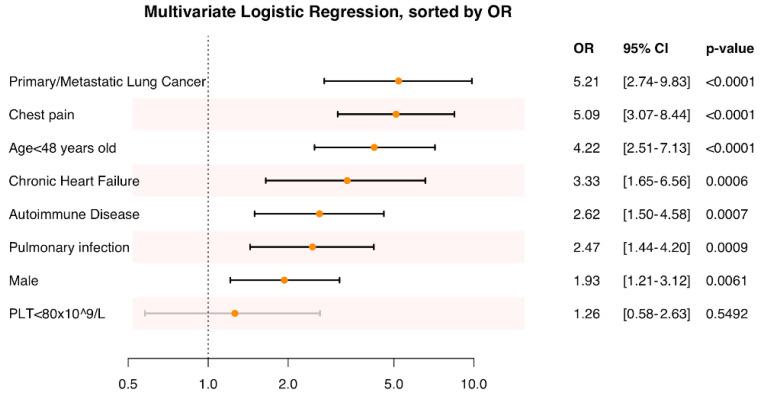
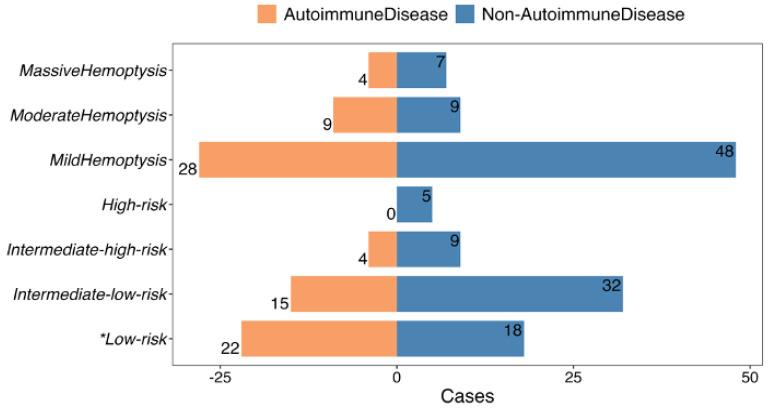
Hemoptysis is prevalent in acute pulmonary embolism (PE) and significantly influences clinical decision-making. Despite the increasing reports of PE in patients with autoimmune diseases, limited studies have investigated the association between acute PE with hemoptysis and autoimmune disease. The retrospective study aimed to investigate patients with autoimmune disease who presented with acute PE and hemoptysis at Peking Union Medical College Hospital (PUMCH) between January 2012 and October 2020. A comparative analysis was conducted between patients with and without hemoptysis, as well as between those with autoimmune diseases and those without. Clinical characteristics, PE severity stratification, the amount of hemoptysis, initial anticoagulation management, and prognosis were analyzed descriptively. The study analyzed 896 patients diagnosed with acute PE, of whom 105 (11.7%) presented with hemoptysis. Hemoptysis in PE patients was frequently associated with autoimmune diseases (39%, 41/105), a younger patient population (42.0 vs. 52.7 years old, =0.002), and a higher prevalence of low-risk PE (53.7 vs. 28.1, =0.008) compared with non-autoimmune disease patients. Multivariate logistic analysis showed PE patients with primary or metastatic lung cancer, chest pain, age < 48 years old, chronic heart failure, autoimmune disease, pulmonary infection and male were more likely to develop hemoptysis. Patients were grouped based on maximum daily sputum blood volume and PE risk stratification. Most patients (73.2%) received therapeutic-dose anticoagulation. Poor prognosis is observed in patients with moderate to massive hemoptysis and intermediate-high-risk or high-risk PE. Hemoptysis is a relatively common manifestation in patients with PE, and its presence during the diagnostic workup of acute PE necessitates careful analysis of underlying comorbidities. In cases where hemoptysis occurs in individuals with autoimmune diseases in the context of PE, proactive management strategies targeting the primary disease are crucial. Therapeutic decisions should consider both PE severity stratification and the volume of hemoptysis.
咯血在急性肺栓塞(PE)中较为常见,显著影响临床决策。尽管自身免疫性疾病患者中的 PE 报道日益增多,但有限的研究调查了急性 PE 伴咯血与自身免疫性疾病之间的关联。本回顾性研究旨在调查 2012 年 1 月至 2020 年 10 月期间在北京协和医院就诊的伴有急性 PE 和咯血的自身免疫性疾病患者。对伴有和不伴有咯血的患者,以及伴有和不伴有自身免疫性疾病的患者进行了对比分析。对临床特征、PE 严重程度分层、咯血量、初始抗凝管理和预后进行了描述性分析。该研究分析了 896 例急性 PE 患者,其中 105 例(11.7%)出现咯血。PE 患者的咯血常与自身免疫性疾病相关(39%,41/105),患者年龄较小(42.0 岁 vs. 52.7 岁, =0.002),低危 PE 更为常见(53.7% vs. 28.1%, =0.008)。多变量 logistic 分析显示,PE 患者伴原发性或转移性肺癌、胸痛、年龄<48 岁、慢性心力衰竭、自身免疫性疾病、肺部感染和男性更易发生咯血。根据最大日痰血量和 PE 风险分层对患者进行分组。大多数患者(73.2%)接受了治疗剂量抗凝治疗。中-大量咯血和中高危或高危 PE 患者预后较差。咯血是 PE 患者较为常见的表现,在急性 PE 的诊断性检查中出现咯血时需要仔细分析潜在的合并症。在 PE 患者伴自身免疫性疾病出现咯血时,针对基础疾病的积极治疗策略至关重要。治疗决策应同时考虑 PE 严重程度分层和咯血量。

 Zotero 插件