
唐氏综合征与自身免疫性疾病。
Down Syndrome and Autoimmune Disease.
机构信息
Keck School of Medicine at the University of Southern California, Los Angeles, CA, USA.
Division of Neurology, Department of Pediatrics, Children's Hospital Los Angeles, 4650 Sunset Blvd, MS82, Los Angeles, CA90027, USA.
出版信息
Clin Rev Allergy Immunol. 2024 Jun;66(3):261-273. doi: 10.1007/s12016-024-08996-2. Epub 2024 Jun 24.
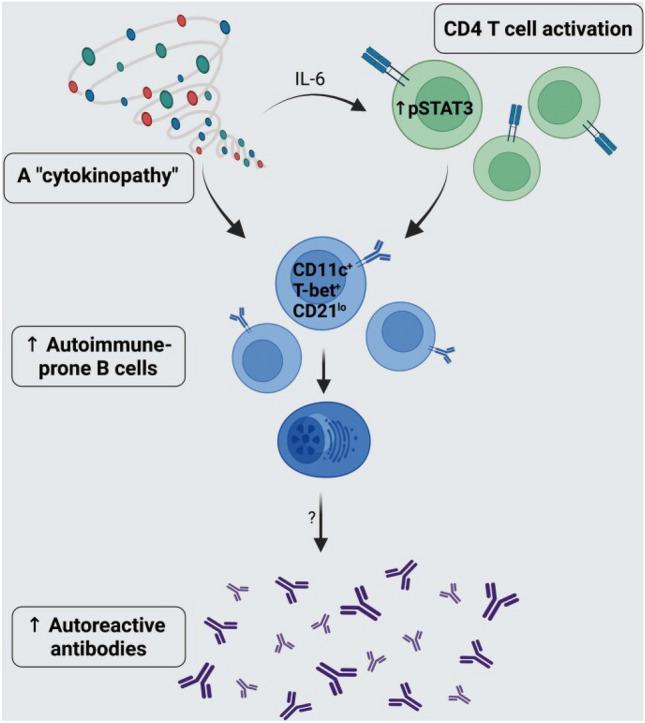
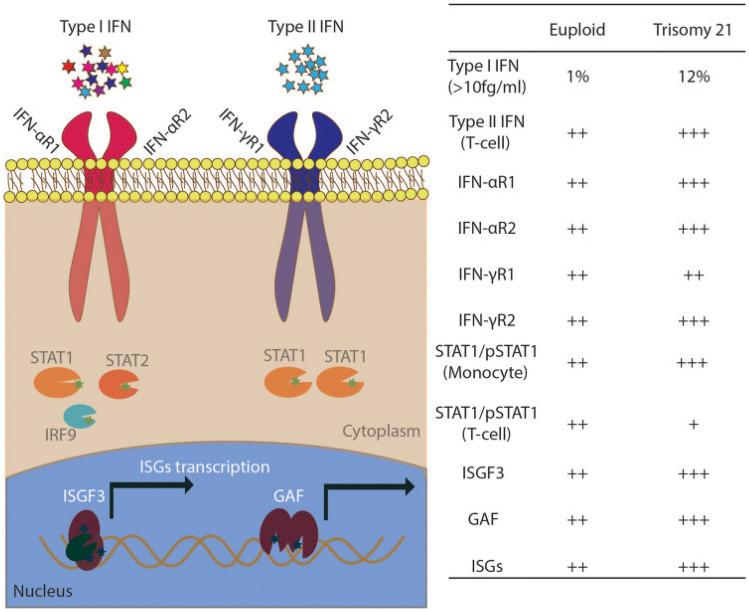
Down syndrome is the most common genetic cause of intellectual disability and has previously been associated with a variety of autoimmune disorders affecting multiple organ systems. The high prevalence of autoimmune disease, in conjunction with other inflammatory and infectious diseases, in this population suggests an intrinsic immune dysregulation associated with triplication of chromosome 21. Emerging data on the role of chromosome 21 in interferon activation, cytokine production, and activation of B-cell mediated autoimmunity are emerging hypotheses that may explain the elevated prevalence of autoimmune thyroid disease, celiac disease, type I diabetes, autoimmune skin disease, and a variety of autoimmune neurologic conditions. As the life expectancy for individuals with Down syndrome increases, knowledge of the epidemiology, clinical features, management and underlying causes of these conditions will become increasingly important. Disorders such as Hashimoto's thyroiditis are prevalent in between 13 and 34% of individuals with Down syndrome but only 3% of the neurotypical population, a pattern similarly recognized in individuals with Celiac Disease (5.8% v 0.5-2%), alopecia areata (27.7% v. 2%), and vitiligo (4.4% v. 0.05-1.55%), respectively. Given the chronicity of autoimmune conditions, early identification and management can significantly impact the quality of life of individuals with Down syndrome. This comprehensive review will highlight common clinical autoimmune conditions observed in individuals with Down syndrome and explore our current understanding of the mechanisms of disease in this population.
唐氏综合征是最常见的遗传性智力障碍,以前与多种影响多个器官系统的自身免疫性疾病有关。该人群中自身免疫性疾病、其他炎症性和传染性疾病的高发率表明,与 21 号染色体三体相关的固有免疫失调。关于 21 号染色体在干扰素激活、细胞因子产生和 B 细胞介导的自身免疫激活中的作用的新数据是新兴的假说,这些假说可能解释自身免疫性甲状腺疾病、乳糜泻、1 型糖尿病、自身免疫性皮肤疾病和多种自身免疫性神经疾病的高发率。随着唐氏综合征患者的预期寿命延长,了解这些疾病的流行病学、临床特征、管理和潜在原因将变得越来越重要。桥本甲状腺炎等疾病在唐氏综合征患者中的患病率为 13%至 34%,而在神经典型人群中仅为 3%,乳糜泻(5.8%对 0.5-2%)、斑秃(27.7%对 2%)和白癜风(4.4%对 0.05-1.55%)患者中也存在类似的模式。鉴于自身免疫性疾病的慢性病程,早期识别和管理可以显著影响唐氏综合征患者的生活质量。这篇综述将重点介绍唐氏综合征患者中常见的临床自身免疫性疾病,并探讨我们目前对该人群中疾病机制的理解。
 Zotero 插件