
蛋白激酶C(PKC)在神经健康中的作用:对阿尔茨海默病和长期饮酒的影响
Protein Kinase C (PKC) in Neurological Health: Implications for Alzheimer's Disease and Chronic Alcohol Consumption.
作者信息
Singh Nishtha, Nandy Shouvik Kumar, Jyoti Anupam, Saxena Juhi, Sharma Aditi, Siddiqui Arif Jamal, Sharma Lalit
机构信息
Department of Pharmacology, School of Pharmaceutical Sciences, Shoolini University of Biotechnology, and Management Sciences, Solan 173229, Himachal Pradesh, India.
School of Pharmacy, Techno India University, Sector-V, Kolkata 700091, West Bengal, India.
出版信息
Brain Sci. 2024 May 29;14(6):554. doi: 10.3390/brainsci14060554.
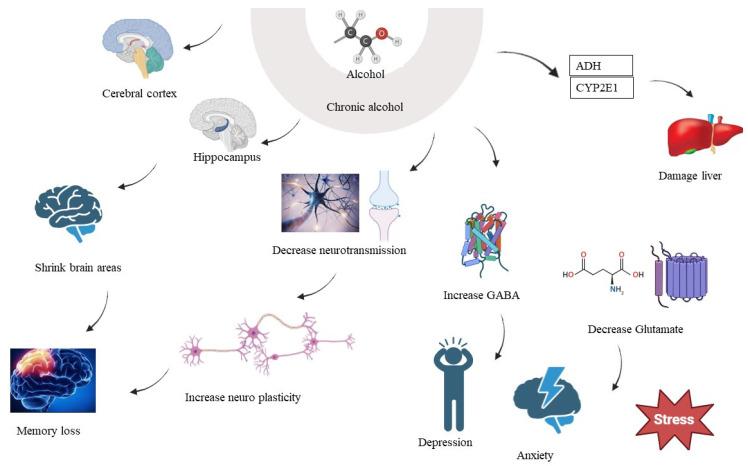
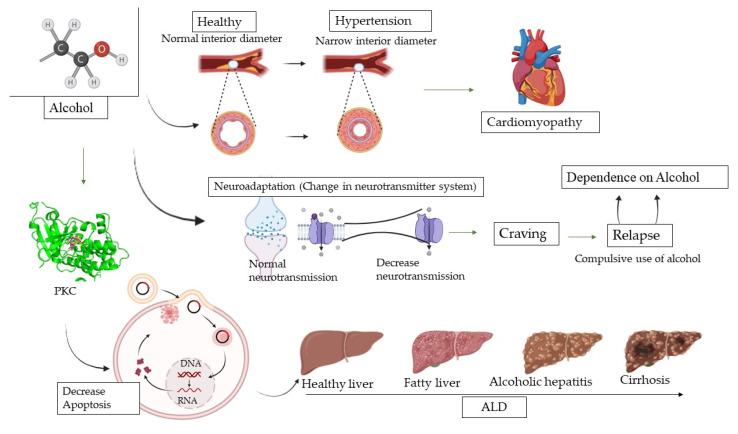
Protein kinase C (PKC) is a diverse enzyme family crucial for cell signalling in various organs. Its dysregulation is linked to numerous diseases, including cancer, cardiovascular disorders, and neurological problems. In the brain, PKC plays pivotal roles in synaptic plasticity, learning, memory, and neuronal survival. Specifically, PKC's involvement in Alzheimer's Disease (AD) pathogenesis is of significant interest. The dysregulation of PKC signalling has been linked to neurological disorders, including AD. This review elucidates PKC's pivotal role in neurological health, particularly its implications in AD pathogenesis and chronic alcohol addiction. AD, characterised by neurodegeneration, implicates PKC dysregulation in synaptic dysfunction and cognitive decline. Conversely, chronic alcohol consumption elicits neural adaptations intertwined with PKC signalling, exacerbating addictive behaviours. By unravelling PKC's involvement in these afflictions, potential therapeutic avenues emerge, offering promise for ameliorating their debilitating effects. This review navigates the complex interplay between PKC, AD pathology, and alcohol addiction, illuminating pathways for future neurotherapeutic interventions.
蛋白激酶C(PKC)是一个多样化的酶家族,对各个器官中的细胞信号传导至关重要。其失调与多种疾病有关,包括癌症、心血管疾病和神经问题。在大脑中,PKC在突触可塑性、学习、记忆和神经元存活中起关键作用。具体而言,PKC参与阿尔茨海默病(AD)发病机制备受关注。PKC信号传导的失调与包括AD在内的神经疾病有关。本综述阐明了PKC在神经健康中的关键作用,特别是其在AD发病机制和慢性酒精成瘾中的意义。以神经退行性变为特征的AD,表明PKC失调与突触功能障碍和认知能力下降有关。相反,长期饮酒会引发与PKC信号传导相互交织的神经适应性变化,加剧成瘾行为。通过揭示PKC在这些疾病中的作用,出现了潜在的治疗途径,有望减轻其衰弱影响。本综述探讨了PKC、AD病理学和酒精成瘾之间的复杂相互作用,为未来的神经治疗干预指明了方向。


 Zotero 插件