
利用贝叶斯网络识别 SARS-CoV-2 传播中保护措施和环境的相互作用。
Identifying the interplay between protective measures and settings on the SARS-CoV-2 transmission using a Bayesian network.
机构信息
Department of Mathematics and Computer Sciences, University of Balearic Islands, Palma, Spain.
Institut d'Investigació Sanitària Illes Balears (IdISBa), Hospital Universitari Son Espases, Palma, Spain.
出版信息
PLoS One. 2024 Jul 11;19(7):e0307041. doi: 10.1371/journal.pone.0307041. eCollection 2024.
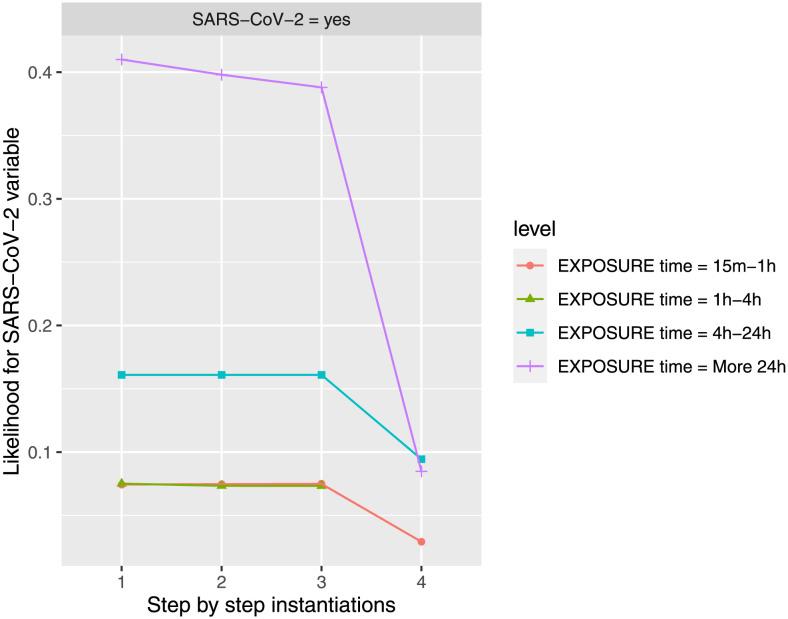
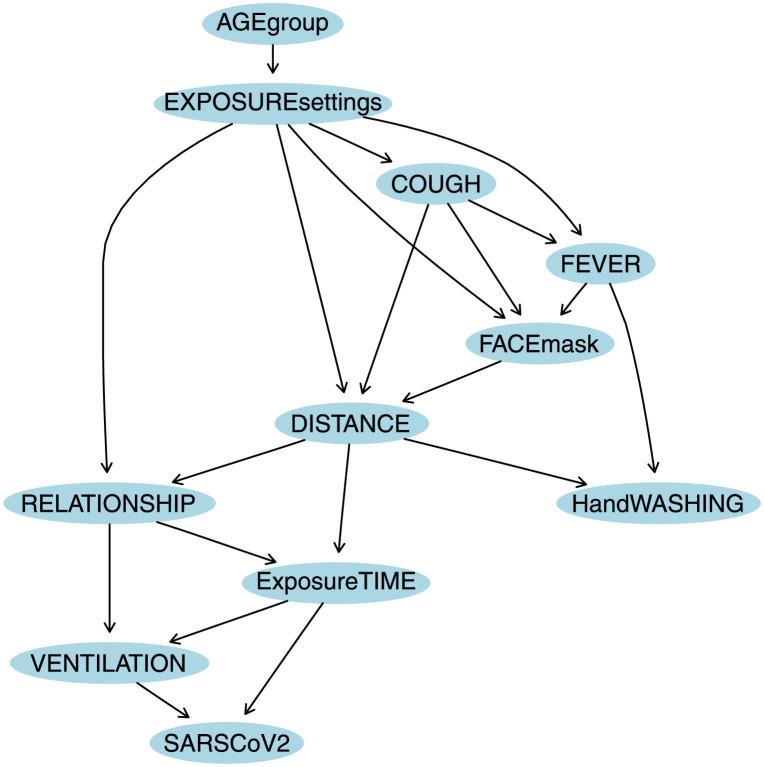
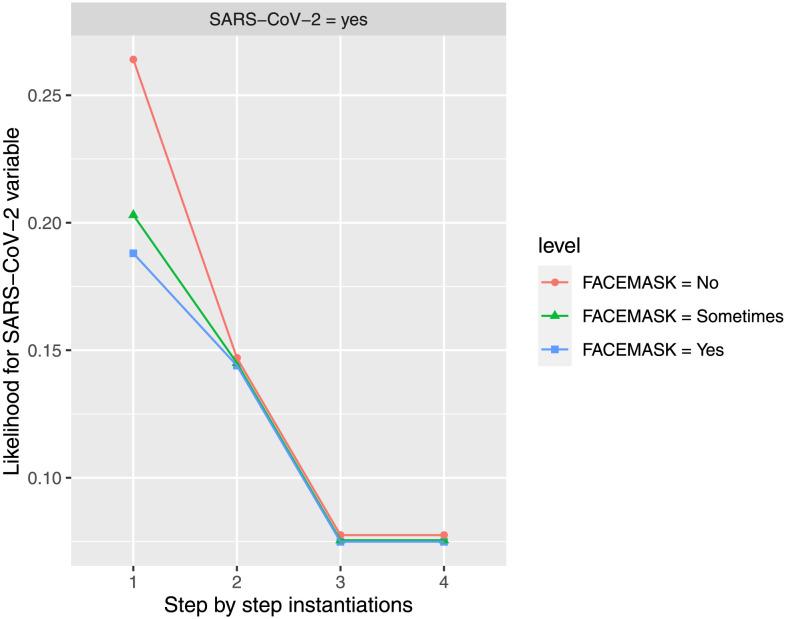
Contact tracing played a crucial role in minimizing the onward dissemination of Severe Acute Respiratory Syndrome Coronavirus-2 (SARS-CoV-2) in the recent pandemic. Previous studies had also shown the effectiveness of preventive measures such as mask-wearing, physical distancing, and exposure duration in reducing SARS-CoV-2 transmission. However, there is still a lack of understanding regarding the impact of various exposure settings on the spread of SARS-CoV-2 within the community, as well as the most effective preventive measures, considering the preventive measures adherence in different daily scenarios. We aimed to evaluate the effect of individual protective measures and exposure settings on the community transmission of SARS-CoV-2. Additionally, we aimed to investigate the interaction between different exposure settings and preventive measures in relation to such SARS-CoV-2 transmission. Routine SARS-CoV-2 contact tracing information was supplemented with additional data on individual measures and exposure settings collected from index patients and their close contacts. We used a case-control study design, where close contacts with a positive test for SARS-CoV-2 were classified as cases, and those with negative results classified as controls. We used the data collected from the case-control study to construct a Bayesian network (BN). BNs enable predictions for new scenarios when hypothetical information is introduced, making them particularly valuable in epidemiological studies. Our results showed that ventilation and time of exposure were the main factors for SARS-CoV-2 transmission. In long time exposure, ventilation was the most effective factor in reducing SARS-CoV-2, while masks and physical distance had on the other hand a minimal effect in this ventilation spaces. However, face masks and physical distance did reduce the risk in enclosed and unventilated spaces. Distance did not reduce the risk of infection when close contacts wore a mask. Home exposure presented a higher risk of SARS-CoV-2 transmission, and any preventive measures posed a similar risk across all exposure settings analyzed. Bayesian network analysis can assist decision-makers in refining public health campaigns, prioritizing resources for individuals at higher risk, and offering personalized guidance on specific protective measures tailored to different settings or environments.
接触者追踪在最大限度地减少严重急性呼吸综合征冠状病毒 2(SARS-CoV-2)在最近的大流行中的进一步传播方面发挥了关键作用。先前的研究还表明,戴口罩、保持身体距离和暴露时间等预防措施在减少 SARS-CoV-2 传播方面的有效性。然而,对于不同的暴露环境对社区内 SARS-CoV-2 传播的影响,以及考虑到不同日常场景下的预防措施遵守情况,最有效的预防措施,人们仍然缺乏了解。我们旨在评估个体保护措施和暴露环境对 SARS-CoV-2 社区传播的影响。此外,我们旨在调查不同暴露环境和预防措施之间的相互作用与 SARS-CoV-2 传播的关系。常规的 SARS-CoV-2 接触者追踪信息辅以从指数患者及其密切接触者收集的个人措施和暴露环境的附加数据。我们使用病例对照研究设计,将 SARS-CoV-2 检测呈阳性的密切接触者归类为病例,检测结果呈阴性的归类为对照。我们使用从病例对照研究中收集的数据构建贝叶斯网络(BN)。BN 可以在引入假设信息时对新场景进行预测,因此在流行病学研究中特别有价值。我们的结果表明,通风和暴露时间是 SARS-CoV-2 传播的主要因素。在长时间暴露的情况下,通风是减少 SARS-CoV-2 的最有效因素,而口罩和身体距离在通风空间中则效果最小。然而,口罩和身体距离确实降低了封闭和无通风空间的风险。当密切接触者戴口罩时,距离不会降低感染风险。家庭暴露呈现出更高的 SARS-CoV-2 传播风险,所有分析的暴露环境中,任何预防措施的风险都相似。贝叶斯网络分析可以帮助决策者完善公共卫生运动,为处于较高风险的个体分配资源,并针对不同的设置或环境提供个性化的特定保护措施指导。



 Zotero 插件