
通过吉赞石油炼制废水的真菌群落评估碳氢化合物和重金属的抗性模式及生物去除效率,并评估JAZ-20的分子分型和细胞毒性。
Evaluation of resistance patterns and bioremoval efficiency of hydrocarbons and heavy metals by the mycobiome of petroleum refining wastewater in Jazan with assessment of molecular typing and cytotoxicity of JAZ-20.
作者信息
Ameen Fuad, Alsarraf Mohammad J, Abalkhail Tarad, Stephenson Steven L
机构信息
Department of Botany& Microbiology, College of Science, King Saud University, Riyadh, 11451, Saudi Arabia.
Department of Science, College of Basic Education, the Public Authority of Applied Education and Training (PAAET), Kuwait.
出版信息
Heliyon. 2024 Jun 16;10(12):e32954. doi: 10.1016/j.heliyon.2024.e32954. eCollection 2024 Jun 30.
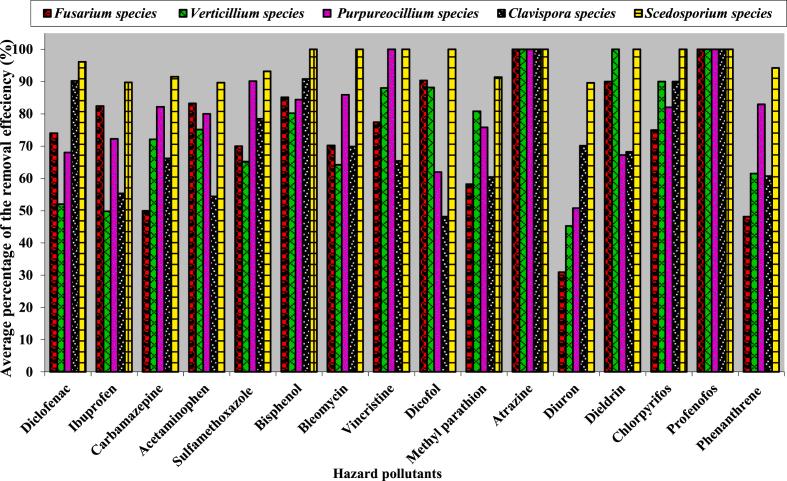
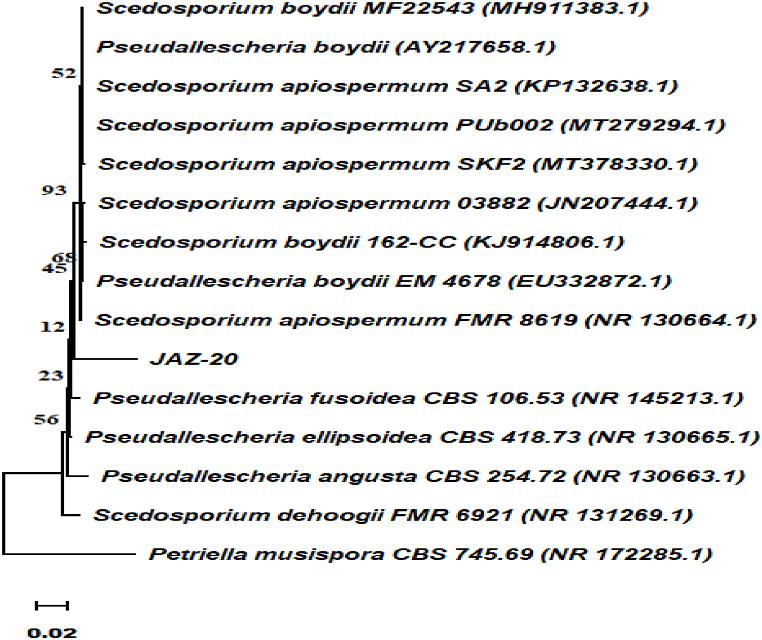
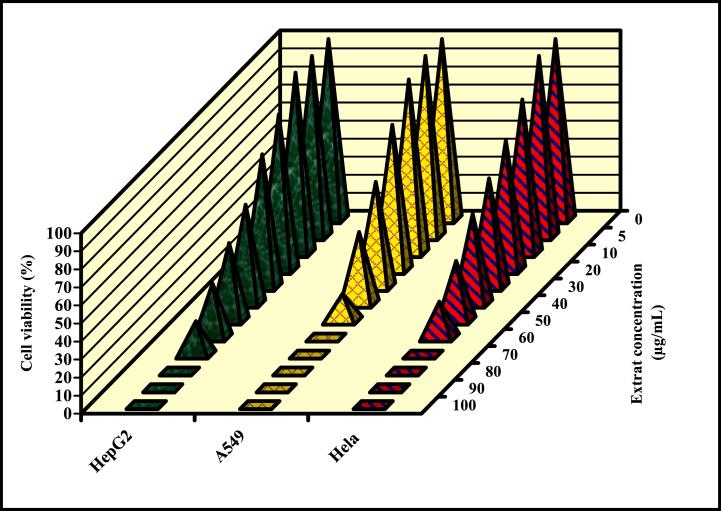
Jazan Industrial Economic City (JIEC) is located on the Red Sea coast in the province of Jazan, southwest of Saudi Arabia anchors diverse heavy and secondary industries in the energy, water desalination, petroleum, aluminum, copper, refineries, pharmaceuticals and food manufacturing fields. These various industries generate a large quantity of industrial wastewaters containing various toxicants. The present work represents ecologically beneficial alternatives for the advancement of environmental biotechnology, which could help mitigate the adverse impacts of environmental pollution resulting from petroleum refining effluents. The mycobiome (32 fungal strains) isolated from the industrial wastewater of the refinery sector in Jazan were belonged to five fungal genera including , , , and with a distribution percentage of 31.25, 21.88, 15.63, 12.50 and 18.75 %, respectively. These isolates showed multimetals tolerance and bioremoval efficiency against a large number of heavy metals (Fe, Ni, Cr, Zn, As, Cu, Cd, Pb, Ag and Hg) along with potent bioremediation activity toward crude oil and the polycyclic aromatic hydrocarbons. Interestingly, the mycobiome resistance patterns obtained against different classes of fungal antibiotics including azole (fluconazole, itraconazole, voriconazole, posaconazole, isavuconazole and ketoconazole), echinocandin (anidulafungin, caspofungin and micafungin) and polyene (amphotericin B) drugs proved the prevalence of antibiotic resistance among the mycobiome of refinery industry in Saudi Arabia is relatively low. The fungal isolate under isolation code JAZ-20 showed the highest bioremoval efficiency against heavy metals (90.8-100.0 %), crude oil (89.50 %), naphthalene (96.7 %), phenanthrene (92.52 %), fluoranthene (100.0 %), anthracene (90.34 %), pyrene (85.60 %) and chrysene (83.4 %). It showed the highest bioremoval capacity ranging from 85.72 % to 100.0 % against numerous pollutants found in a wide array of industrial effluents, including diclofenac, ibuprofen, carbamazepine, acetaminophen, sulfamethoxazole, bisphenol, bleomycin, vincristine, dicofol, methyl parathion, atrazine, diuron, dieldrin, chlorpyrifos, profenofos and phenanthrene. The isolate JAZ-20 was chosen for molecular typing, cytotoxicity assessment, analysis of volatile compounds and optimization investigations. Based on phenotypic, biochemical and phylogenetic analysis, strain JAZ-20 identified as JAZ-20. This strain is newly discovered in industrial effluents in Saudi Arabia. Fungal strain JAZ-20 consistently produced various types of saturated and unsaturated fatty acids. the main fatty acids were C (1.95 %), iso-C (2.98 %), anteiso-C (2.13 %), iso-C (9.16 %), anteiso-C (11.75 %), C (7.42 %), C (2.37 %), anteiso-C (3.4 %), C (10.3 %), iso-C (9.5 %), C (1.36 %), anteiso-C (8.64 %), iso-C (11.0 %), C (3.63 %), anteiso-C (3.78 %), anteiso-C (2.0 %), iso-C (2.44 %), C (1.15 %), and C (2.17 %). These fatty acids serve as natural and eco-friendly antifungal agents, promoting fungal resistance and inhibiting the production of mycotoxins in the environment. Despite being an environmental isolate, its cytotoxicity was assessed against both normal and cancerous human cell lines. The IC values of JAZ-20 extract were 8.92, 10.41, 20.0, 16.5, and 40.0 μg/mL against WI38, MRC5, MCF10A, HEK293 and HDFs normal cells and 43.26, 33.75, and 40.0 μg/mL against liver (HepG2), breast (A549) and cervix (HeLa) cancers, respectively. Based on gas chromatography-mass spectrometry (GC-MS), analysis the extract of JAZ-20 showed 47 known volatile compounds (VOCs) for varied and significant biological activities. Enhancing the bioremoval efficiency of heavy metals from actual refining wastewater involves optimizing process parameters. The parameters optimized were the contact time, the fungal biomass dosage, pH, temperature and agitation rate.
吉赞工业经济城(JIEC)位于沙特阿拉伯西南部吉赞省的红海沿岸,是能源、海水淡化、石油、铝、铜、炼油、制药和食品制造等多种重工业和二级产业的所在地。这些不同的产业产生了大量含有各种有毒物质的工业废水。目前的工作为环境生物技术的发展提供了生态有益的替代方案,这有助于减轻炼油废水造成的环境污染的不利影响。从吉赞炼油厂工业废水中分离出的真菌群落(32株真菌菌株)属于五个真菌属,包括、、、和,分布百分比分别为31.25%、21.88%、15.63%、12.50%和18.75%。这些分离株对大量重金属(铁、镍、铬、锌、砷、铜、镉、铅、银和汞)具有多金属耐受性和生物去除效率,同时对原油和多环芳烃具有强大的生物修复活性。有趣的是,针对不同类别的真菌抗生素(包括唑类(氟康唑、伊曲康唑、伏立康唑、泊沙康唑、艾沙康唑和酮康唑)、棘白菌素类(阿尼芬净、卡泊芬净和米卡芬净)和多烯类(两性霉素B)药物)获得的真菌群落抗性模式证明,沙特阿拉伯炼油行业真菌群落中抗生素抗性的流行率相对较低。分离代码为JAZ - 20的真菌分离株对重金属(90.8 - 100.0%)、原油(89.50%)、萘(96.7%)、菲(92.52%)、荧蒽(100.0%)、蒽(90.34%)、芘(85.60%)和 Chrysene(83.4%)显示出最高的生物去除效率。它对各种工业废水中发现 的多种污染物(包括双氯芬酸、布洛芬、卡马西平、对乙酰氨基酚、磺胺甲恶唑、双酚、博来霉素、长春新碱、三氯杀螨醇、甲基对硫磷、阿特拉津、敌草隆、狄氏剂、毒死蜱、丙溴磷和菲)的生物去除能力最高,范围为85.72%至100.0%。选择分离株JAZ - 20进行分子分型、细胞毒性评估、挥发性化合物分析和优化研究。基于表型、生化和系统发育分析,菌株JAZ - 20被鉴定为JAZ - 此菌株是在沙特阿拉伯的工业废水中新发现的。真菌菌株JAZ - 20持续产生各种类型的饱和和不饱和脂肪酸。主要脂肪酸为C(1.95%)、异C(2.98%)、anteiso - C(2.13%)、异C(9.16%)、anteiso - C(11.75%)、C(7.42%)、C(2.37%)、anteiso - C(3.4%)、C(C(10.3%)、异C(9.5%)、C(1.36%)、anteiso - C(8.64%)、异C(11.0%)、C(3.63%)、anteiso - C(3.78%)、anteiso - C(2.0%)、异C(2.44%)、C(1.15%)和C(2.17%)。这些脂肪酸作为天然和生态友好的抗真菌剂,促进真菌抗性并抑制环境中霉菌毒素的产生。尽管它是一种环境分离株,但仍对正常和癌细胞系进行了细胞毒性评估。JAZ - 20提取物对WI38、MRC5、MCF10A、HEK293和HDFs正常细胞的IC值分别为8.92、10.41、20.0、16.5和40.0μg/mL,对肝癌(HepG2)、乳腺癌(A549)和宫颈癌(HeLa)的IC值分别为43.26、33.75和40.0μg/mL。基于气相色谱 - 质谱联用(GC - MS)分析,JAZ - 20的提取物显示出47种已知的挥发性化合物(VOCs),具有多种重要的生物活性。提高实际炼油废水中重金属的生物去除效率需要优化工艺参数。优化的参数包括接触时间、真菌生物量剂量、pH值、温度和搅拌速率。





 Zotero 插件