
鸦片使用与胃肠道癌症:一项系统评价和荟萃分析研究。
Opium use and gastrointestinal cancers: a systematic review and meta-analysis study.
作者信息
Mohammadi Mahsa, Tadger Philippe, Sadeghi Amir, Salehi Niloufar, Rajabnia Mohsen, Paraandavaji Elham, Shafiei Sasan, Pirani Ahmad, Hatamnejad Mohammad Reza, Taherifard Erfan, Kheshti Fatemeh, Naderilordejani Arman, Honarfar Forough, Rahmani Khaled, Soruri Majid, Kord Varkaneh Hamed, Dadras Omid, Jahanian Ali, Rasta Sara, Zali Mohammad Reza
机构信息
Gastrointestinal and Liver Diseases Research Center, Guilan University of Medical Sciences, Guilan, Iran.
Real World Evidence, IQVIA, 3600 Genk, Belgium.
出版信息
Gastroenterol Hepatol Bed Bench. 2024;17(2):104-120.
AIM
The current systematic review and meta-analysis aimed to assess the association between Gastrointestinal (GI) cancers and opium use.
BACKGROUND
GI malignancies are a global public health issue and are associated with many risk factors including genetic and lifestyle factors.
METHODS
PubMed, Web of Science, Embase and Scopus and the Google Scholar search engine in addition to Persian databases including Magiran and SID were searched using relevant keywords. The associations of opium use, long duration of opium use, high daily amount opium use and high cumulative opium use and GI cancer and various subtypes of GI cancers were estimated and pooled in format of odds ratios (OR) and their corresponding 95% confidence intervals (CI) with a random effects model.
RESULTS
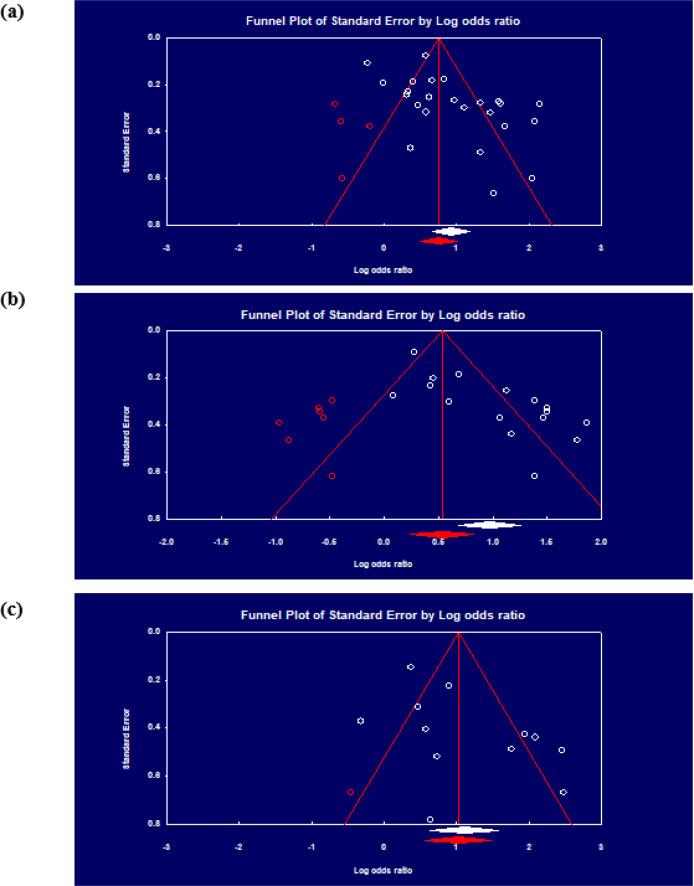
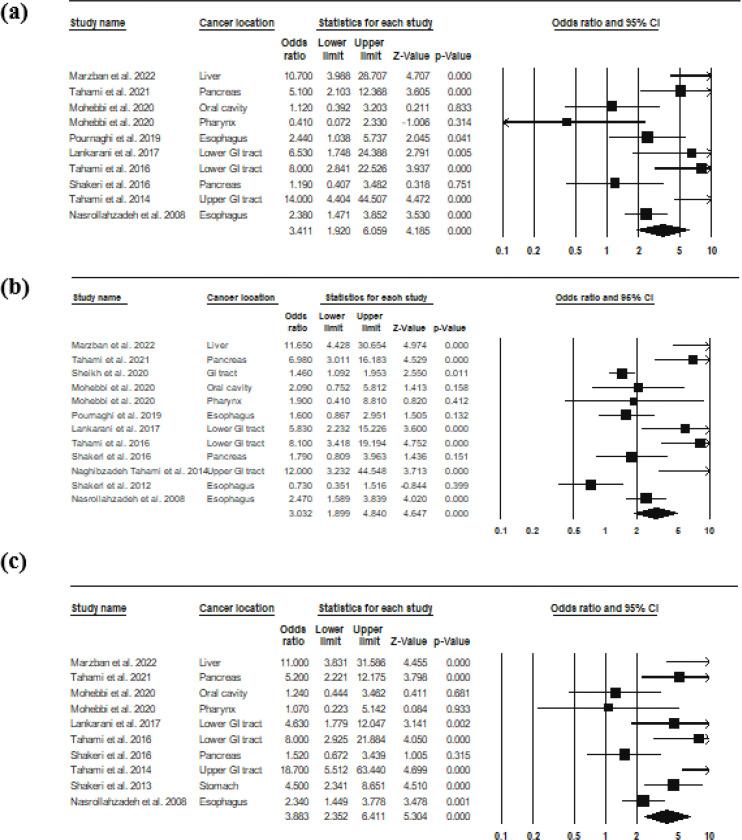
22 articles that were published between 1983 and 2022 entered the analyses. There were significant relationships between opium use based on crude effect sizes (OR: 2.53, 1.95-3.29) and adjusted effect sizes (OR: 2.64, 1.99-3.51), high daily opium use (or: 3.41, 1.92-6.06), long duration of opium use (OR: 3.03, 1.90-4.84) and high cumulative opium use (OR: 3.88, 2.35-6.41), all compared to never opium use, and GI cancer. The results were not sensitive to sensitivity analyses and no influential publication biases were found in these analyses.
CONCLUSION
Our meta-analysis showed that opium use could be associated with increased risk of overall and some particular GI cancers including oropharyngeal, gastric, pancreatic and colorectal cancers. Opium use as a potentially modifiable factor, therefore, should be more emphasized.
目的
本系统评价和荟萃分析旨在评估胃肠道(GI)癌症与鸦片使用之间的关联。
背景
GI恶性肿瘤是一个全球公共卫生问题,与许多风险因素相关,包括遗传和生活方式因素。
方法
除了波斯语数据库(包括Magiran和SID)外,还使用相关关键词搜索了PubMed、科学网、Embase、Scopus和谷歌学术搜索引擎。估计并汇总鸦片使用、长期鸦片使用、高每日鸦片使用量、高累积鸦片使用量与GI癌症以及GI癌症各亚型之间的关联,并以比值比(OR)及其相应的95%置信区间(CI)的形式,采用随机效应模型进行分析。
结果
1983年至2022年间发表的22篇文章纳入了分析。基于粗效应量(OR:2.53,1.95 - 3.29)和调整效应量(OR:2.64,1.99 - 3.51)的鸦片使用、高每日鸦片使用量(OR:3.41,1.92 - 6.06)、长期鸦片使用(OR:3.03,1.90 - 4.84)和高累积鸦片使用量(OR:3.88,2.35 - 6.41)与GI癌症相比,与从不使用鸦片相比,均存在显著关联。结果对敏感性分析不敏感,且在这些分析中未发现有影响力的发表偏倚。
结论
我们的荟萃分析表明,鸦片使用可能与总体及某些特定GI癌症(包括口咽癌、胃癌、胰腺癌和结直肠癌)风险增加有关。因此,应更加强调鸦片使用作为一个潜在可改变的因素。


 Zotero 插件