
化疗中 B 细胞的表现:揭示 B 细胞治疗潜力的奥秘。
B-cell performance in chemotherapy: Unravelling the mystery of B-cell therapeutic potential.
机构信息
Department of Oncology, Zhujiang Hospital, Southern Medical University, Guangzhou, Guangdong, China.
The First School of Clinical Medicine, Southern Medical University, Guangzhou, Guangdong, China.
出版信息
Clin Transl Med. 2024 Jul;14(7):e1761. doi: 10.1002/ctm2.1761.
BACKGROUND AND MAIN BODY
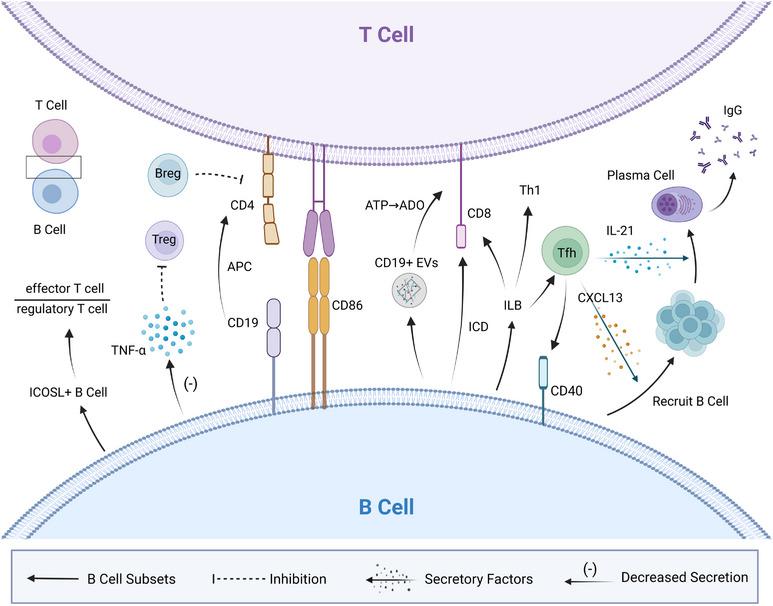
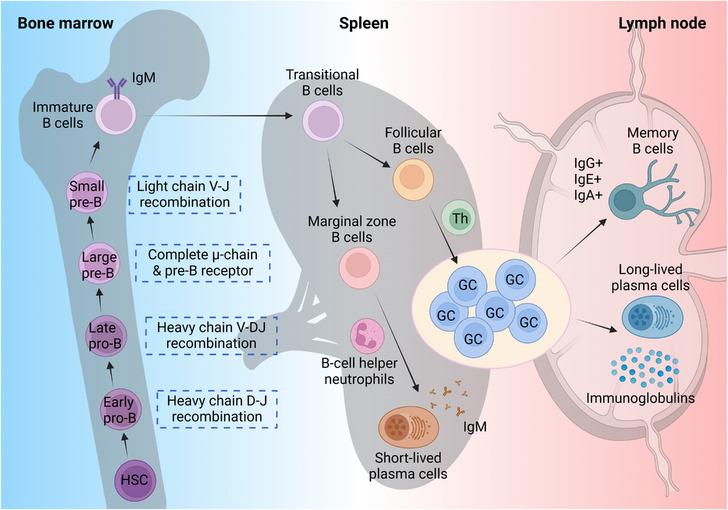
The anti-tumour and tumour-promoting roles of B cells in the tumour microenvironment (TME) have gained considerable attention in recent years. As essential orchestrators of humoral immunity, B cells potentially play a crucial role in anti-tumour therapies. Chemotherapy, a mainstay in cancer treatment, influences the proliferation and function of diverse B-cell subsets and their crosstalk with the TME. Modulating B-cell function by targeting B cells or their associated cells may enhance chemotherapy efficacy, presenting a promising avenue for future targeted therapy investigations.
CONCLUSION
This review explores the intricate interplay between chemotherapy and B cells, underscoring the pivotal role of B cells in chemotherapy treatment. We summarise promising B-cell-related therapeutic targets, illustrating the immense potential of B cells in anti-tumour therapy. Our work lays a theoretical foundation for harnessing B cells in chemotherapy and combination strategies for cancer treatment.
KEY POINTS
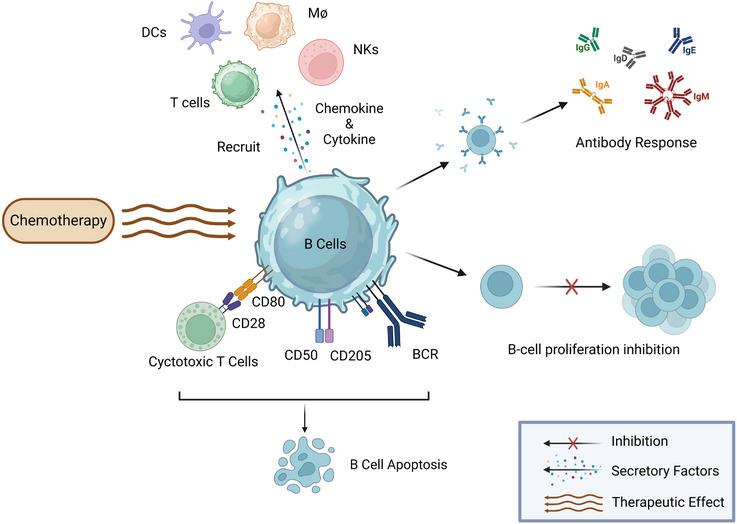
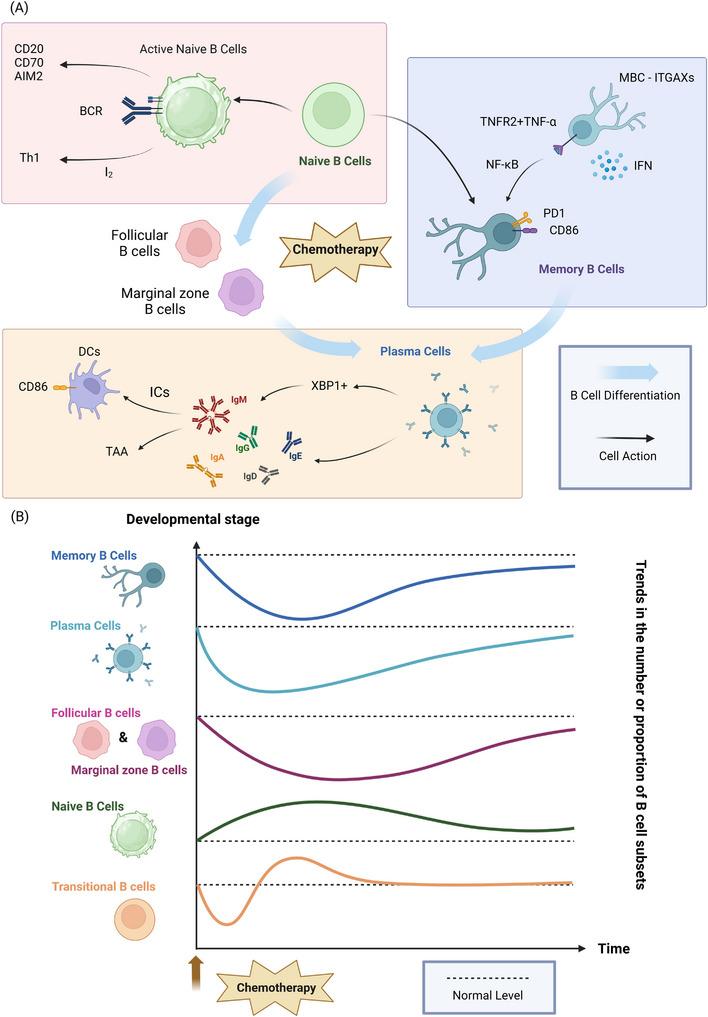
Chemotherapy can inhibit B-cell proliferation and alter subset distributions and functions, including factor secretion, receptor signalling, and costimulation. Chemotherapy can modulate complex B-cell-T-cell interactions with variable effects on anti-tumour immunity. Targeting B-cell surface markers or signalling improves chemotherapy responses, blocks immune evasion and inhibits tumour growth. Critical knowledge gaps remain regarding B-cell interactions in TME, B-cell chemoresistance mechanisms, TLS biology, heterogeneity, spatial distributions, chemotherapy drug selection and B-cell targets that future studies should address.
背景和正文
近年来,B 细胞在肿瘤微环境(TME)中的抗肿瘤和促肿瘤作用引起了相当大的关注。作为体液免疫的重要协调者,B 细胞在抗肿瘤治疗中可能发挥关键作用。化疗作为癌症治疗的主要手段,影响着各种 B 细胞亚群的增殖和功能及其与 TME 的相互作用。通过靶向 B 细胞或其相关细胞来调节 B 细胞功能,可能会提高化疗疗效,为未来的靶向治疗研究提供有前景的途径。
结论
本综述探讨了化疗与 B 细胞之间的复杂相互作用,强调了 B 细胞在化疗治疗中的关键作用。我们总结了有前途的 B 细胞相关治疗靶点,阐明了 B 细胞在抗肿瘤治疗中的巨大潜力。我们的工作为利用 B 细胞进行化疗和联合治疗癌症策略奠定了理论基础。
关键点
化疗可抑制 B 细胞增殖,并改变亚群分布和功能,包括因子分泌、受体信号转导和共刺激。化疗可调节 B 细胞与 T 细胞的复杂相互作用,对抗肿瘤免疫产生不同的影响。靶向 B 细胞表面标志物或信号转导可提高化疗反应、阻断免疫逃逸和抑制肿瘤生长。目前仍存在一些关键的知识空白,包括 TME 中 B 细胞相互作用、B 细胞化疗耐药机制、生发中心 T 细胞样结构(TLS)生物学、异质性、空间分布、化疗药物选择和 B 细胞靶点,未来的研究应重点关注这些问题。
 Zotero 插件