
某些精油及其活性化合物与氟康唑对新型隐球菌唑耐药株的协同作用。
Synergistic Interaction of Certain Essential Oils and Their Active Compounds with Fluconazole against Azole-resistant Strains of Cryptococcus neoformans.
机构信息
Department of Basic Sciences, Deanship of Preparatory Year and Supporting Studies, Imam Abdulrahman Bin Faisal University, Dammam, Saudi Arabia.
出版信息
Ann Afr Med. 2024 Jul 1;23(3):391-399. doi: 10.4103/aam.aam_197_23. Epub 2024 May 13.
OBJECTIVES
This study investigated the anti-cryptococcal potential of certain essential oils (EOs)/compounds alone and in combination with fluconazole.
MATERIALS AND METHODS
We investigated the antifungal activity of oils of Cinnamomum verum, Cymbopogon citratus, Cymbopogon martini, and Syzygium aromaticum, and their major active ingredients cinnamaldehyde, citral, eugenol, and geraniol against clinical and standard strains of Cryptococcus neoformans (CN). Disc diffusion, broth microdilution, checkerboard methods, and transmission electron microscopy were employed to determine growth inhibition, synergistic interaction, and mechanism of action of test compounds.
RESULTS
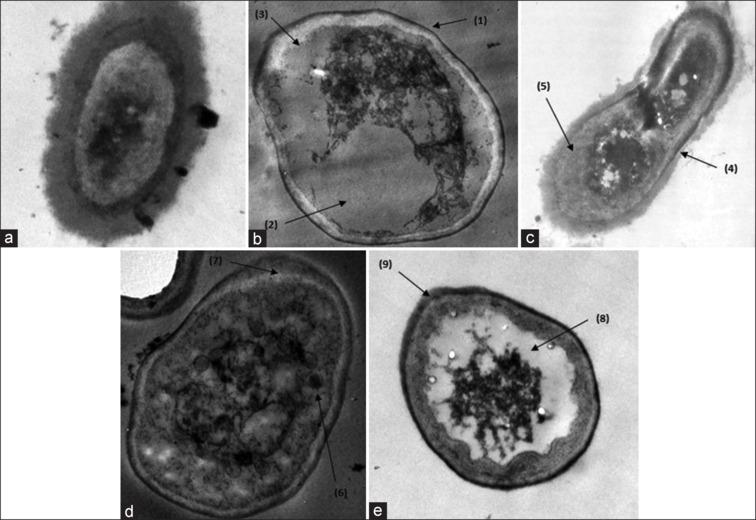
EOs/compounds showed pronounced antifungal efficacy against azole-resistant CN in the order of cinnamaldehyde > eugenol > S. aromaticum > C. verum > citral > C. citratus > geraniol ≥ C. martini, each exhibiting zone of inhibition >15 mm. These oils/compounds were highly cidal compared to fluconazole. Eugenol and cinnamaldehyde showed the strongest synergy with fluconazole against CN by lowering their MICs up to 32-fold. Transmission electron microscopy indicated damage of the fungal cell wall, cell membrane, and other endomembranous organelles.
CONCLUSION
Test oils and their active compounds exhibited potential anti-cryptococcus activity against the azole-resistant strains of CN. Moreover, eugenol and cinnamaldehyde significantly potentiated the anti-cryptococcal activity of fluconazole. It is suggested that multiple sites of action from oils/compounds could turn static fluconazole into a cidal drug combination in combating cryptococcosis.
目的
本研究旨在单独及联合氟康唑评估某些精油(EOs)/化合物的抗隐球菌作用。
材料和方法
我们评估了肉桂油、香茅油、马丁香茅油和丁香罗勒油及其主要活性成分肉桂醛、柠檬醛、丁香酚和香叶醇对临床和标准隐球菌新株(CN)的抗真菌活性。采用纸片扩散法、肉汤微量稀释法、棋盘法和透射电镜来确定受试化合物的抑菌作用、协同作用和作用机制。
结果
EOs/化合物对唑类耐药 CN 的抗真菌效果显著,其顺序为肉桂醛>丁香酚>丁香罗勒>肉桂>柠檬醛>香茅>香叶醇≥马丁香茅,每个化合物的抑菌圈>15mm。与氟康唑相比,这些精油/化合物的杀菌效果更强。与氟康唑相比,丁香酚和肉桂醛对 CN 表现出最强的协同作用,使 MIC 降低了 32 倍。透射电镜显示真菌细胞壁、细胞膜和其他内膜细胞器受损。
结论
受试油及其活性化合物对唑类耐药 CN 株表现出潜在的抗隐球菌活性。此外,丁香酚和肉桂醛显著增强了氟康唑的抗隐球菌活性。提示从油/化合物作用的多个靶点可能将氟康唑由抑菌药物转变为杀菌药物组合,从而治疗隐球菌病。

 Zotero 插件