
锰钳形配合物催化聚甲醛升级循环转化为甲醇和甲基
Polyoxymethylene Upcycling into Methanol and Methyl Groups Catalyzed by a Manganese Pincer Complex.
作者信息
Lu Lijun, Luo Jie, Montag Michael, Diskin-Posner Yael, Milstein David
机构信息
Department of Molecular Chemistry and Materials Science, Weizmann Institute of Science, Rehovot 7610001, Israel.
Department of Chemical Research Support, Weizmann Institute of Science, Rehovot 7610001, Israel.
出版信息
J Am Chem Soc. 2024 Aug 7;146(31):22017-22026. doi: 10.1021/jacs.4c07468. Epub 2024 Jul 24.
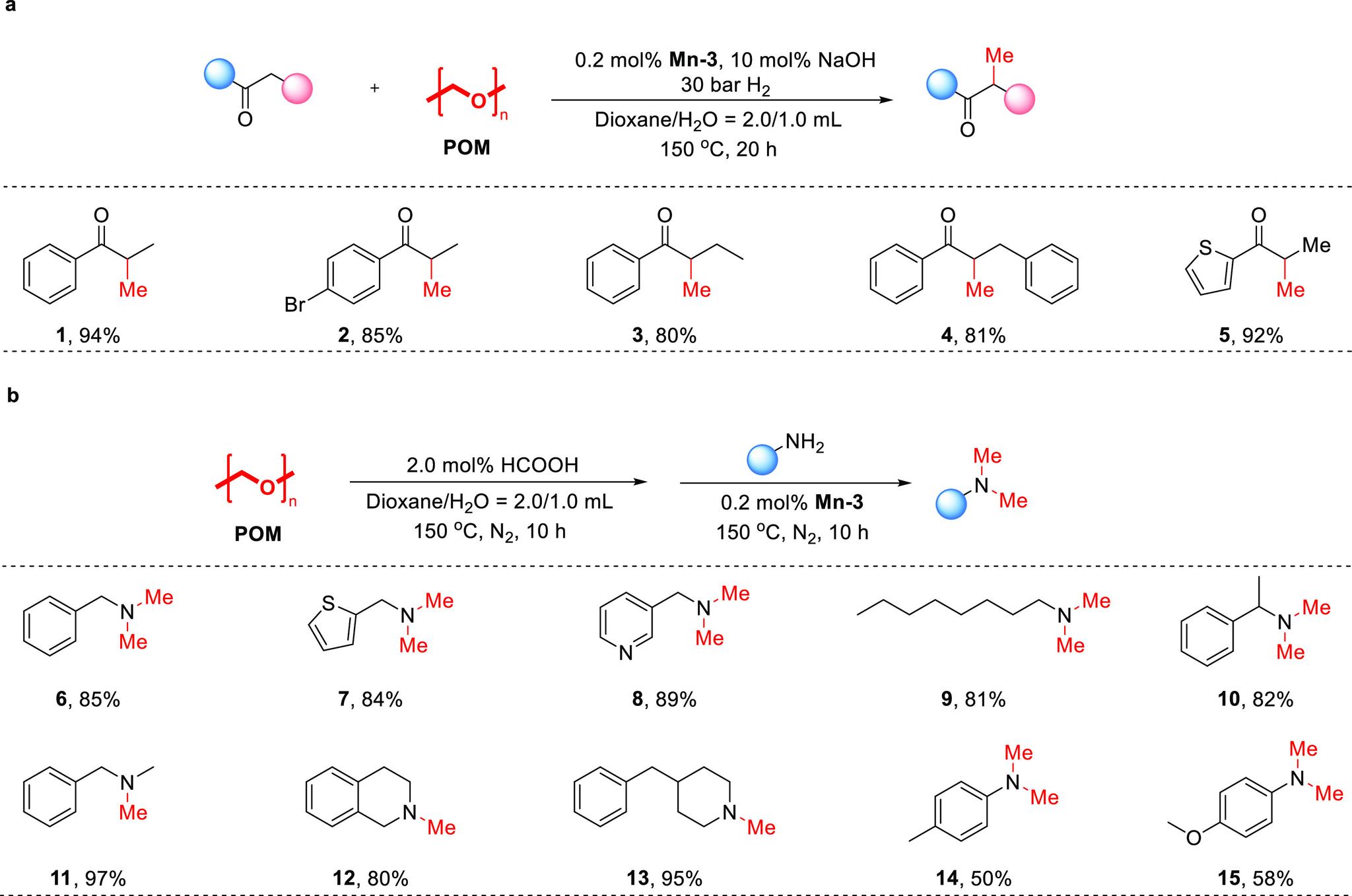
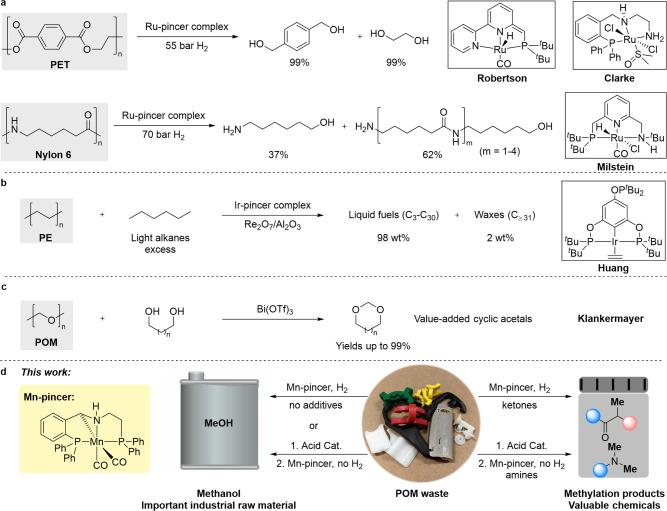
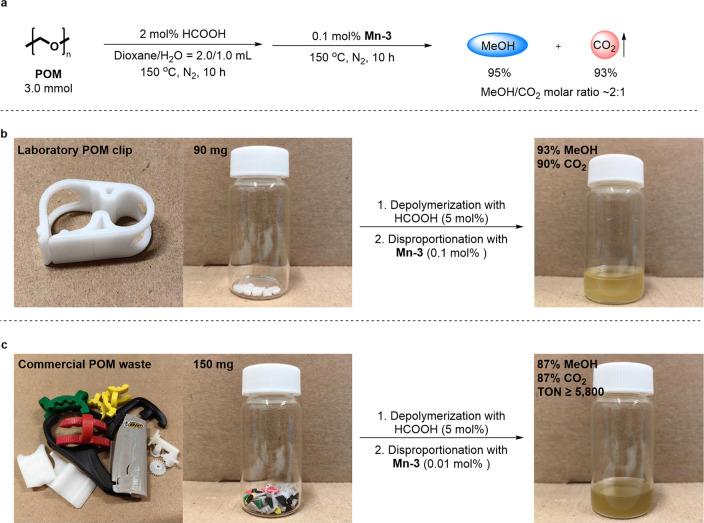
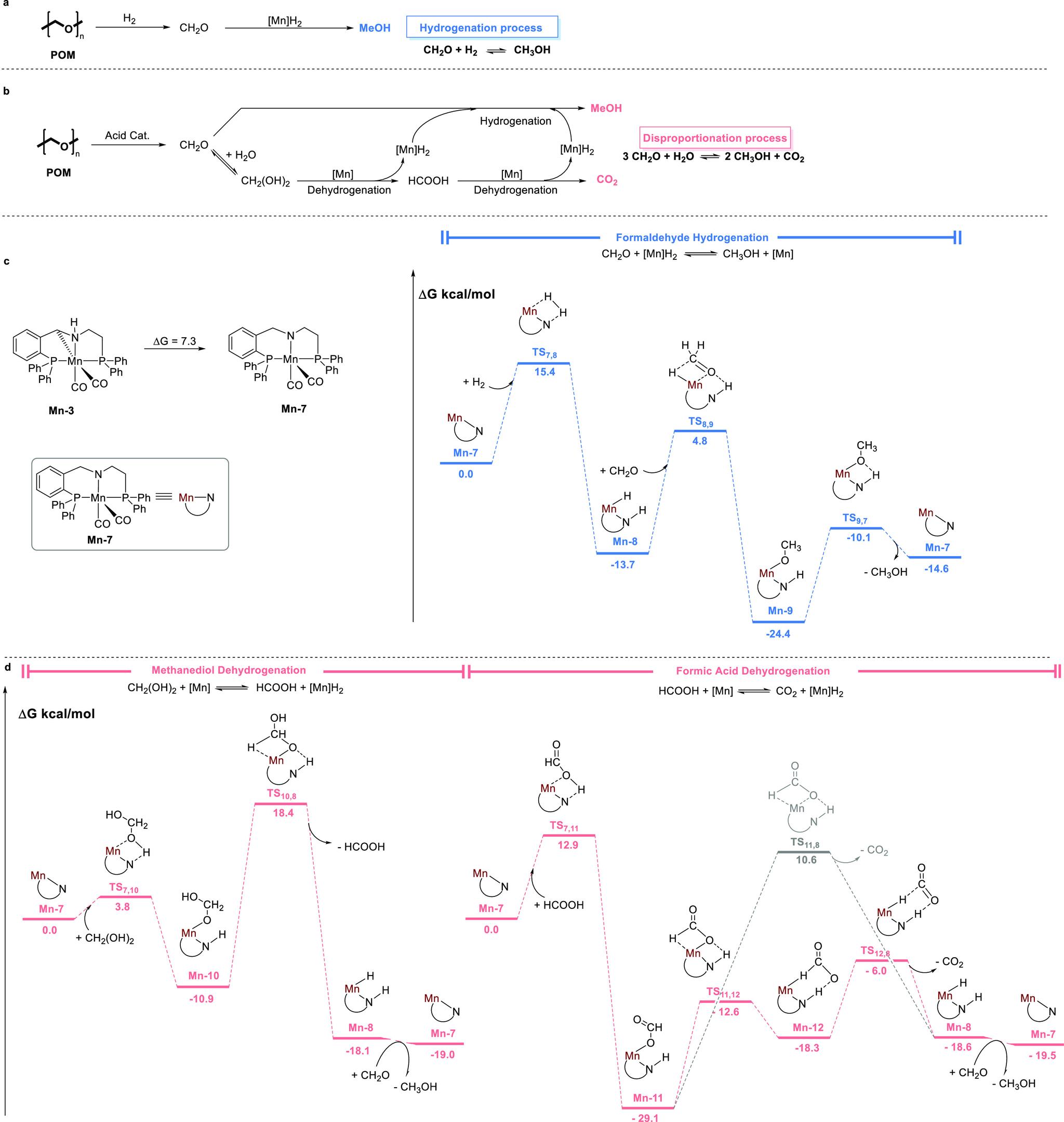
Polyoxymethylene (POM) is a commonly used engineering thermoplastic, but its recycling by conventional means, i.e., mechanical recycling, is not practiced to any meaningful extent, due to technical limitations. Instead, waste POM is typically incinerated or disposed in landfills, where it becomes a persistent environmental pollutant. An attractive alternative to mechanical recycling is upcycling, namely, the conversion of waste POM into value-added chemicals, but this has received very little attention. Herein, we report the upcycling of POM into useful chemicals through three different reactions, all of which are efficiently catalyzed by a single pincer complex of earth-abundant manganese. One method involves hydrogenation of POM into methanol using H gas as the only reagent, whereas another method converts POM into methanol and CO through a one-pot process comprising acidolysis followed by Mn-catalyzed disproportionation. The third method utilizes POM as a reagent for the methylation of ketones and amines.
聚甲醛(POM)是一种常用的工程热塑性塑料,但由于技术限制,通过传统方法(即机械回收)对其进行回收利用并未得到广泛应用。相反,废弃的聚甲醛通常被焚烧或填埋,在那里它会成为一种持久性环境污染物。机械回收的一个有吸引力的替代方法是升级循环利用,即将废弃的聚甲醛转化为高附加值的化学品,但这方面受到的关注很少。在此,我们报告了通过三种不同的反应将聚甲醛升级循环利用为有用化学品的方法,所有这些反应都由一种地球上储量丰富的锰的钳形配合物高效催化。一种方法是使用氢气作为唯一试剂将聚甲醛氢化为甲醇,而另一种方法是通过包括酸解然后锰催化歧化的一锅法将聚甲醛转化为甲醇和一氧化碳。第三种方法是利用聚甲醛作为酮和胺甲基化的试剂。

 Zotero 插件