
质子放疗增强间皮素靶向嵌合抗原受体 T 细胞疗法在胰腺癌中的疗效。
Proton radiation boosts the efficacy of mesothelin-targeting chimeric antigen receptor T cell therapy in pancreatic cancer.
机构信息
Department of Radiation Oncology, Perelman School of Medicine, University of Pennsylvania, Philadelphia, PA 19104.
Department of Radiation Oncology, Tel Aviv Medical Center, Tel Aviv 64239, Israel.
出版信息
Proc Natl Acad Sci U S A. 2024 Jul 30;121(31):e2403002121. doi: 10.1073/pnas.2403002121. Epub 2024 Jul 24.
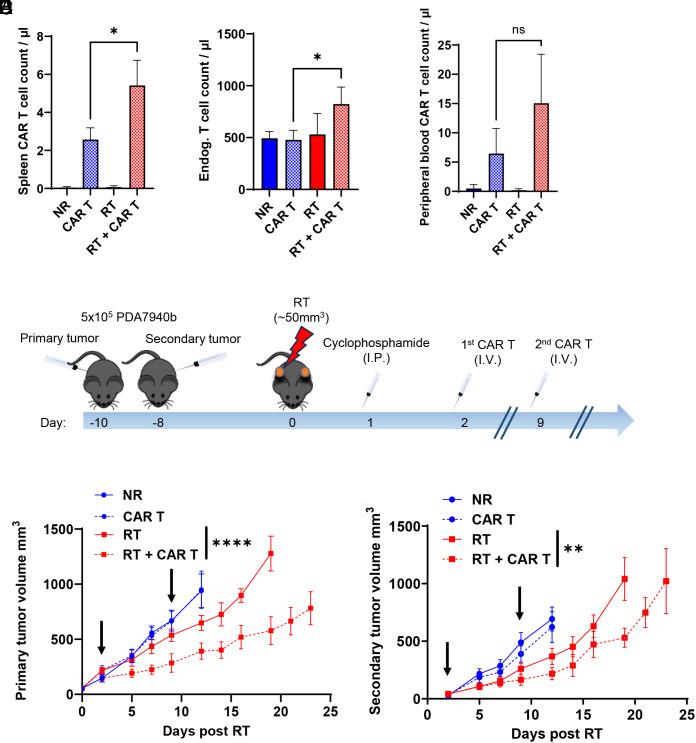
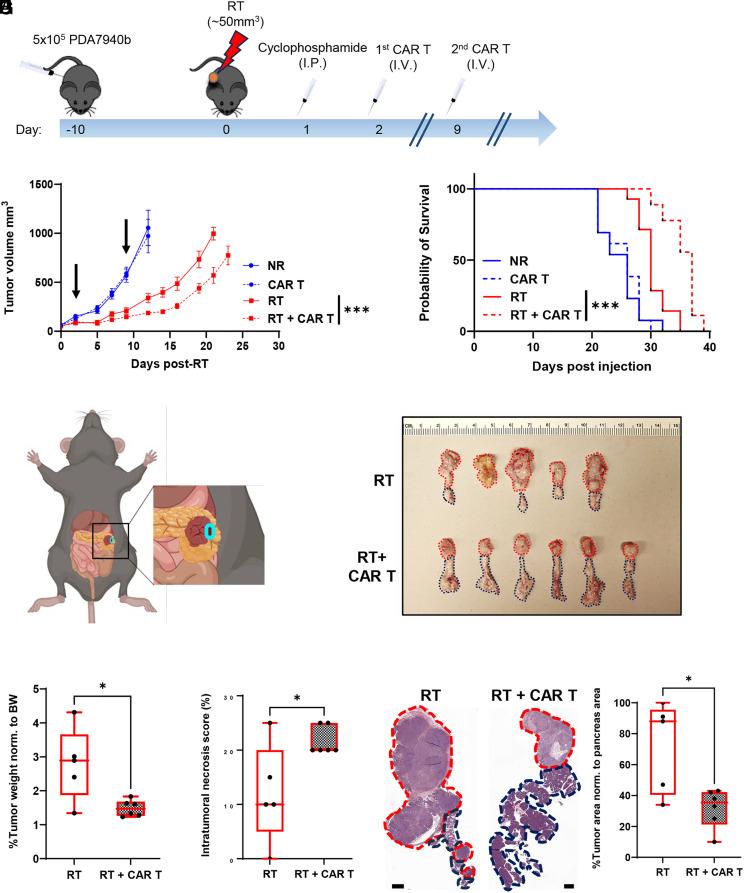
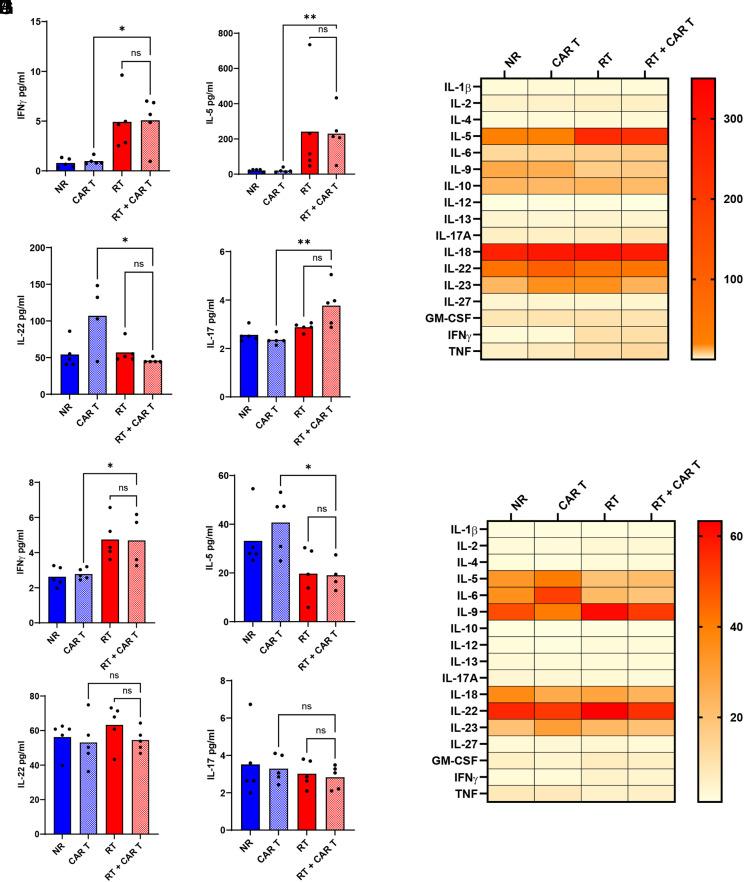
Pancreatic ductal adenocarcinoma (PDAC) represents a challenge in oncology, with limited treatment options for advanced-stage patients. Chimeric antigen receptor T cell (CAR T) therapy targeting mesothelin (MSLN) shows promise, but challenges such as the hostile immunosuppressive tumor microenvironment (TME) hinder its efficacy. This study explores the synergistic potential of combining proton radiation therapy (RT) with MSLN-targeting CAR T therapy in a syngeneic PDAC model. Proton RT significantly increased MSLN expression in tumor cells and caused a significant increase in CAR T cell infiltration into tumors. The combination therapy reshaped the immunosuppressive TME, promoting antitumorigenic M1 polarized macrophages and reducing myeloid-derived suppressor cells (MDSC). In a flank PDAC model, the combination therapy demonstrated superior attenuation of tumor growth and improved survival compared to individual treatments alone. In an orthotopic PDAC model treated with image-guided proton RT, tumor growth was significantly reduced in the combination group compared to the RT treatment alone. Further, the combination therapy induced an abscopal effect in a dual-flank tumor model, with increased serum interferon-γ levels and enhanced proliferation of extratumoral CAR T cells. In conclusion, combining proton RT with MSLN-targeting CAR T therapy proves effective in modulating the TME, enhancing CAR T cell trafficking, and exerting systemic antitumor effects. Thus, this combinatorial approach could present a promising strategy for improving outcomes in unresectable PDAC.
胰腺导管腺癌 (PDAC) 是肿瘤学领域的一大挑战,晚期患者的治疗选择有限。针对间皮素 (MSLN) 的嵌合抗原受体 T 细胞 (CAR T) 疗法显示出前景,但诸如敌对的免疫抑制肿瘤微环境 (TME) 等挑战阻碍了其疗效。本研究探讨了在同种异体 PDAC 模型中联合质子放射治疗 (RT) 和 MSLN 靶向 CAR T 疗法的协同潜力。质子 RT 显著增加了肿瘤细胞中的 MSLN 表达,并导致 CAR T 细胞大量浸润肿瘤。联合治疗重塑了免疫抑制的 TME,促进了抗肿瘤的 M1 极化巨噬细胞,并减少了髓系来源的抑制细胞 (MDSC)。在 flank PDAC 模型中,与单独治疗相比,联合治疗显著抑制了肿瘤生长并提高了生存率。在接受图像引导质子 RT 治疗的原位 PDAC 模型中,与单独 RT 治疗相比,联合组的肿瘤生长明显减少。此外,联合治疗在双 flank 肿瘤模型中诱导了远隔效应,血清干扰素-γ 水平升高,并增强了肿瘤外 CAR T 细胞的增殖。总之,将质子 RT 与 MSLN 靶向 CAR T 疗法相结合,可有效调节 TME,增强 CAR T 细胞的迁移,并发挥全身抗肿瘤作用。因此,这种联合治疗方法可能为改善不可切除的 PDAC 患者的预后提供一种有前途的策略。

 Zotero 插件