
三卤甲烷在原始和老化聚氯乙烯微塑料上的吸附行为及机制
Adsorption Behavior and Mechanisms of Trihalomethanes onto Virgin and Weathered Polyvinyl Chloride Microplastics.
作者信息
Li Yi, Neema Paragi, Andrews Susan
机构信息
Department of Civil & Mineral Engineering, University of Toronto, Toronto, ON M5S 1A4, Canada.
出版信息
Toxics. 2024 Jun 22;12(7):450. doi: 10.3390/toxics12070450.
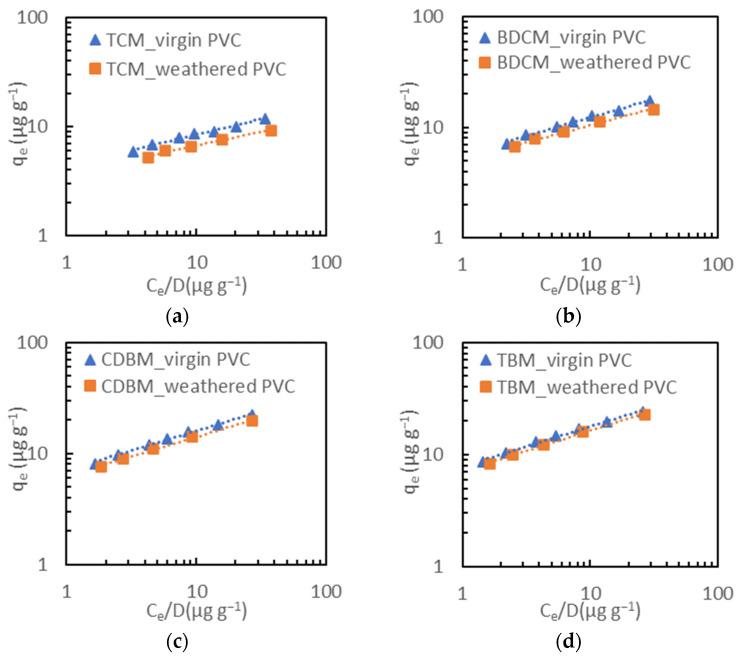
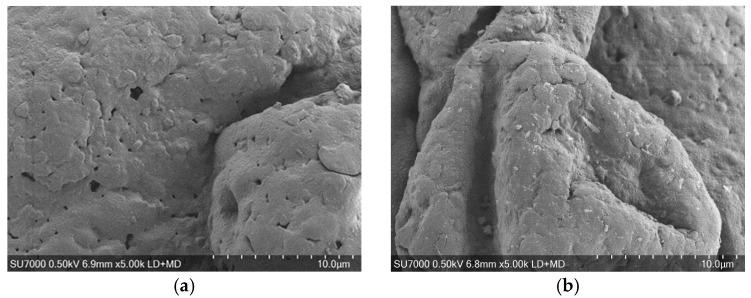
Microplastics that adsorb various toxic contaminants in water may be transported into cells and organs, possibly posing toxicological risks in the aquatic environment. Disinfection byproducts (DBPs), which are ubiquitous in chlorinated drinking water and wastewater, may have some potential to sorb onto microplastics (MPs) through hydrophobic or electrostatic interactions. However, DBP adsorption on microplastics has not yet been closely examined. This work investigated the adsorption behavior of trihalomethanes (THMs)-a regulated and ubiquitous DBP class in chlorinated water-onto virgin and weathered polyvinyl chloride (PVC) microplastics, the most widely used plastic material in drinking water distribution and sewer systems. A comparative analysis of kinetic and isotherm test results indicated that the adsorption mechanisms mainly involved hydrophobic interactions from a combination of weak and strong physisorption behavior and possibly chemisorption. The adsorption coefficients from all the models examined suggested that the adsorption of THMs, and perhaps chemically similar DBPs, onto virgin PVC microplastics can be 10-20 µg g. However, the weathered PVC microplastics contained more polar functional groups, which led to a decreased hydrophobicity and reduced THM adsorption capacity by approximately 10%. These findings offer novel insights into the possible adsorption characteristics of disinfection byproducts (DBPs) onto microplastics and will assist in targeting more toxic DBPs for future investigations.
吸附水中各种有毒污染物的微塑料可能会进入细胞和器官,这在水生环境中可能带来毒理学风险。消毒副产物(DBPs)在氯化饮用水和废水中普遍存在,它们可能通过疏水或静电相互作用吸附在微塑料(MPs)上。然而,DBPs在微塑料上的吸附情况尚未得到深入研究。这项工作研究了三卤甲烷(THMs)——氯化水中一种受监管且普遍存在的DBP类别——在原始和老化的聚氯乙烯(PVC)微塑料上的吸附行为,PVC是饮用水分配和下水道系统中使用最广泛的塑料材料。动力学和等温线测试结果的对比分析表明,吸附机制主要涉及由弱和强物理吸附行为以及可能的化学吸附组合而成的疏水相互作用。所有测试模型的吸附系数表明,THMs以及可能化学性质相似的DBPs在原始PVC微塑料上的吸附量可达10 - 20 µg/g。然而,老化的PVC微塑料含有更多极性官能团,这导致疏水性降低,THM吸附容量减少了约10%。这些发现为消毒副产物(DBPs)在微塑料上可能的吸附特性提供了新见解,并将有助于确定未来研究中更具毒性的DBPs。


 Zotero 插件