
3D打印聚乳酸基装置及给药系统在生物医学与临床中的新兴应用
Emerging Biomedical and Clinical Applications of 3D-Printed Poly(Lactic Acid)-Based Devices and Delivery Systems.
作者信息
Barcena Allan John R, Ravi Prashanth, Kundu Suprateek, Tappa Karthik
机构信息
Department of Interventional Radiology, The University of Texas MD Anderson Cancer Center, Houston, TX 77030, USA.
College of Medicine, University of the Philippines Manila, Manila 1000, Philippines.
出版信息
Bioengineering (Basel). 2024 Jul 11;11(7):705. doi: 10.3390/bioengineering11070705.
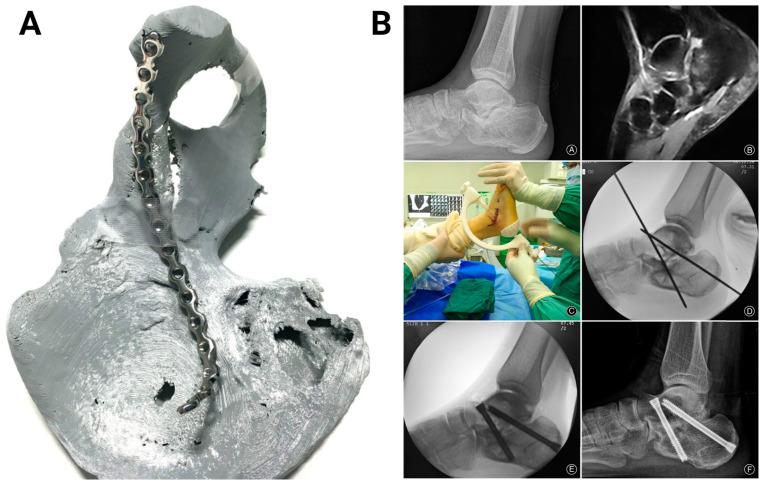
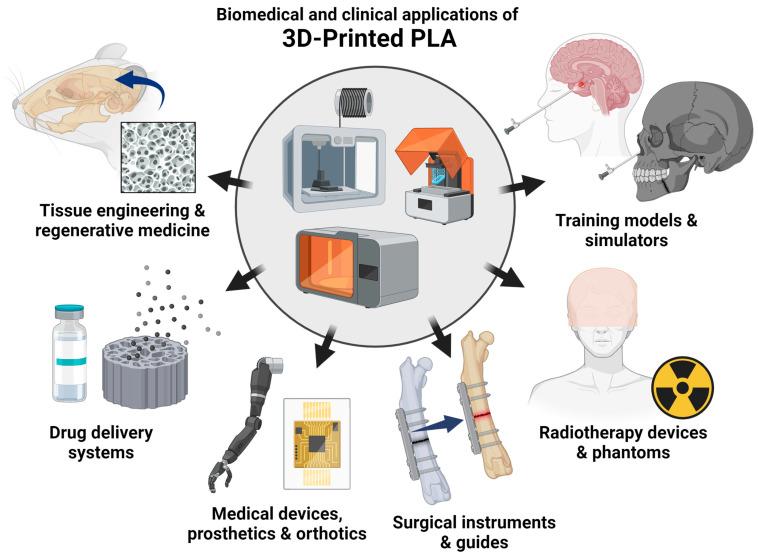
Poly(lactic acid) (PLA) is widely used in the field of medicine due to its biocompatibility, versatility, and cost-effectiveness. Three-dimensional (3D) printing or the systematic deposition of PLA in layers has enabled the fabrication of customized scaffolds for various biomedical and clinical applications. In tissue engineering and regenerative medicine, 3D-printed PLA has been mostly used to generate bone tissue scaffolds, typically in combination with different polymers and ceramics. PLA's versatility has also allowed the development of drug-eluting constructs for the controlled release of various agents, such as antibiotics, antivirals, anti-hypertensives, chemotherapeutics, hormones, and vitamins. Additionally, 3D-printed PLA has recently been used to develop diagnostic electrodes, prostheses, orthoses, surgical instruments, and radiotherapy devices. PLA has provided a cost-effective, accessible, and safer means of improving patient care through surgical and dosimetry guides, as well as enhancing medical education through training models and simulators. Overall, the widespread use of 3D-printed PLA in biomedical and clinical settings is expected to persistently stimulate biomedical innovation and revolutionize patient care and healthcare delivery.
聚乳酸(PLA)因其生物相容性、多功能性和成本效益,在医学领域得到广泛应用。三维(3D)打印或将PLA分层系统沉积,已能够制造出适用于各种生物医学和临床应用的定制支架。在组织工程和再生医学中,3D打印的PLA主要用于生成骨组织支架,通常与不同的聚合物和陶瓷结合使用。PLA的多功能性还使得能够开发用于控制释放各种药物的药物洗脱结构,如抗生素、抗病毒药物、抗高血压药物、化疗药物、激素和维生素。此外,3D打印的PLA最近还被用于开发诊断电极、假体、矫形器、手术器械和放射治疗设备。PLA通过手术和剂量测定指南提供了一种经济高效、易于获得且更安全的改善患者护理的方法,同时通过培训模型和模拟器加强医学教育。总体而言,预计3D打印的PLA在生物医学和临床环境中的广泛应用将持续推动生物医学创新,并彻底改变患者护理和医疗服务的提供方式。





 Zotero 插件