
蜂胶对抗感染的抗生物膜作用。
Anti-Biofilm Perspectives of Propolis against Infections.
机构信息
Department of Applied Physics, University of Extremadura, 06006 Badajoz, Spain.
Department of Biomedical Science, Area of Microbiology, University of Extremadura, 06006 Badajoz, Spain.
出版信息
Biomolecules. 2024 Jun 29;14(7):779. doi: 10.3390/biom14070779.
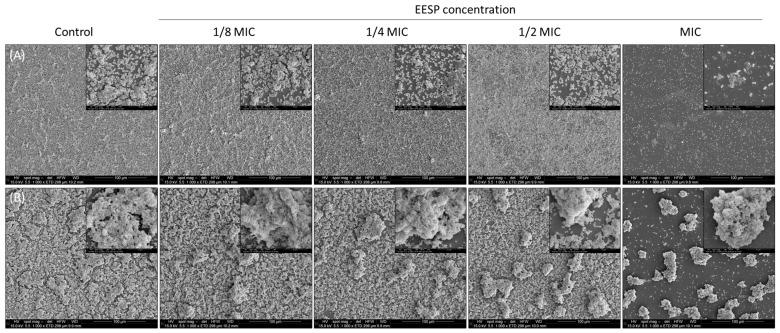
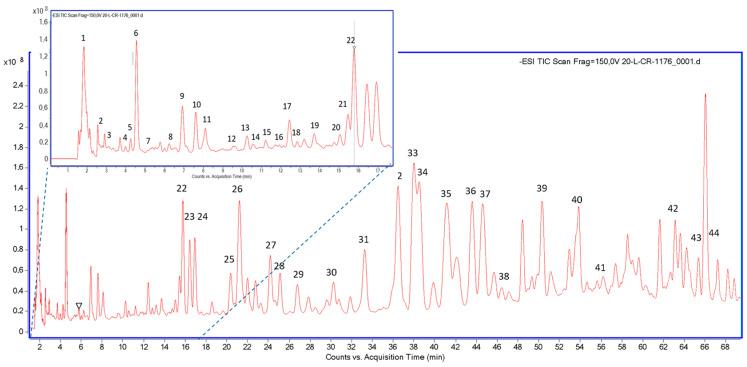
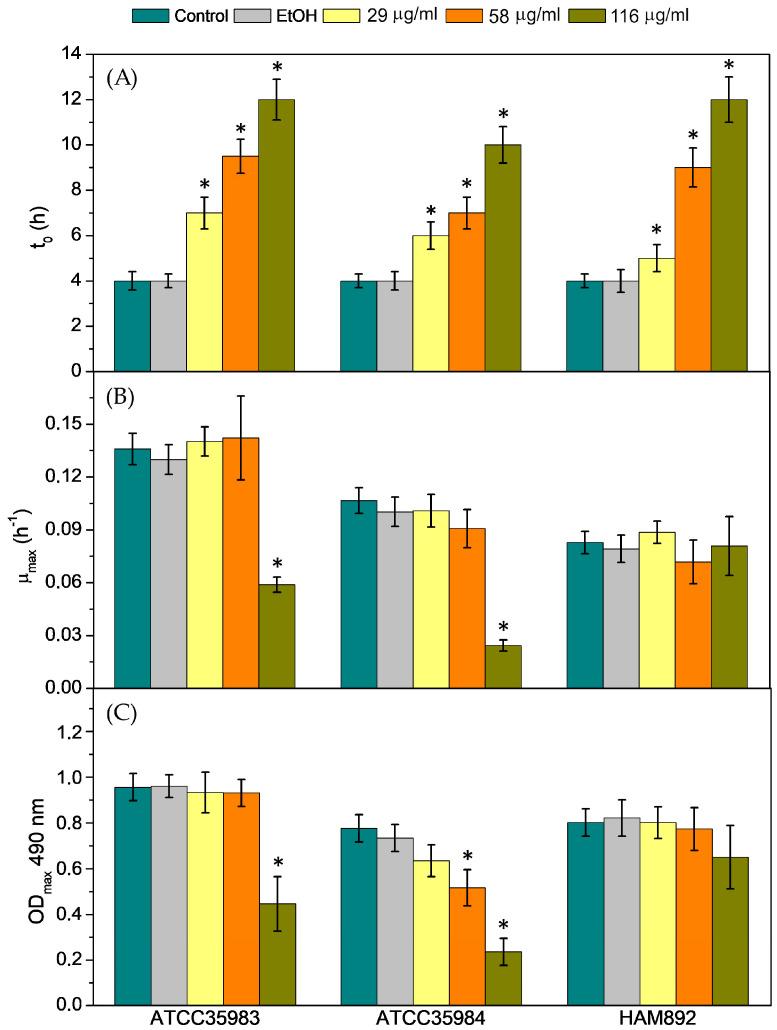
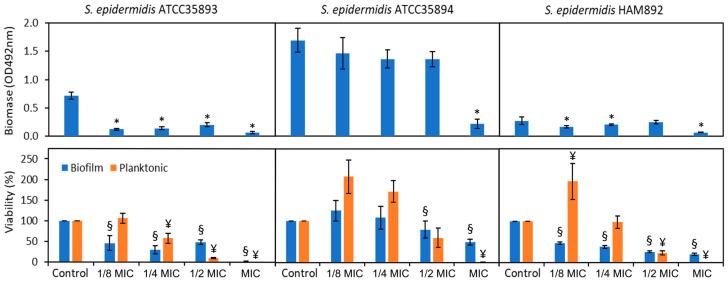
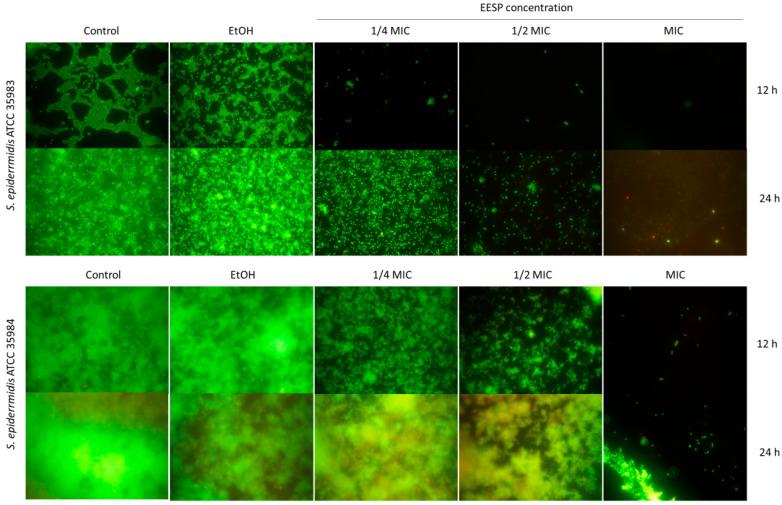
has emerged as the main causative agent of medical device-related infections. Their major pathogenicity factor lies in its ability to adhere to surfaces and proliferate into biofilms, which increase their resistance to antibiotics. The main objective of this study was to evaluate the use and the mechanism of action of an ethanolic extract of Spanish propolis (EESP) as a potential alternative for preventing biofilm-related infections caused by . The chemical composition of propolis is reported and its antibacterial activity against several strains of with different biofilm-forming capacities evaluated. The influence of sub-inhibitory concentrations (sub-MICs) of EESP on their growth, physicochemical surface properties, adherence, and biofilm formation were studied. EESP interferes with planktonic cells, homogenizing their physicochemical surface properties and introducing a significant delay in their growth. The adherence and biofilms at the EESP concentrations investigated were decreased up to 90.5% among the strains. Microscopic analysis indicated that the planktonic cells that survived the treatment were the ones that adhere and proliferate on the surfaces. The results obtained suggest that the EESP has a high potential to be used as an inhibitor of both the adhesion and biofilm formation of
已经成为医疗器械相关感染的主要病原体。它们的主要致病因素在于其能够附着在表面并增殖成生物膜,从而增加其对抗生素的耐药性。本研究的主要目的是评估西班牙蜂胶(EESP)的乙醇提取物作为预防 引起的生物膜相关感染的潜在替代品的用途和作用机制。报道了蜂胶的化学成分,并评估了其对具有不同生物膜形成能力的几种 菌株的抗菌活性。研究了亚抑制浓度(sub-MICs)的 EESP 对其生长、理化表面特性、黏附和生物膜形成的影响。EESP 干扰浮游细胞,使它们的理化表面特性均匀化,并显著延迟其生长。在所研究的 EESP 浓度下,菌株的黏附和生物膜形成减少了 90.5%。显微镜分析表明,在处理后存活的浮游细胞是那些附着并在表面增殖的细胞。研究结果表明,EESP 具有作为抑制物的高潜力,可用于抑制 和 的黏附和生物膜形成。


 Zotero 插件