
TRPA1 离子通道介导氧化应激相关偏头痛发病机制。
The TRPA1 Ion Channel Mediates Oxidative Stress-Related Migraine Pathogenesis.
机构信息
Department of Developmental Neurology and Epileptology, Polish Mother's Memorial Hospital Research Institute, 93-338 Lodz, Poland.
Department of Pediatric Dentistry, Medical University of Lodz, 92-217 Lodz, Poland.
出版信息
Molecules. 2024 Jul 18;29(14):3385. doi: 10.3390/molecules29143385.
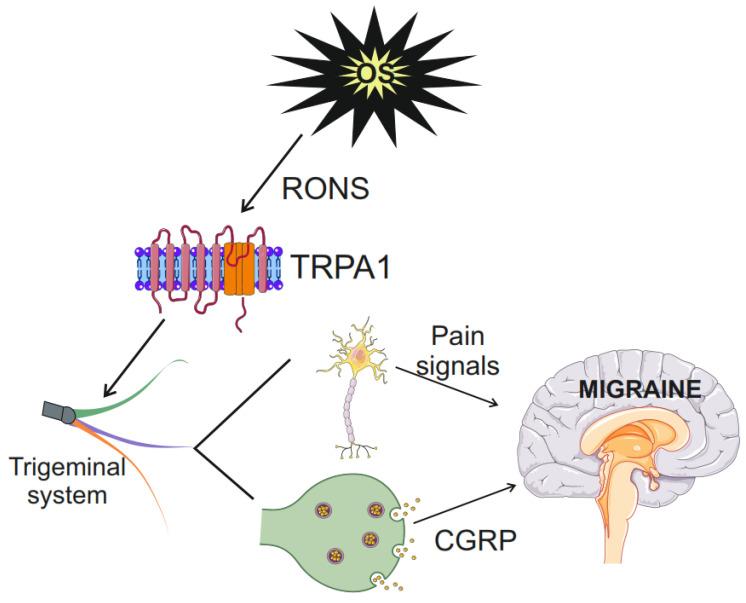
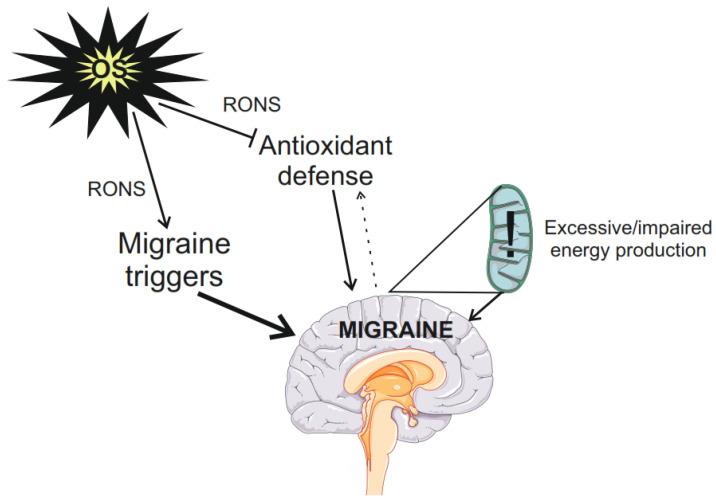
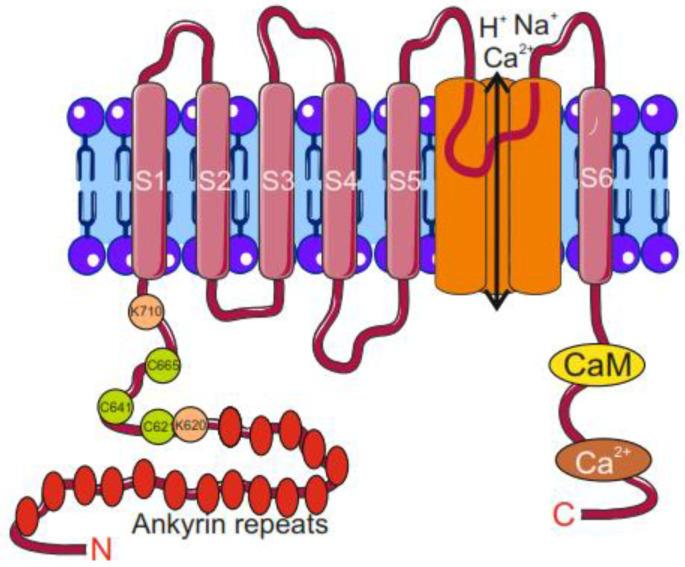
Although the introduction of drugs targeting calcitonin gene-related peptide (CGRP) revolutionized migraine treatment, still a substantial proportion of migraine patients do not respond satisfactorily to such a treatment, and new therapeutic targets are needed. Therefore, molecular studies on migraine pathogenesis are justified. Oxidative stress is implicated in migraine pathogenesis, as many migraine triggers are related to the production of reactive oxygen and nitrogen species (RONS). Migraine has been proposed as a superior mechanism of the brain to face oxidative stress resulting from energetic imbalance. However, the precise mechanism behind the link between migraine and oxidative stress is not known. Nociceptive primary afferent nerve fiber endings express ion channel receptors that change harmful stimuli into electric pain signals. Transient receptor potential cation channel subfamily A member 1 (TRPA1) is an ion channel that can be activated by oxidative stress products and stimulate the release of CGRP from nerve endings. It is a transmembrane protein with ankyrin repeats and conserved cysteines in its N-terminus embedded in the cytosol. TRPA1 may be a central element of the signaling pathway from oxidative stress and NO production to CGRP release, which may play a critical role in headache induction. In this narrative review, we present information on the role of oxidative stress in migraine pathogenesis and provide arguments that TRPA1 may be "a missing link" between oxidative stress and migraine and therefore a druggable target in this disease.
尽管靶向降钙素基因相关肽(CGRP)的药物的引入彻底改变了偏头痛的治疗方法,但仍有相当一部分偏头痛患者对此种治疗方法反应不佳,需要新的治疗靶点。因此,对偏头痛发病机制的分子研究是合理的。氧化应激与偏头痛的发病机制有关,因为许多偏头痛的诱因都与活性氧和氮物种(RONS)的产生有关。偏头痛被认为是大脑应对能量失衡引起的氧化应激的一种优越机制。然而,偏头痛和氧化应激之间联系的确切机制尚不清楚。伤害性初级传入神经纤维末端表达离子通道受体,将有害刺激转化为电疼痛信号。瞬时受体电位阳离子通道亚家族 A 成员 1(TRPA1)是一种离子通道,可被氧化应激产物激活,并刺激神经末梢释放 CGRP。它是一种跨膜蛋白,其 N 端具有锚蛋白重复序列和保守半胱氨酸,嵌入细胞质中。TRPA1 可能是从氧化应激和 NO 产生到 CGRP 释放的信号通路的核心要素,它可能在头痛诱导中起关键作用。在这篇叙述性综述中,我们介绍了氧化应激在偏头痛发病机制中的作用,并提出了 TRPA1 可能是氧化应激和偏头痛之间的“缺失环节”的观点,因此它可能是这种疾病的一个可药物治疗的靶点。

 Zotero 插件