
衣原体发育及宿主细胞反应的见解
Insights into Chlamydia Development and Host Cells Response.
作者信息
Yang Shuaini, Zeng Jiajia, Yu Jinxi, Sun Ruoyuan, Tuo Yuqing, Bai Hong
机构信息
Tianjin Key Laboratory of Cellular and Molecular Immunology (The Educational Ministry of China), Tianjin Institute of Immunology, Department of Immunology, School of Basic Medical Sciences, Tianjin Medical University, Tianjin 300070, China.
出版信息
Microorganisms. 2024 Jun 26;12(7):1302. doi: 10.3390/microorganisms12071302.
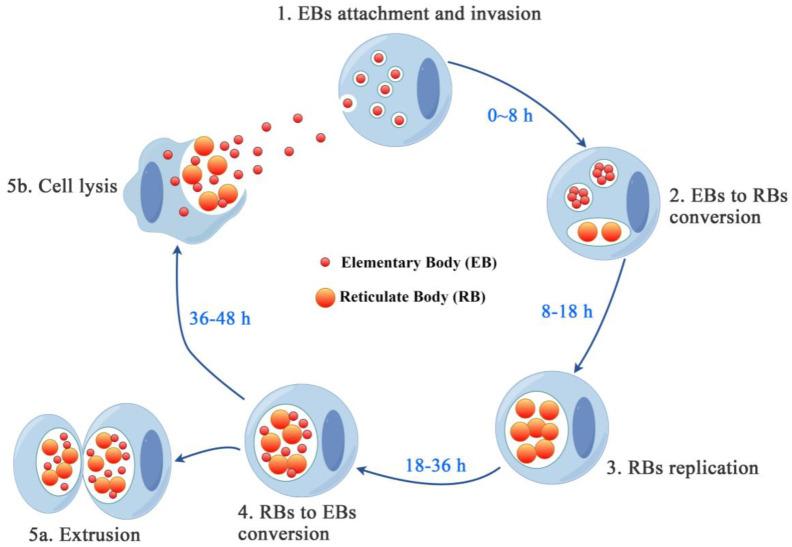
Chlamydia infections commonly afflict both humans and animals, resulting in significant morbidity and imposing a substantial socioeconomic burden worldwide. As an obligate intracellular pathogen, Chlamydia interacts with other cell organelles to obtain necessary nutrients and establishes an intracellular niche for the development of a biphasic intracellular cycle. Eventually, the host cells undergo lysis or extrusion, releasing infectious elementary bodies and facilitating the spread of infection. This review provides insights into Chlamydia development and host cell responses, summarizing the latest research on the biphasic developmental cycle, nutrient acquisition, intracellular metabolism, host cell fates following Chlamydia invasion, prevalent diseases associated with Chlamydia infection, treatment options, and vaccine prevention strategies. A comprehensive understanding of these mechanisms will contribute to a deeper comprehension of the intricate equilibrium between Chlamydia within host cells and the progression of human disease.
衣原体感染在人类和动物中都很常见,会导致严重发病,并在全球造成巨大的社会经济负担。作为一种专性细胞内病原体,衣原体与其他细胞器相互作用以获取必要营养,并建立细胞内生态位以进行双相细胞内周期的发育。最终,宿主细胞发生裂解或被挤出,释放出具有感染性的原体,促进感染传播。本综述深入探讨了衣原体的发育和宿主细胞反应,总结了关于双相发育周期、营养获取、细胞内代谢、衣原体入侵后宿主细胞命运、与衣原体感染相关的常见疾病、治疗选择以及疫苗预防策略的最新研究。对这些机制的全面理解将有助于更深入地理解宿主细胞内衣原体与人类疾病进展之间的复杂平衡。

 Zotero 插件