
3型心肾综合征的分子机制与治疗策略
The Molecular Mechanism and Therapeutic Strategy of Cardiorenal Syndrome Type 3.
作者信息
Liu Yong, Guan Xu, Shao Yuming, Zhou Jie, Huang Yinghui
机构信息
Department of Nephrology, The Key Laboratory for the Prevention and Treatment of Chronic Kidney Disease of Chongqing, Chongqing Clinical Research Center of Kidney and Urology Diseases, Xinqiao Hospital, Army Medical University (Third Military Medical University), 400037 Chongqing, China.
Medical Division, Xinqiao Hospital, Army Medical University, 400037 Chongqing, China.
出版信息
Rev Cardiovasc Med. 2023 Feb 6;24(2):52. doi: 10.31083/j.rcm2402052. eCollection 2023 Feb.
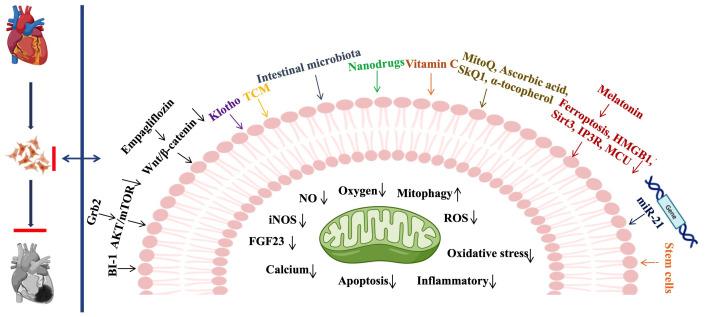
Cardiorenal syndrome type 3 (CRS3) is defined as acute kidney injury (AKI)-induced acute cardiac dysfunction, characterized by high morbidity and mortality. CRS3 often occurs in elderly patients with AKI who need intensive care. Approximately 70% of AKI patients develop into CRS3. CRS3 may also progress towards chronic kidney disease (CKD) and chronic cardiovascular disease (CVD). However, there is currently no effective treatment. Although the major intermediate factors that can mediate cardiac dysfunction remain elusive, recent studies have summarized the AKI biomarkers, identified direct mechanisms, including mitochondrial dysfunction, inflammation, oxidative stress, apoptosis and activation of the sympathetic nervous system (SNS) and renin-angiotensin-aldosterone system (RAAS), inflammasome, as well as indirect mechanisms such as fluid overload, electrolyte imbalances, acidemia and uremic toxins, which are involved in the pathophysiological changes of CRS3. This study reviews the main pathological characteristics, underlying molecular mechanisms, and potential therapeutic strategies of CRS3. Mitochondrial dysfunction and inflammatory factors have been identified as the key initiators and abnormal links between the impaired heart and kidney, which contribute to the formation of a vicious circle, ultimately accelerating the progression of CRS3. Therefore, targeting mitochondrial dysfunction, antioxidants, Klotho, melatonin, gene therapy, stem cells, exosomes, nanodrugs, intestinal microbiota and Traditional Chinese Medicine may serve as promising therapeutic approaches against CRS3.
3型心肾综合征(CRS3)被定义为急性肾损伤(AKI)诱发的急性心脏功能障碍,其特点是发病率和死亡率高。CRS3常发生在需要重症监护的老年AKI患者中。约70%的AKI患者会发展为CRS3。CRS3也可能进展为慢性肾脏病(CKD)和慢性心血管疾病(CVD)。然而,目前尚无有效的治疗方法。尽管介导心脏功能障碍的主要中间因素仍不明确,但最近的研究总结了AKI的生物标志物,确定了直接机制,包括线粒体功能障碍、炎症、氧化应激、细胞凋亡以及交感神经系统(SNS)和肾素-血管紧张素-醛固酮系统(RAAS)的激活、炎性小体,以及诸如液体超负荷、电解质失衡、酸血症和尿毒症毒素等间接机制,这些都参与了CRS3的病理生理变化。本研究综述了CRS3的主要病理特征、潜在分子机制和潜在治疗策略。线粒体功能障碍和炎症因子已被确定为心脏和肾脏受损之间的关键启动因素和异常环节,它们促成了恶性循环的形成,最终加速了CRS3的进展。因此,针对线粒体功能障碍、抗氧化剂、Klotho、褪黑素、基因治疗、干细胞、外泌体、纳米药物、肠道微生物群和传统中药可能是治疗CRS3的有前景的方法。


 Zotero 插件