
城乡慢性肾脏病患者健康差距:2012 年至 2019 年的一项基于社区的横断面研究。
Urban-rural health disparity among patients with chronic kidney disease: a cross-sectional community-based study from 2012 to 2019.
机构信息
Taiwan Kidney Foundation, New Taipei City, Taiwan.
School of Nursing, College of Nursing, Taipei Medical University, Taipei, Taiwan.
出版信息
BMJ Open. 2024 Jul 30;14(7):e082959. doi: 10.1136/bmjopen-2023-082959.
OBJECTIVES
The incidence of chronic kidney disease (CKD) is increasing owing to the ageing population, resulting in an increased demand for dialysis and kidney transplantation, which can be costly. Current research lacks clarity regarding the relationship between residence setting and CKD prevalence or its related risk factors. This study explored the urban-rural disparities in CKD prevalence and risk factors in Taiwan. Our findings will aid the understanding of the distribution of CKD and the design of more effective prevention programmes.
DESIGN
This cross-sectional community-based study used the Renal Value Evaluation Awareness and Lift programme, which involves early screening and health education for CKD diagnosis and treatment. CKD prevalence and risk factors including alcohol consumption, smoking and betel nut chewing were compared between urban and rural areas.
SETTING
Urbanisation levels were determined based on population density, education, age, agricultural population and medical resources.
PARTICIPANTS
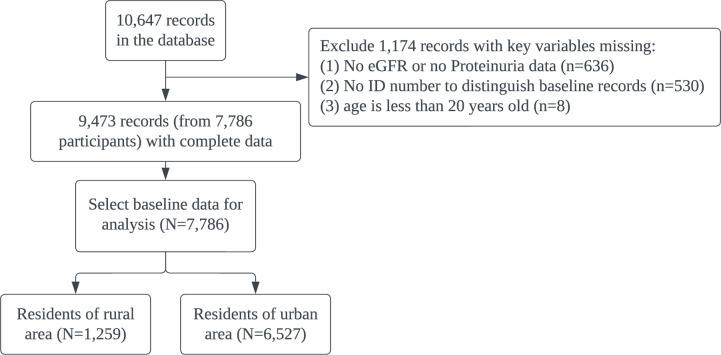
A total of 7786 participants from 26 urban and 15 rural townships were included.
RESULTS
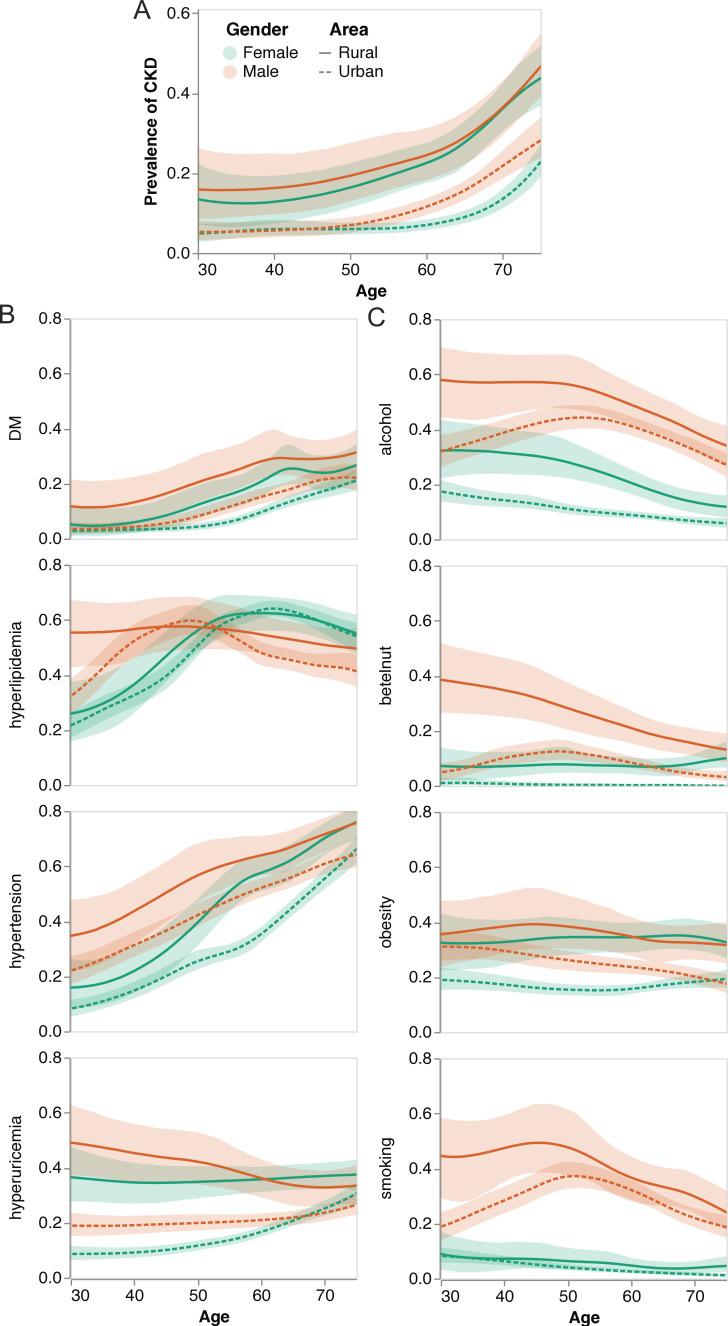
The prevalence of CKD was significantly higher in rural (29.2%) than urban (10.8%) areas, representing a 2.7-fold difference (p<0.0001). Risk factors including diabetes (rural vs urban: 21.7% and 11.0%), hypertension (59.0% vs 39.9%), hyperuricaemia (36.7% vs 18.6%), alcohol consumption (29.0% vs 19.5%), smoking (15.9% vs 12.0%), betel nut chewing (12.6% vs 2.8%) and obesity (33.6% vs 19.4%) were significantly higher (p<0.0001) in rural areas.
CONCLUSIONS
The prevalence of CKD is three times higher in rural versus urban areas. Despite >99% National Health Insurance coverage, disparities in CKD prevalence persist between residential areas. Targeted interventions and further studies are crucial for addressing these disparities and enhancing CKD management across different settings.
目的
由于人口老龄化,慢性肾脏病(CKD)的发病率不断上升,导致对透析和肾移植的需求增加,而这可能是昂贵的。目前的研究对于居住环境与 CKD 患病率或其相关危险因素之间的关系尚不清楚。本研究探讨了台湾地区 CKD 患病率和危险因素的城乡差异。我们的研究结果将有助于了解 CKD 的分布,并设计更有效的预防计划。
设计
本横断面社区研究使用了肾脏价值评估意识和提升计划(Renal Value Evaluation Awareness and Lift programme),该计划涉及 CKD 诊断和治疗的早期筛查和健康教育。比较了城乡地区 CKD 患病率和危险因素,包括饮酒、吸烟和嚼槟榔。
设置
根据人口密度、教育程度、年龄、农业人口和医疗资源来确定城市化水平。
参与者
共纳入了 26 个城市和 15 个农村乡镇的 7786 名参与者。
结果
农村(29.2%)CKD 患病率明显高于城市(10.8%),差异有统计学意义(2.7 倍,p<0.0001)。糖尿病(农村 vs 城市:21.7%和 11.0%)、高血压(59.0%和 39.9%)、高尿酸血症(36.7%和 18.6%)、饮酒(29.0%和 19.5%)、吸烟(15.9%和 12.0%)、嚼槟榔(12.6%和 2.8%)和肥胖(33.6%和 19.4%)等危险因素也明显更高(p<0.0001)。
结论
农村地区 CKD 患病率是城市地区的三倍。尽管有超过 99%的全民健康保险覆盖,但城乡地区的 CKD 患病率仍存在差异。针对这些差异进行有针对性的干预和进一步研究对于改善不同环境下的 CKD 管理至关重要。
 Zotero 插件